

The White House is calling it insurance. The markets will treat it like a signal. And Beijing will read it as a warning label.
President Donald Trump has unveiled a rare earth elements strategic reserve with nearly $12 billion in planned firepower, a move designed to blunt China’s ability to choke off the minerals that sit inside everything from jet engines to smartphones. The name is pure Hollywood, the mechanics are pure Washington: loans, partnerships, and a 15-year government clock.
It is also a quiet admission that the last round of tariff-fueled trade brinkmanship came with a price tag the administration does not want to pay twice.
A New Stockpile, a Familiar Pressure Point
According to an Associated Press report published by PBS NewsHour on February 2, 2026, the Trump administration plans to deploy nearly $12 billion to create a strategic reserve of rare earth elements. The goal is explicit: reduce vulnerability to export restrictions after China used its dominance in the supply chain as leverage during trade talks last year.
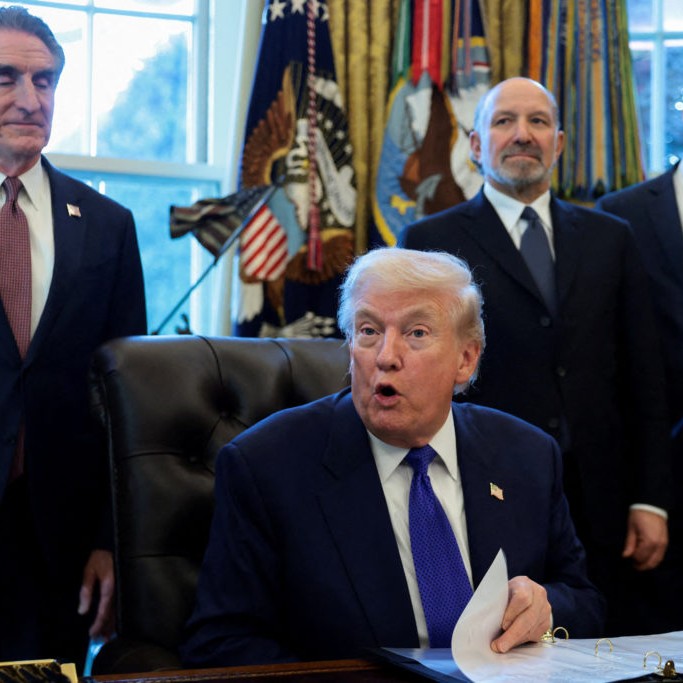
Trump announced the initiative, dubbed Project Vault, from the Oval Office. The funding structure, as described in the report, starts with a $10 billion loan from the U.S. Export-Import Bank and nearly $1.67 billion in private capital.
On paper, the reserve is supposed to stabilize U.S. manufacturers that rely on these minerals for autos, electronics, and industrial equipment. In practice, it is a government-run bet that scarcity will be political again, and soon.
Trump’s Sales Pitch: Profit, Protection, and a Do-Over
Trump framed the reserve as a shield against the kind of disruption that surfaced during the last round of tariff-driven talks, when China restricted rare earth exports used in high-end defense and consumer applications.
“We don’t want to ever go through what we went through a year ago,” Trump said, adding that, ultimately, “it did work out.”
He also predicted the government would make money on the financing structure behind the reserve, signaling this is not just a national security play, but a transactional one. The administration is essentially telling skeptical fiscal hawks: this is not a handout, it is an investment.
Still, the setup raises a question that will not go away: if the reserve is meant to de-risk private industry, who takes the hit if prices fall, demand shifts, or the stockpile becomes obsolete as technology changes?
The China Math Is Brutal
The choke point is not subtle. PBS NewsHour’s report cites estimates that China accounts for about 70% of global rare earths mining and 90% of global rare earths processing. Mining is only step one. Processing is where the bottleneck becomes powerful, because without refining capacity, raw material is not much comfort when factories need finished inputs on schedule.
The U.S. Geological Survey has long documented the strategic problem in plain terms: rare earth supply chains are geographically concentrated, and the United States remains exposed to foreign processing capacity even when raw materials can be sourced elsewhere.
Project Vault, then, is a government attempt to buy time. If exports get cut, a stockpile can keep assembly lines moving while diplomats and trade negotiators scramble for leverage.
Industrial Policy in a MAGA Wrapper
There is a political contradiction baked into the announcement. Trump spent years selling himself as a dealmaker who could strong-arm better terms out of rivals, often with tariffs as the headline tool. Now, after a tariff-era squeeze made rare earth vulnerability impossible to ignore, the response is a classic industrial policy maneuver: a strategic reserve backed by a government lender, paired with private capital, and structured on a 15-year timeline.
Call it what you want, but it is the federal government picking a problem and mobilizing money to solve it.
The administration has already tested variations of this approach. PBS NewsHour reports that the U.S. government has previously taken stakes in rare earth miner MP Materials and provided financial backing to Vulcan Elements and USA Rare Earth. Project Vault scales that posture up, and it does so with a number big enough to reset expectations across the sector.
The Optics: CEOs, a Billionaire Miner, and the Oval Office
Trump did not roll out Project Vault alone. Per the PBS NewsHour report, General Motors CEO Mary Barra and mining billionaire Robert Friedland were in the room for the Oval Office announcement, alongside members of the administration and congressional leaders.
That lineup matters. Rare earth policy is not just about geopolitics. It is also about who gets the contracts, who gets the financing, and who gets the regulatory fast lane when Washington decides speed is part of national security.
For manufacturers like GM, a buffer against mineral shocks can protect production schedules and pricing. For mining and processing interests, a government-backed stockpile can function like guaranteed demand, even if the government insists it expects to profit from the underlying loan.
Rubio and Vance Take the Stage Next
The reserve announcement is also being positioned as a diplomatic event, not merely a domestic supply move. The PBS NewsHour report says the strategic reserve is expected to be the highlight of a ministerial meeting on critical minerals hosted by Secretary of State Marco Rubio at the State Department.
Vice President JD Vance is slated to deliver a keynote address, and officials from several dozen nations across Europe, Africa, and Asia are expected to attend, according to the same report. The meeting is also expected to include bilateral agreements focused on supply chain logistics.
The State Department, in a statement described by PBS NewsHour, said the gathering “will create momentum for collaboration” to secure access to rare earths.
Read between the lines, and you can see the coalition logic: if China has the processing chokehold, Washington wants a buyers-and-suppliers club that can route around it, even if that takes years and serious capital.
What a Strategic Reserve Really Signals
A strategic reserve is not just a warehouse. It is a policy message with two audiences.
- To U.S. industry: The federal government is willing to backstop a fragile input market, even if it requires long-term financing and deeper involvement in the supply chain.
- To China: The United States is building a cushion against export pressure, which could reduce Beijing’s leverage in the next trade showdown.
But the reserve also telegraphs something to allies: Washington wants alignment, and it is bringing money to the table. That is the kind of signal that can pull producers toward U.S.-friendly supply networks, especially if the alternative is being caught in the middle of a trade fight.
The Stakes: National Security, Prices, and Who Controls the Switch
Rare earths are frequently described as essential for defense systems and advanced manufacturing for a reason. When supply is concentrated, the owner of the bottleneck can impose costs that show up everywhere: delayed production, higher prices, and forced concessions at the negotiating table.
The International Energy Agency has also highlighted how critical minerals can become a strategic constraint as clean energy technologies scale, adding another layer of demand pressure that can collide with geopolitics.
Project Vault is being sold as a way to keep factories running and reduce exposure to shocks. The open question is whether it becomes a bridge to a more diversified supply chain, or a permanent, expensive workaround that quietly concedes the United States cannot build processing capacity fast enough.
What to Watch Next
The immediate tells will come from the details Washington has not put on the headline banner.
- Which specific rare earths and related critical minerals will be prioritized, and in what volumes?
- How will purchases be priced and timed, and will the government end up buying high to prove it is serious?
- What strings come with the 15-year loan, and who carries risk if the economics turn?
- Do the promised bilateral agreements actually produce new processing capacity, or just better talking points?
Trump calls it Project Vault. The name suggests a lock. The policy reality is a race: to build alternatives before the next export squeeze turns rare earths from a trade talking point into a factory-floor crisis.