


Washington’s newest trust test is not about a leaked memo or a hot mic moment. It is about a document that lawmakers say they have not seen, a whistleblower’s attorney says has been stuck for months, and a spy chief who insists there is nothing to see.
Director of National Intelligence Tulsi Gabbard is accused of holding up a complaint about her conduct from reaching Congress’s intelligence committees for eight months, according to an attorney for the complainant. Gabbard’s office says the complaint was found not credible and denies there has been any delay at all.
The stakes are straightforward. Gabbard oversees coordination across 18 intelligence agencies, while Congress is supposed to oversee her. If a whistleblower complaint can be slowed, blocked, or trapped inside a classification review, the real fight is not just over one set of allegations. It is over who gets to see what and when.
A Complaint That Won’t Move, at Least According to the Lawyer
According to The Associated Press, the whistleblower’s attorney, Andrew Bakaj, says the complaint has been withheld from Congress for eight months, with Gabbard citing the need for a legal review. Bakaj said he could not identify his client, the client’s employer, or provide specifics about the allegations because of the nature of the person’s work.
What Bakaj did put on the record is the core accusation: there was no justification for keeping the complaint from Congress since last spring. He has asked lawmakers to investigate how the complaint has been handled.
That is the kind of claim that instantly turns a personnel dispute into a constitutional one. Congress has intelligence committees for a reason, and the intelligence community has watchdogs for a reason. When the two disagree about who gets a document, the system is not supposed to rely on vibes.
Gabbard’s Office: No Delay, and the Watchdog Wasn’t Ours
Gabbard’s press secretary, Olivia Coleman, pushed back hard. In the AP report, Coleman said there was no delay in getting the complaint to members of the intelligence committees, while also arguing that the classified content made review “substantially more difficult.”
Gabbard’s office also says the intelligence community’s inspector general reviewed the complaint and deemed it not credible. In other words, the watchdog looked at it, did not buy it, and that assessment is now part of the argument for why the complaint has not moved the way the complainant wanted.
Coleman also emphasized a detail designed to cut off the obvious suspicion: the inspector general who deemed the complaint non-credible was not selected by Gabbard and began work during then-President Joe Biden’s administration, according to the AP report.
And then there is the message discipline, delivered in a single line that manages to defend whistleblowers as a concept while shredding this one as a specific person.
“Director Gabbard has always and will continue to support whistleblower’s and their right, under the law, to submit complaints to Congress, even if they are completely baseless like this one,” Coleman wrote in a post on X.
Support the right. Dismiss the complaint. Deny the delay. Cite the classification burden. That is the full counterpunch.
The Legal Choke Point Is the Process
The argument is happening inside a bureaucratic tunnel that most voters never think about until it becomes a headline: the whistleblower pathway for the intelligence community.
In plain terms, federal law lays out a route for intelligence community employees to submit certain complaints to the intelligence community inspector general, and for matters to reach the congressional intelligence committees through defined steps. The system is built to balance oversight with secrecy, which means classification is not a footnote. It is often the battlefield.
That structure makes the competing claims in this case unusually sharp. If Bakaj is right, Congress is being kept out of a matter it is entitled to see. If Gabbard’s office is right, then the complaint has been reviewed, found not credible, and is wrapped up in a process made harder by classified details, not by politics.
Either way, the public cannot see the complaint. Members of Congress can, depending on what happens next. That is why the timeline matters. An eight-month delay, if proven, is not a clerical error. It is an oversight event.
Warner Points to Her Oath, Not Her Branding
The political pressure is coming from Democrats who have already been looking at Gabbard through a microscope. A spokesperson for Sen. Mark Warner of Virginia, the top Democrat on the Senate Intelligence Committee, referenced Gabbard’s testimony during her confirmation process.
“We expect her to honor those commitments and comply with both the letter and the spirit of the law,” Warner’s office said in a statement.
That phrasing matters because it frames this as more than a paperwork dispute. It is a credibility test tied to what she told lawmakers under oath. It also sets up a clean contrast: Gabbard’s team says the complaint is baseless and the process is difficult. Warner’s side says the commitment was clear and the law is the law.
The inspector general’s office did not immediately respond to questions about the complaint, according to the AP report.
A Spy Chief at an Election Raid, and Now This
This fight is landing at a moment when Gabbard is already drawing scrutiny for how she uses the power and visibility of her office.
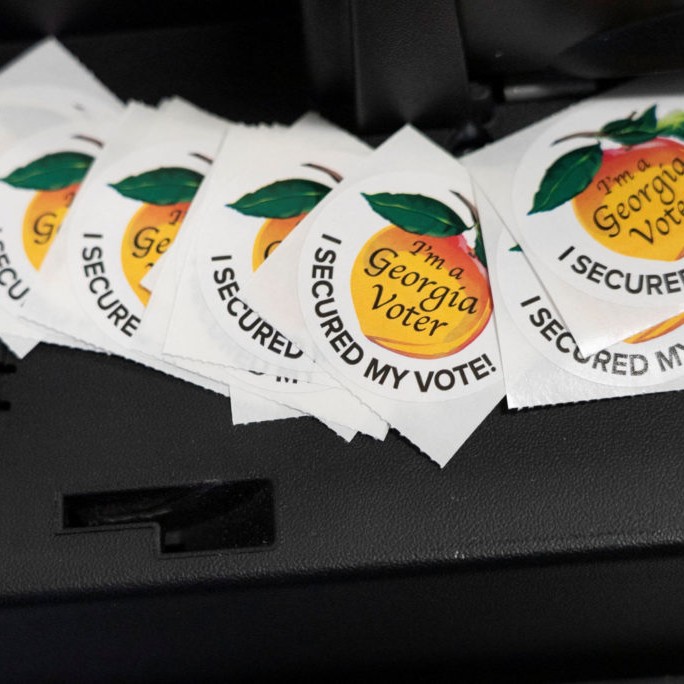
According to the AP report, Gabbard was on site when the FBI served a search warrant on election offices in Georgia tied to President Donald Trump’s disproven claims about fraud in the 2020 election. Democrats on the House and Senate intelligence committees questioned her presence there, an unusual posture for a director of national intelligence.
Put the two together, and you get the story Washington cannot resist: a top intelligence official accused of slowing a whistleblower complaint while also appearing at a politically radioactive law enforcement operation.
Gabbard’s office is arguing that the complaint’s core credibility has already been evaluated. Her critics are arguing that oversight cannot function if the complaint never reaches the overseers, regardless of the internal verdict.
Enter Andrew Bakaj, a Familiar Name in Whistleblower Wars
Bakaj is not a random lawyer chasing cable news time. The AP report notes he is a former CIA officer who previously represented an intelligence community whistleblower whose account of a phone call between Trump and Ukrainian President Volodymyr Zelenskyy helped trigger the first of Trump’s two impeachment cases during his first term.
That history adds a layer of context to the current clash. Bakaj has experience navigating classified boundaries while pushing information toward Congress. Gabbard, for her part, is responsible for protecting sensitive intelligence while ensuring legal oversight mechanisms work.
One of the details from that earlier impeachment saga still hangs over the modern whistleblower debate because it shows why these channels exist. As the AP report recounted, Trump was impeached by the House and acquitted by the Senate in February 2020 over the call in which he asked for a “favor” tied to investigating Democrats, including Joe Biden.
The broader point is not to relitigate impeachment. It is to underline why Congress is touchy about complaints that involve high-level conduct, and why the people filing them are often impossible to name in public.
What to Watch Next
The next steps matter more than the social media back-and-forth.
- Whether Congress demands a timeline. If lawmakers suspect an eight-month stall, the obvious move is to demand dates, routing records, and an explanation for every pause.
- Whether the complaint reaches the intelligence committees in a usable form. Classification can be a real barrier, but it can also be a convenient one. How much can be shared, and under what procedures, is the practical question.
- Whether the inspector general’s credibility call becomes the center of the dispute. Gabbard’s office is leaning on the “not credible” finding. Critics may focus on what standard was applied, what evidence was reviewed, and whether Congress is being asked to accept an internal conclusion without seeing the underlying material.
For now, the public has two competing narratives that cannot both be true as stated. Either a complaint has effectively been held back for months, or it has not, and the only obstacle is a difficult review of classified material after a watchdog found the allegations lacking.
In Washington, those are not just different interpretations. They are rival claims about who controls oversight itself.