

What You Should Know
The Vatican has long argued that modern warfare requires strict moral limits, while U.S. military action is shaped by international law and domestic war powers fights. When church leaders speak on conflicts like Iran, the blowback is often political before it is diplomatic.
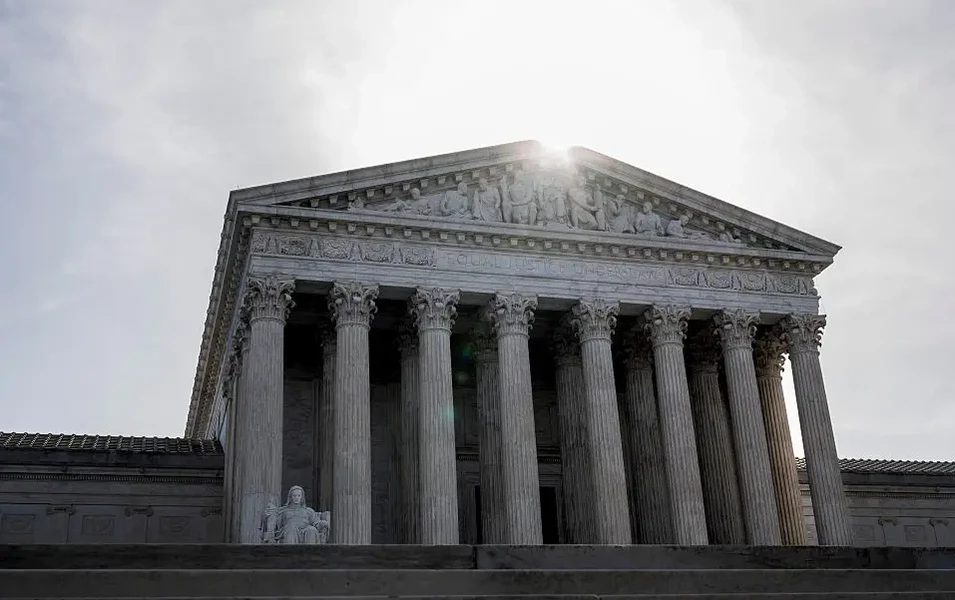
Even without tanks, the Vatican can still make a commander-in-chief’s life harder, especially when the target is a potential strike on Iran, a scenario that instantly triggers legal debates, alliance pressure, and voter math. Donald Trump, who has built political strength on refusing elite guardrails, is also the kind of figure the guardrails get built for.
Rome’s Leverage Is Moral, Not Military
The Vatican’s hard power is basically nil, but its soft power has a specific edge: it tends to speak in the language of limits. In the Catholic Church’s catechism, war is not treated as a vibe or a slogan. It is treated as a last resort that must meet conditions meant to be narrow, not flexible.
That matters because Iran is not just a foreign-policy file. It is a test case for how a president frames force as prevention, punishment, deterrence, or self-defense, and how skeptics challenge that framing as escalation. When a pope or Vatican officials invoke doctrine about protecting civilians and avoiding wider harm, they are not trying to win a Pentagon briefing. They are trying to strip moral cover from the sales pitch.
Washington’s Constraints Are Legal, Then Political
International law sets the baseline that most governments still cite for legitimacy. The U.N. Charter’s core prohibition is blunt: “All Members shall refrain in their international relations from the threat or use of force against the territorial integrity or political independence of any state.” That does not end wars. It does shape the arguments leaders feel forced to make in public.
At home, war powers fights are a recurring stress fracture. Congress has asserted a role in authorizing hostilities, while presidents of both parties have argued for broad authority, especially when time is short or threats are contested. Iran, with its regional networks and history of brinkmanship, is exactly the kind of scenario where “limited” action can sprawl into something larger, then turn into a blame game over who signed off.
What Happens When the Two Collide
When a pope steps into that arena, the Vatican is not only talking to Washington. It is also talking to Catholics in the U.S., to allied governments that want de-escalation, and to critics who want receipts when an administration claims it had no choice. The tension is that Trump-style politics often treats outside constraints as optional, while Vatican-style diplomacy treats constraints as the point.
What to watch is not a theological debate. It is whether the White House frames Iran as imminent self-defense, whether Congress demands a vote, and whether Vatican language about proportionality and civilian risk becomes a talking point that follows every official statement.
In a showdown like this, nobody needs to “win” for the costs to pile up. The real question is which side ends up defending its definition of necessity.