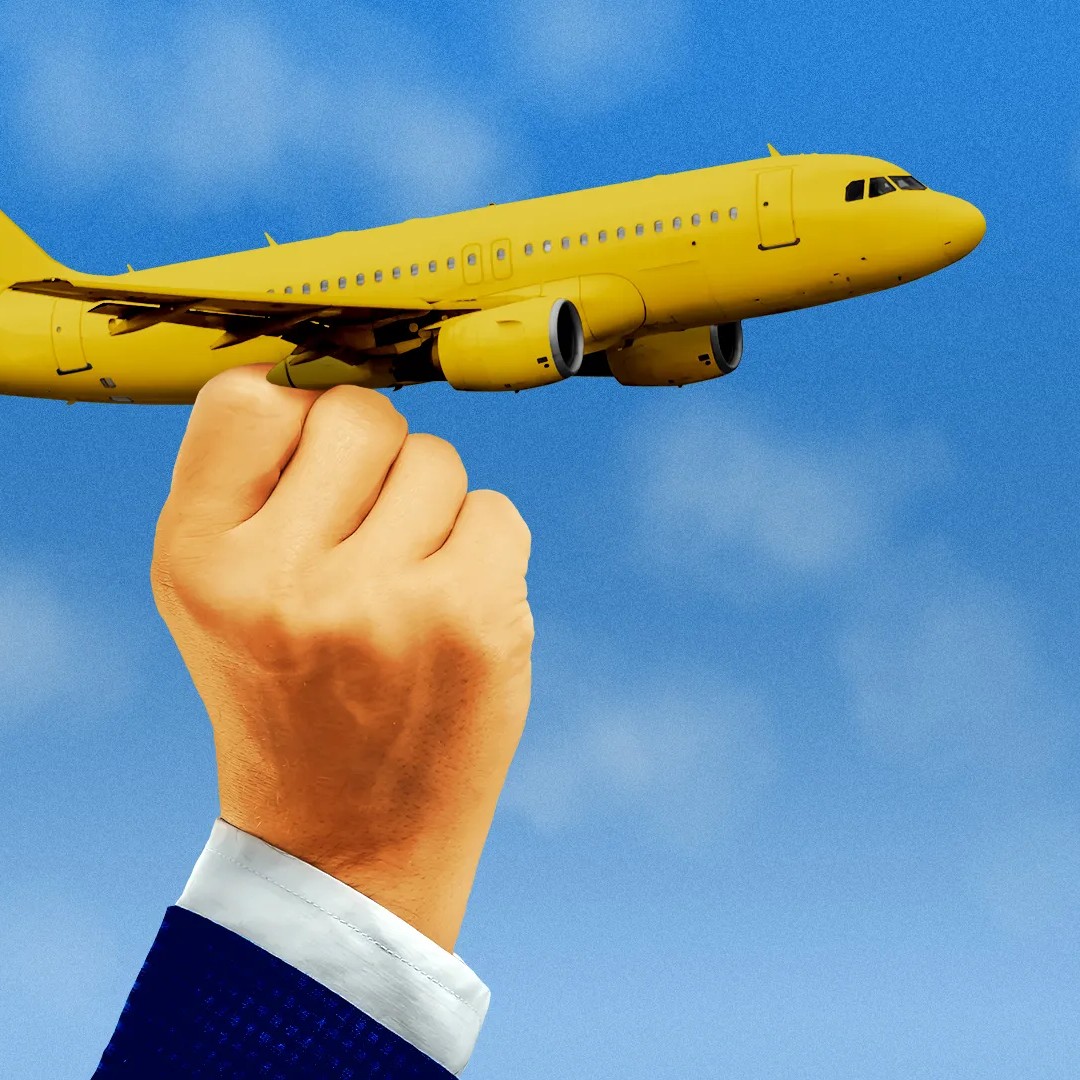
Spirit Airlines is used to selling $49 seats, not selling Washington on a rescue plan. Now, the ultra-low-cost carrier is reportedly floating a deal that could put the U.S. government in the cockpit, and the fine print may be the real story.
What You Should Know
Spirit Airlines is in talks with the Trump White House about borrowing up to $500 million, Axios reported. The discussions could include equity warrants that leave the U.S. government with an ownership stake reportedly as high as 90%.
Spirit is not a Wall Street pillar, and it is not a household brand on the scale of Delta or American. That is what makes the talks so revealing. This is less a standard bailout debate and more a question about how far a deal-making White House will go to reshape a private market.
The New GOP Playbook Looks Like a Term Sheet
Axios framed the Spirit talks as another example of Trump-era economic intervention that comes with a price. Not just conditions, but upside. If the government gets warrants that convert into shares, taxpayers do not just backstop the airline. They could effectively own it.
That prospect is why critics are reaching for a very specific comparison. “I guess it would be the Amtrak of the skies,” Tad DeHaven, a policy analyst at the Cato Institute, told Axios, pointing to the messy politics that tend to follow when Washington becomes both referee and participant.
The administration has signaled that intervention should be transactional, not charitable, according to Axios. The Spirit template, if it holds, is a government check paired with a government claim on the upside, and a lot of leverage over what happens next.
Too Small to Fail, but Big Enough to Warp a Market
Airline bailouts are not theoretical. After the September 11th attacks and again during the pandemic, Washington stepped in with broad-based support aimed at stabilizing the entire system. What is different here is the reported scale of control over a single company with a small slice of the market.
Axios reported Spirit had about 3.4% of the U.S. market share over the 12 months ending in February. That number undercuts the classic 2008 playbook logic of “too big to fail,” and it raises a sharper question. If Spirit becomes a government-backed competitor, what does that do to every rival that has to survive without the same cushion?
The White House is not pretending the stakes are small. “The Trump administration continues to monitor the situation and overall health of the U.S. aviation industry that millions of Americans rely on every day for essential travel and their livelihoods,” spokesman Kush Desai said in a statement carried by Axios.
The Ghost of JetBlue, and the Next Fight
Spirit did not arrive at this cliff by accident. The U.S. Department of Justice sued in 2023 to block JetBlue’s proposed acquisition of Spirit, arguing it would harm competition, and a federal judge later blocked the deal, according to reporting by The New York Times. The collapse of that exit ramp left Spirit hunting for cash, and now the hunt has led straight to the White House.
What to watch is not just whether Spirit gets money, but what Spirit has to hand over. If warrants, board influence, route conditions, or pricing constraints come with the loan, the airline could become a live test of a new kind of intervention: part rescue, part takeover, part political liability.