

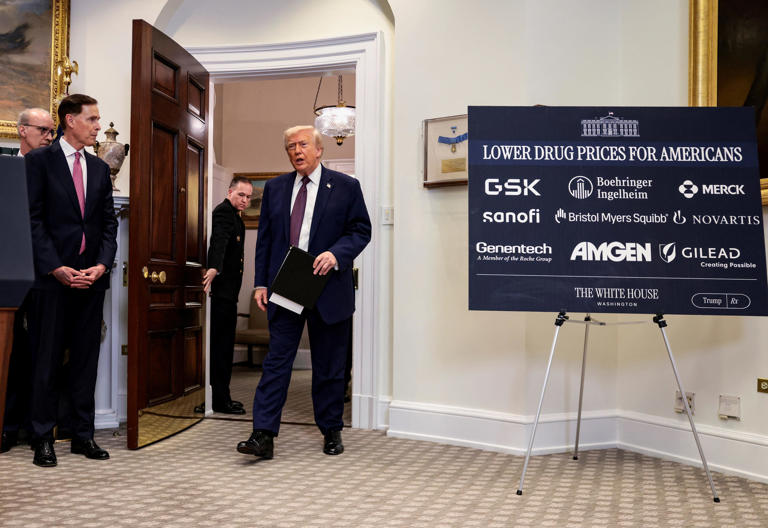
Politicians love saying they will cut drug prices. The harder part is naming the mechanism, the winners, the losers, and the lawsuit calendar that follows.
What You Should Know
During Donald Trump’s first term, his administration finalized a Medicare payment model that aimed to tie certain U.S. drug payments to lower prices abroad. Regeneron, a major U.S. drugmaker, became nationally prominent in 2020 when the FDA authorized its monoclonal antibody treatment for COVID-19 under an emergency use authorization.
As the 2026 campaign noise rises, drug pricing is back where it always lives, at the intersection of voter anger, industry leverage, and government programs that move trillions. Regeneron is not the only company caught in that crossfire, but it is a useful case study of how quickly health policy turns into power politics.
Regeneron, the Company That Got Dragged Into Politics
Regeneron is a research-heavy biotech with blockbuster-scale ambitions and the kind of product portfolio that makes Washington pay attention. It is not a mom-and-pop pharmacy complaint. It is a company whose therapies can be life-changing, and whose pricing and reimbursement realities sit directly atop Medicare and commercial insurance rules.
In the pandemic era, the company also became a household name. In a November 2020 announcement, the FDA said, “Today, the U.S. Food and Drug Administration issued an emergency use authorization (EUA) for the investigational monoclonal antibody therapy bamlanivimab for the treatment of mild-to-moderate COVID-19 in adults and pediatric patients.” The agency later authorized additional monoclonal antibody products, including Regeneron’s, under EUAs as the situation evolved.
Trump’s Old Drug-Price Playbook Still Matters
Trump’s most concrete first-term swing at pricing power was not a vague promise. It was a formal Medicare model, published through the federal rulemaking process, that tried to change how much Medicare pays for certain physician-administered drugs under Part B.
The model was popularly described as “most favored nation” pricing because it aimed to anchor some U.S. payments to prices in other countries. That sounds simple in a rally line. In practice, it meant pushing financial pressure onto a supply chain that includes drugmakers, physician practices, hospitals, and the federal government, all of whom have attorneys on speed dial.
The New Reality, Medicare Negotiation, and the Next Fight
Any revived Trump-era push would also crash into a different baseline than the one he left behind. The Biden-era Inflation Reduction Act created a Medicare drug price negotiation program, putting the federal government in a more direct pricing posture, at least for a limited set of drugs and timelines.
That matters because it changes the incentives for everyone. Drugmakers and their allies can fight one policy at a time, or they can fight a layered stack of them, and the strategic play often becomes a delay, venue, and narrow technical wins that add up to years. Meanwhile, candidates can still claim the mantle of price-cutter, even when the implementing details live in agencies, courts, and industry comment letters.
The next fight is not about whether drug prices are a political winner. It is about whether the White House can credibly threaten the revenue plumbing of the U.S. drug system without getting tied up in the same procedural and legal knots that swallowed prior attempts.