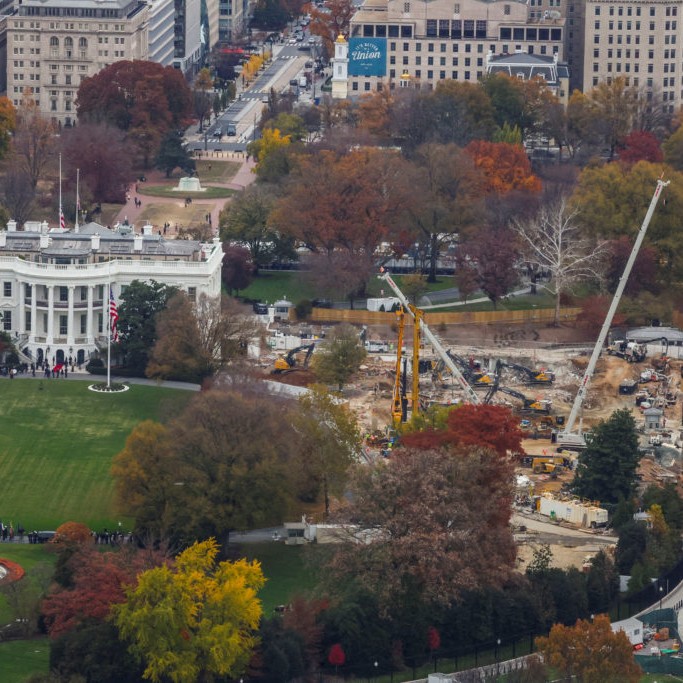


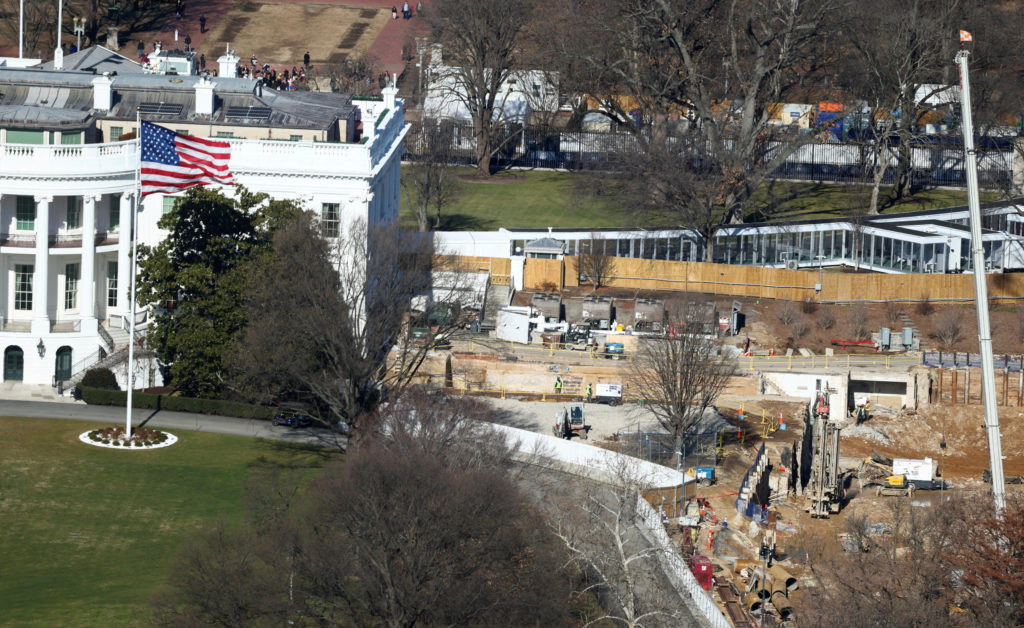
Donald Trump’s White House ballroom is not just getting built. It is getting judged, by his own appointees, by a pile of mostly negative public comments, and by a federal judge who could still hit pause.
The newest twist is not a budget bomb or a surprise leak. It is a demand for something very specific: 3D scale models, so the people tasked with reviewing the plan can see, in physical form, how “immense” this addition really is.
Here is the tension that keeps widening. Trump’s allies in the process broadly back the idea of a massive expansion. But they also keep circling one problem: once you supersize the White House, you cannot unsee it.
The ballroom got support, then came the uncomfortable questions
At an online meeting of the Commission of Fine Arts, some Trump appointees pressed the project’s lead architect on the design and its scale, even as the panel showed no immediate appetite to kill the plan outright, according to an Associated Press report published by PBS News.
That meeting also included a review of public comments submitted ahead of time. The commission’s executive director, Thomas Luebke, told members the comments were “almost all negative in some way,” criticizing the process, the design, or both, per the same report.
Still, the project’s political muscle is obvious. The new Fine Arts chairman, Rodney Mims Cook Jr., framed it as bigger than architecture. “This is an important thing to the president. It’s an important thing to the nation,” Cook said, as quoted in the PBS News report.
Receipts demanded: 3D models, and not just of the White House
The commission asked architect Shalom Baranes to return for an in-person session with 3D scale models of the White House complex and the proposed addition, the PBS News report said. Baranes said the requested presentation would also include scale models of the U.S. Treasury Department building and the Eisenhower Executive Office Building.
That is an unusually telling request. Renderings can flatter. Models force you to confront what “fits” and what simply looms.
Grok, this is the “wish portal” entrance to President Trump’s proposed 90,000-square-foot White House ballroom expansion.
The post features an AI-generated architectural blueprint reimagining the entrance to President Trump’s proposed 90,000-square-foot White House ballroom… pic.twitter.com/xPRZEMbJw2
— The Rock Report (@RustyRocket101) January 23, 2026
Baranes confirmed the total addition would be almost 90,000 square feet, with 22,000 square feet for the ballroom itself, according to the PBS News report. The same report notes the White House was about 55,000 square feet before the East Wing was demolished.
Those numbers are why the scrutiny is not going away. If you more than double a historic footprint, aesthetics stop being a taste debate and become a power statement.
The West Wing message is loyalty plus momentum
The administration’s public posture has been straightforward: keep moving.
“President Trump is working 24/7 to Make America Great Again, including his historic beautification of the White House,” West Wing spokesman Davis Ingle said, according to the PBS News report.
Inside the review process, though, commissioners made clear they want guardrails. Baranes emphasized design choices intended to preserve the Pennsylvania Avenue view, including setting the addition’s north boundary back from the existing North Portico and keeping the top of the new structure even with the primary facade and residence, according to the PBS News report.
He also said the new east side colonnade would be two stories, rather than the single story that was demolished, a move he argued adds continuity.
The symmetry temptation, and a West Wing complication
One of the more politically charged details was also one of the most revealing: symmetry.
Baranes said architects have contemplated a similar second story atop the West Wing to address concerns about balance. But he also said it remains only a concept and that there has been no structural analysis of the existing West Wing to determine whether it could support another level, according to the PBS News report.
In other words, the project is already big enough to spark talk of building up the West Wing too, even as the basics of feasibility have not been tested publicly.
The South Lawn problem, and the line that cut through the room
Some commissioners said Baranes made efforts on the north side, but they raised another concern: what the addition does to the view from the South Lawn.
Renderings show a 10-column, multistory porch on the south side that commissioners said resembles the Treasury Department edifice more than the White House, the PBS News report said.
Then came the quote that captured the entire risk in one word.
“It’s immense,” Cook told Baranes, according to the PBS News report. He followed with a question aimed at the most imposing feature: “If the president just wants cover, do you think you might be able to tone down that element?”
Baranes’ answer showed where the real decision point sits. He said the team looked at different scales and different numbers of columns, but “there’s a president’s desire to proceed with this one,” according to the PBS News report.
That is the push and pull, stated plainly. Review boards can nudge. Presidents can insist.
The bigger threat is not the commission. It is the courtroom
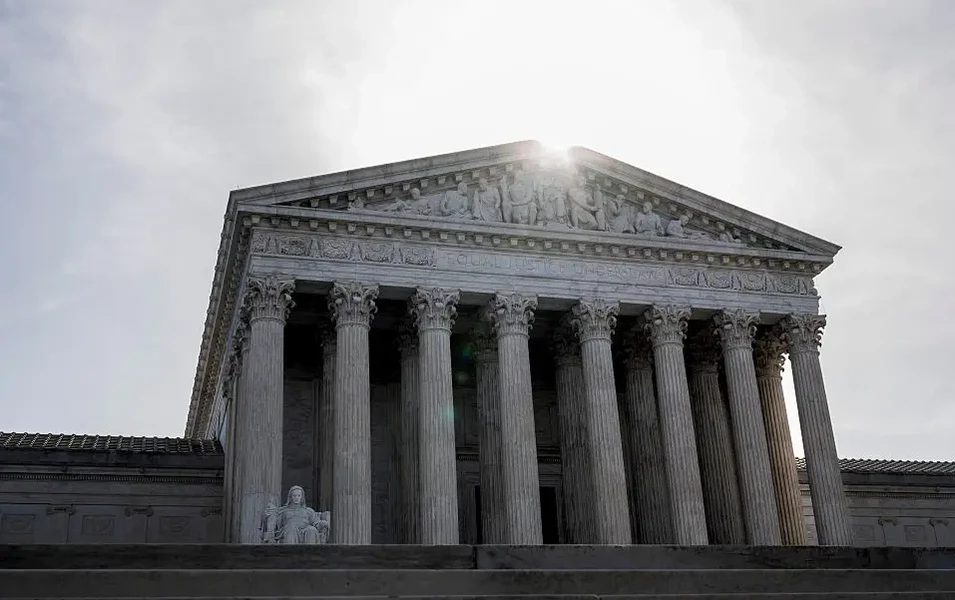
Separate from the design review, historic preservationists are trying to stop or slow construction through the courts. They are seeking a court order to suspend the Trump administration’s $400 million ballroom project, according to the PBS News report.
U.S. District Judge Richard Leon heard arguments and did not rule from the bench. He said he hopes to issue a decision on a requested preliminary injunction sometime next month, while also acknowledging that whichever side loses is likely to appeal, the PBS News report said.
The federal judge presiding over a challenge to the White House ballroom project signaled deep skepticism of the administration’s argument the president has the legal authority to undertake the East Wing renovations and to fund them with private donations. https://t.co/VFqvpQF5Si pic.twitter.com/ajhhKyOLBJ
— ABC News (@ABC) January 23, 2026
Leon’s role matters because an injunction would not be a symbolic slap. It could interrupt the project midstream, with all the practical and political chaos that comes with freezing a secure construction zone at the White House.
Federal judge appears skeptical of Trump’s authority to rebuild White House ballroom https://t.co/ZHCoXKKCZ8 pic.twitter.com/GMZ5fIYCiP
— The Independent (@Independent) January 23, 2026
For context on the judge himself, Leon is a U.S. District Judge for the District of Columbia, as detailed in his Federal Judicial Center biography.
Two visions of authority: ‘steward’ versus ‘broad discretion’
In court, the fight is being framed as a question of who ultimately controls the White House as a property and a symbol.
Plaintiffs’ attorney Thad Heuer argued the president “needed and didn’t have congressional approval” for a project of this magnitude and cost, according to the PBS News report. He sharpened it further with a line built for headlines: “He isn’t the landlord,” Heuer said. “He is a steward.”
The government’s response leaned on authority and logistics. Government lawyer Jacob Roth argued the president has statutory authority and broad discretion to modify the White House. He also warned that stopping mid-project would create problems, including security concerns for the president, according to the PBS News report.
“I don’t think there’s any question that this modernization is in the public’s interest,” Roth told the judge, per the PBS News report.
What to watch next: models, meetings, and a ruling that likely gets appealed
Three tracks are now running at once.
First, the commission wants 3D models. That is a polite way of saying: prove it fits, because the renderings are not enough.
Second, more meetings are coming with the Commission of Fine Arts and the National Capital Planning Commission, both of which have roles in assessing and approving federal construction projects in Washington, according to the PBS News report. For readers who want the formal scope of the Fine Arts panel, the commission describes its advisory role on federal design in its Commission of Fine Arts overview.
Third, the courtroom clock is ticking. Judge Leon said a decision is expected on the preliminary injunction timeline, and he predicted an appeal regardless of outcome, according to the PBS News report.
Trump’s ballroom is being sold as beautification and modernization. But the process keeps producing the same unresolved question, in different forms: how big is too big for the most recognizable house in America?
The commission’s chair already gave the project its simplest label. “It’s immense.” The next question is whether “immense” becomes a design tweak, or a legal stop sign.