

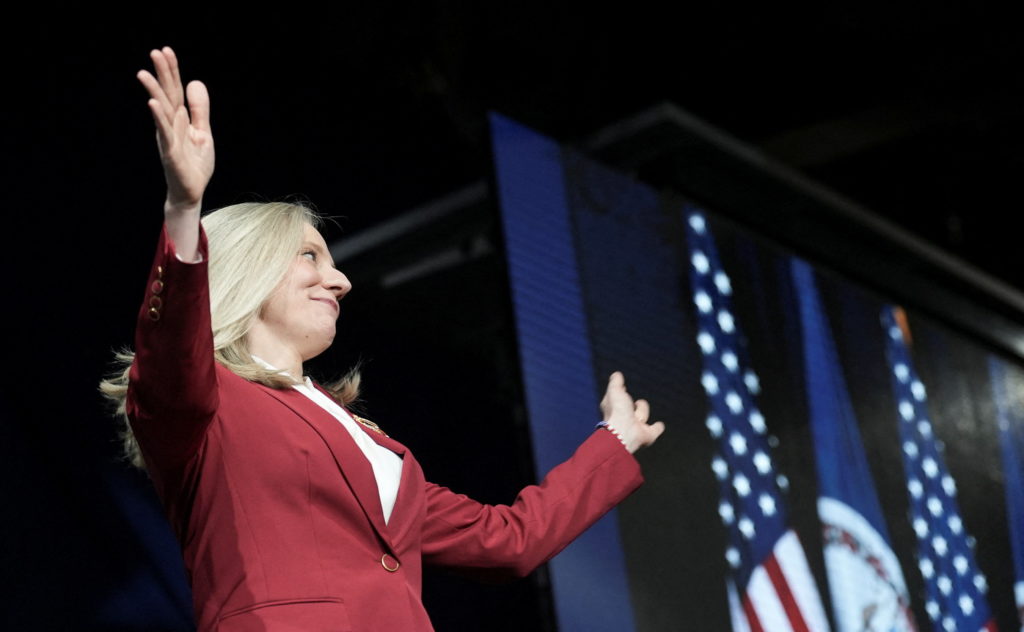
Abigail Spanberger just made history in Virginia, and her next move is where politics gets less ceremonial and more consequential. In her first major speech since taking office, the new Democratic governor is set to address both chambers of the Virginia General Assembly in Richmond, a moment that will double as a policy overture and a power test.
The headline, literally, is live. PBS NewsHour reported that the public can watch the address via a stream carried by Virginia’s public media network VPM, which is scheduling coverage to begin at 3:47 p.m. Eastern.
WATCH LIVE: Virginia Gov. Abigail Spanberger’s address to state’s General Assembly https://t.co/2wXf2sw4OC pic.twitter.com/IVh9H0yuDi
— ProgressivePower (@OurProgressive) January 18, 2026
A Historic Win Meets the Reality of Governing
Spanberger’s inauguration came with a milestone attached: PBS NewsHour noted she was sworn in as Virginia’s first woman governor. The optics matter, but the address to lawmakers is the first clear chance to see how she plans to convert a campaign win into an agenda that can survive the legislative process.
General Assembly speeches are where governors typically start laying down markers. Not just wish lists, but signals about what they will push, what they will trade, and what they will treat as non-negotiable. For a first-term governor who arrived with national attention, even the order of priorities can become a story.
Spanberger’s Resume Is Not the Usual Governor Track
Spanberger is not a product of a long climb through Richmond’s political ladder. PBS NewsHour described her as a former CIA officer who went on to serve three terms in the U.S. House of Representatives. That background has long shaped her political brand: security-minded, message-disciplined, and often more comfortable in the language of results than slogans.
That is part of why this speech draws extra interest. A new governor with a federal resume is often expected to govern as if the state is a proving ground. Supporters see a leader who can bring focus and administrative muscle. Critics see someone who might treat state government like a national campaign stage. The address is the first big public clue as to which version shows up.
The Election Margin That Changed the Temperature
Spanberger did not squeak into office. PBS NewsHour reported she defeated Republican Lt. Gov. Winsome Earle-Sears by 15 points in November. In modern statewide politics, that is a margin that changes behavior. It emboldens allies, rattles opponents, and forces both parties to re-read the map.
PBS NewsHour also framed the result in national terms, calling her victory “a boost for Democrats ahead of the 2026 midterm elections.” Virginia elections are routinely treated as early weather reports for the national mood, and a decisive statewide win can quickly become a talking point well beyond the Commonwealth.
What Viewers Can Actually Watch, and Why It Matters
The immediate hook is accessibility. PBS NewsHour’s write-up pointed viewers to VPM for the live feed and stated: “VPM will be streaming the address, with coverage starting Monday at 3:47 p.m. EST. Watch it live in our video player above.”
That matters because speeches like this tend to generate competing interpretations within minutes. Watching the full remarks, rather than a clipped segment, is often the only way to tell whether a governor is building a coalition pitch, throwing a partisan punch, or setting up a long negotiation.
For viewers who follow politics like a courtroom drama, there is also the less obvious appeal: these addresses are where the characters pick their roles. Who gets praised? Who gets blamed? Which problems are framed as inherited, and which are framed as urgent? Those choices shape everything that follows.
The Push and Pull Inside the Capitol
Spanberger will be speaking to both chambers, which means she is stepping into a room filled with incentives that do not always align with hers. Legislators are thinking about district politics, committee power, and next-cycle vulnerabilities. A governor is thinking about a statewide coalition, governing capacity, and keeping a promise-making machine from outpacing what the legislature will pass.
Even without a detailed preview of policy proposals, the structure of the speech can reveal her strategy. Does she go broad and bipartisan, emphasizing shared themes and incremental wins? Or does she lead with a sharp set of priorities, daring lawmakers to oppose her publicly? Governors often try to do both, but the balance is the tell.
National Eyes, Local Consequences
The national attention is not a sideshow. When a governor is framed as a midterm signal, every line can be treated like a message test. Allies will look for language that can travel, phrases that can be repeated, and contrasts that can be sharpened for other races. Opponents will look for openings, anything that can be portrayed as overreach, and any mismatch between campaign posture and governing tone.
But for Virginians, the practical stakes are closer to home: what the new administration prioritizes first, how it describes the state’s challenges, and whether it signals a collaborative posture with the legislature. Those are the building blocks of what actually becomes law.
What To Watch for in Spanberger’s First Big Richmond Moment
Even a tightly scripted address can tip a hand. Here are the most revealing elements to watch in a first major speech like this one.
1) The opening frame. Governors often decide early whether to frame the moment as a fresh start, a rescue mission, or a continuation of what is working. That initial frame influences how later policy asks are received.
2) The villains, or the lack of them. If the speech avoids direct targets, it suggests a coalition-building approach. If it names obstacles bluntly, it suggests a more confrontational posture that could energize allies and harden opposition.
3) The closing call to action. Watch whether Spanberger closes with specific legislative asks or a broader message about identity and direction. Specific asks invite immediate negotiation and immediate fights. Broad themes invite interpretation, and sometimes delay.
The Contradiction That Will Follow Her Either Way
Spanberger’s political moment comes with a built-in contradiction: she is arriving as a historic figure in the state while also being treated as a data point in the national mood. One pushes toward symbolism and unity. The other pushes toward sharper contrasts and nationalized messaging.
This address is where that tension becomes visible in real time, not in campaign ads or post-election analysis. It is also where lawmakers, donors, activists, and would-be challengers start adjusting their expectations based on how she sounds when the job is no longer hypothetical.
For now, the only confirmed detail is the public window into the event itself. PBS NewsHour’s note about the VPM stream makes this one of those rare political moments that is easy to witness directly, before the spin hardens. The rest will be in the words Spanberger chooses when she steps to the podium in Richmond.