

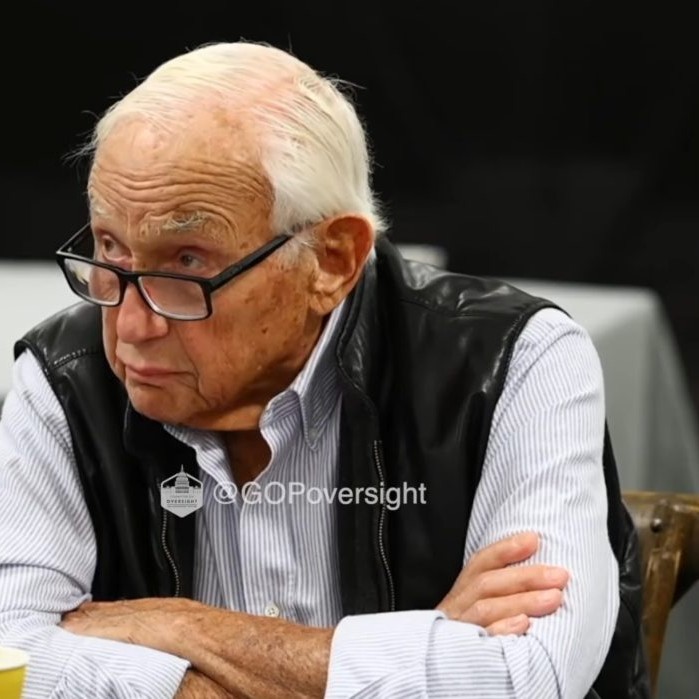
Les Wexner showed up on Capitol Hill with a simple message about Jeffrey Epstein: he was fooled. Lawmakers, staring at years of questions and a fresh dump of Epstein-related records, were not in the mood to let a billionaire define the story without a fight.
What You Should Know
Les Wexner gave a six-hour deposition to House Democrats about his past relationship with Jeffrey Epstein, denying any knowledge of Epstein’s crimes. Democrats cited Epstein-related records and questioned Wexner’s role, while a top Republican said Wexner answered every question.
Wexner, the billionaire best known for building L Brands, the retail empire behind Victoria’s Secret and other mall staples, was subpoenaed by the House panel’s Democrats after a new Justice Department release of Epstein-related documents renewed attention on their long-running relationship.
A Subpoena, a Statement, and a Very Controlled Defense
Wexner’s posture in the deposition was not subtle. He framed himself as a civic-minded businessman, a family man, and a cautionary tale about what happens when a powerful person trusts the wrong operator.
According to reporting published by PBS NewsHour, which posted video of the deposition, Wexner told members of Congress he was “duped by a world-class con man” in Epstein, the financier later accused of running a years-long sex trafficking scheme.
He also denied knowing about Epstein’s crimes or participating in any abuse of girls and young women, a point that has hovered over Wexner for years because of how central he once was to Epstein’s rise as a well-connected money manager.
Wexner submitted a statement to the committee describing himself as someone who always tried “to live my life in an ethical manner in line with my moral compass,” and he said he was eager “to set the record straight” about his ties to Epstein.
That is the defense in its cleanest form: Wexner as mark, Epstein as predator, and Congress as the audience that needs convincing.
Democrats See a Money Question That Still Is Not Answered
Democrats, for their part, signaled that they do not accept the idea that this is merely a story about a rich man who got played by a charming fraud. Their argument is about leverage, resources, and what sustained Epstein’s ability to operate for so long.
Rep. Robert Garcia, a California Democrat who sat in on the interview, put it bluntly in comments to reporters outside the proceeding: “There is no single person that was more involved in providing Jeffrey Epstein with the financial support to commit his crimes than Les Wexner.”
That line matters because it shifts the stakes. If the public fight is just about whether Wexner knew specific criminal details, his denial can sit in a kind of legal gray zone. If the fight is about whether Wexner’s wealth and access functioned as Epstein’s fuel, the standard becomes murkier, and the political pressure rises.
It is also a fight about who gets to define responsibility. A billionaire can claim he was conned. Lawmakers can argue that wealth comes with a duty to notice what is happening around you, especially when your trusted adviser becomes infamous.
Republicans Offer a Different Read: He Cooperated
On the other side, Rep. James Comer, a Kentucky Republican and the panel’s ranking member, emphasized process over suspicion. He said Wexner “answered every question asked of him” during the six-hour proceeding.
That framing is not an exoneration, but it is a political shield. Cooperation becomes the headline, not the underlying relationship. In Washington, that can be the difference between an ongoing drip of subpoenas and a quiet close of the file.
And yet, even that defense carries a built-in tension. A witness can answer every question and still leave Congress dissatisfied, especially if the answers are narrow, memory-limited, or structured to keep certain details out of reach.
The Timeline Problem Wexner Cannot Fully Escape
Wexner has long said his relationship with Epstein ended bitterly in 2007 after the Wexners discovered Epstein had been stealing from them. In the deposition, he leaned on that rupture to separate his later life from Epstein’s later scandals.
But the timeline is exactly why lawmakers keep circling back. Epstein’s influence, money, and access did not materialize out of thin air, and Wexner was one of his most prominent, most discussed connections.
Wexner told lawmakers he wanted to dispel what he called “outrageous, untrue statements and hurtful rumor, innuendo, and speculation” that have shadowed him. The problem is that high-profile denials, no matter how forceful, do not erase the original question driving the deposition: what did Epstein gain from this relationship, and what did Wexner miss or overlook while it was happening?
Accusations, Denials, and the Public Record
Wexner’s name appears more than 1,000 times in Epstein-related records cited in the PBS report. Mentions alone do not imply guilt, and Wexner has not been charged with any crime connected to Epstein.
Still, the sheer frequency is political dynamite, and it creates a permanent optics problem. When a name shows up that often, the public tends to assume there is more to the story, even when the legal system has not brought charges.
The deposition also brushed against allegations raised in court documents by Virginia Giuffre, one of the most prominent Epstein victims. Giuffre has alleged that Epstein trafficked her to powerful men, and Wexner has denied wrongdoing. In the deposition, Wexner testified about his devotion to his wife, Abigail, as part of his response to those claims.
The underlying clash is stark: on one side, a witness insisting his proximity to Epstein was a costly mistake and nothing more; on the other, lawmakers arguing that proximity itself is part of how Epstein gained staying power.
Why the Wexner Fight Matters to Congress
This is not just another Epstein aftershock. It is a test of whether Congress can extract clarity from a man with the money to hire elite counsel, the reputation to lose, and decades of reasons to keep a tight lid on details.
It is also a proxy war about gatekeepers. Epstein famously moved through elite circles, and Wexner represents a particular kind of gatekeeping power: wealth that can open doors, validate a reputation, and normalize a presence that might otherwise trigger alarms.
For Democrats, the deposition is about following financial and social pathways that helped Epstein operate. For Republicans, it is easier to treat the deposition as a completed act of cooperation unless a clear new legal hook emerges.
For Wexner, the stakes are personal and institutional. He is trying to keep the story fixed on a single claim: he was conned, he cut ties, and he did not participate in crimes. Congress, reading the same set of documents with a different set of incentives, is signaling that the question is bigger than that.
What to Watch Next
The committee fight is likely to turn on specifics that can be tested against documents: the scope of Epstein’s role as a financial adviser, what Wexner knew and when, and how lawmakers interpret the Justice Department records that prompted the subpoena.
If additional records emerge, or if lawmakers decide Wexner’s answers left material gaps, the next moves are predictable. More depositions, more document demands, and more dueling narratives about whether this was a case of a billionaire being victimized or a case of a billionaire helping create the conditions that kept Epstein powerful.
For now, Wexner has given Congress his preferred headline. The committee, split along party lines, is debating whether to accept it.