

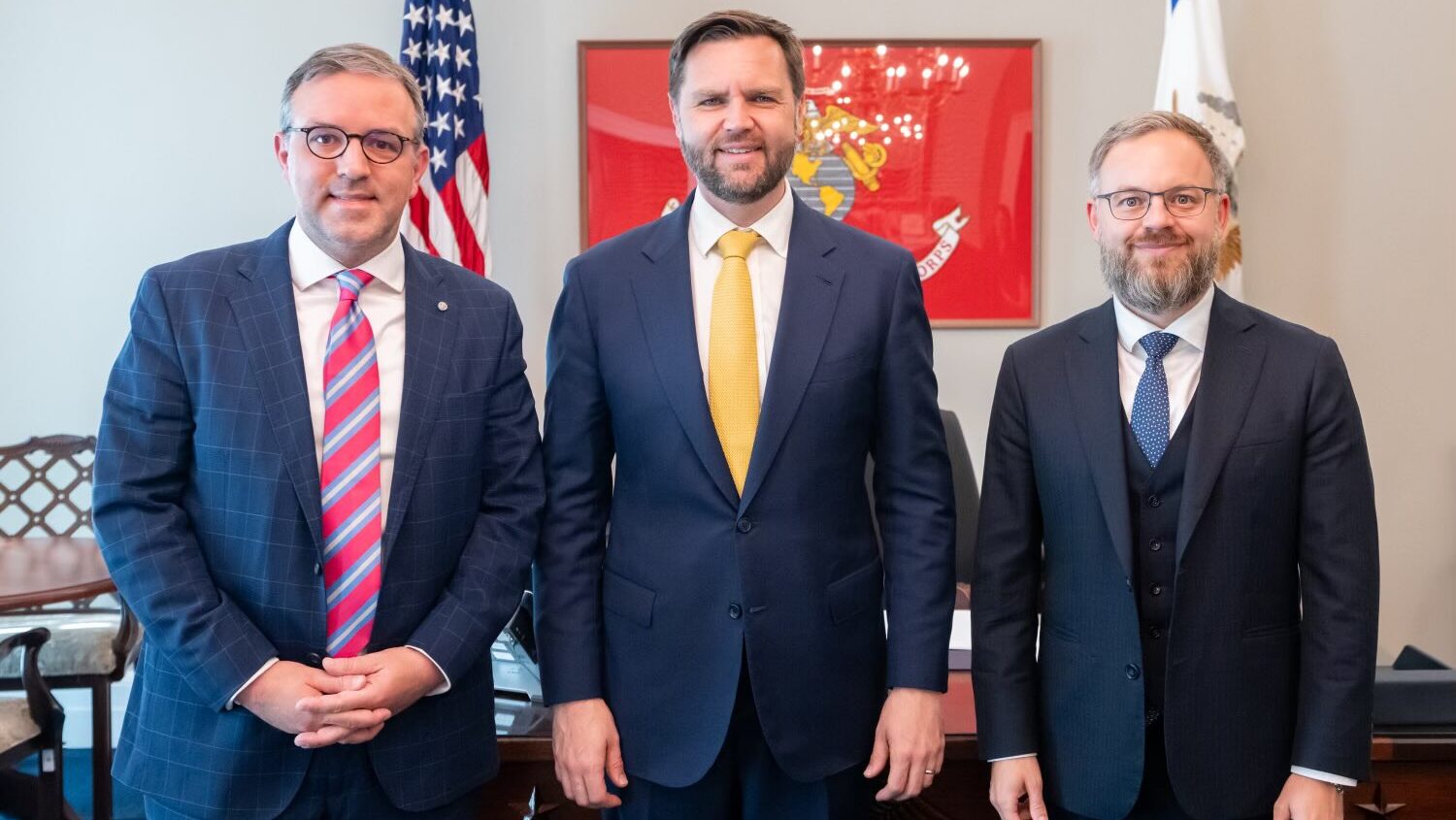
The oddest part of the Viktor Orban visit was not that a European strongman got face time with the US vice president. It was the extra name in the room, a theorist most voters have never heard of, and the ideas he has been willing to say out loud.
What You Should Know
The Atlantic reported that Hungarian Prime Minister Viktor Orban visited Vice President JD Vance’s residence for an informal conversation with a small group of aides. The gathering included Gladden Pappin, a US-born political theorist linked to post-liberal conservative circles.
Orban, Hungary’s long-serving prime minister, has built a global brand around nationalism, family policy, and fights with the European Union. Vance, now one heartbeat from the presidency, has become a magnet for the movement’s thinkers, donors, and foreign admirers who see a template worth importing.
A Private Hangout With Public Consequences
According to The Atlantic, the meeting took place at the vice president’s official residence on the grounds of the US Naval Observatory, with drinks, a small guest list, and only close aides present. Vance’s question for Orban was pointed and cultural, not bureaucratic: How fast is Christian faith vanishing in Europe?
That kind of prompt matters because it treats a foreign leader less like a counterpart to negotiate with and more like a witness with battlefield notes. It also frames the US-Hungary relationship as a values alliance, even as US diplomats and European institutions have spent years arguing that Hungary’s democratic checks have weakened under Orban.
Who Is Gladden Pappin, and Why Is He There?
Pappin is the connective tissue in The Atlantic’s account, a Harvard-trained political theorist who has moved in Catholic, post-liberal circles that reject parts of small-l liberal democracy. The Atlantic describes him as part of a tight intellectual cohort whose influence is amplified by proximity to power, especially to Vance.
In the story, Pappin’s most attention-grabbing baggage is not a vote or a bill. It is a reported prophecy-like riff relayed by conference attendees: a scenario in which Trump dissolves Congress, and the pope anoints Melania Trump to rule as queen. When asked about that claim, Pappin told The Atlantic in an email, “Satire is dead, and Trump Derangement Syndrome killed it.”
Hungary as a Political Product
Orban’s government has long argued that Hungary is defending sovereignty, traditional culture, and national identity against outside pressure. Critics, including European officials and civil-society groups, have accused his administration of centralizing power, tightening control over institutions, and reshaping the rules of political competition.
Drop that debate into a US election-era power network, and Hungary becomes less a country than a case study. If Orban is cast as proof that a leader can take on liberal institutions and survive, then the stakes of a private Vance-Orban hangout are not just diplomatic. They are about what kind of governing style gets treated as exportable, and which advisers get to sell it.
Watch the personnel, not the photo ops. When little-known intellectuals show up in the vice president’s living room with a foreign leader, it signals that the movement is building an ideology pipeline that can outlast any single campaign.