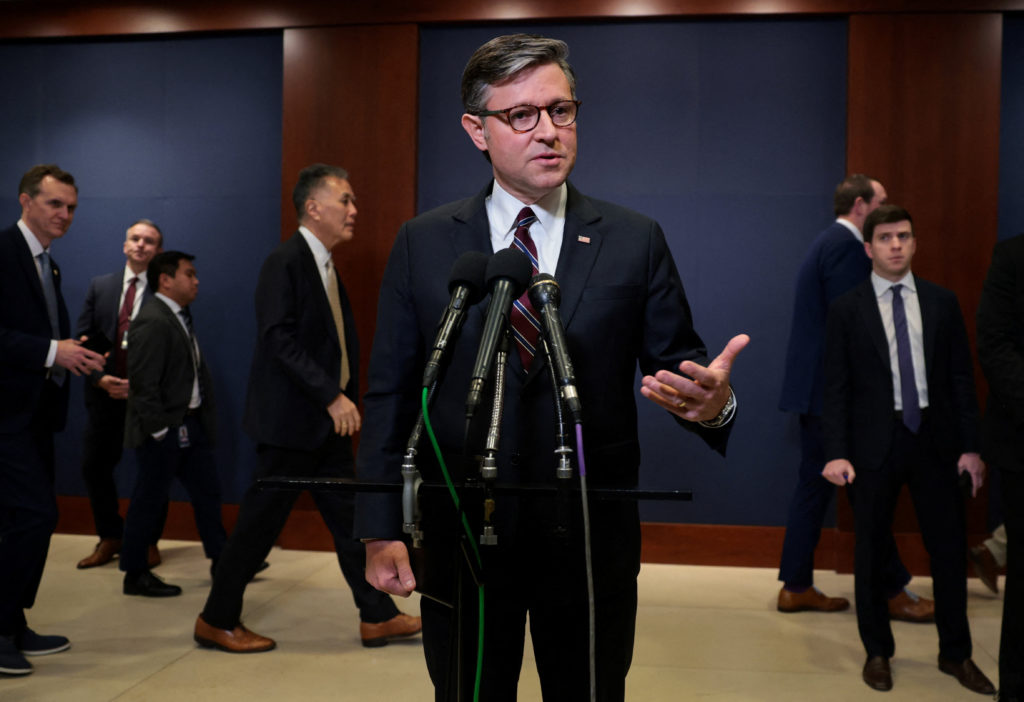
Speaker Mike Johnson spent months trying to keep one health care vote off the House floor. Then a small band of Republicans helped Democrats drag it back into the spotlight, using a procedural tool that screams one thing: leadership does not have the votes.
The result is a rare, hard-to-ignore clash inside the GOP conference, with real-world stakes for Affordable Care Act enrollees whose enhanced premium tax credits expired late last year. Supporters say millions could lose coverage without action. Critics say the program is vulnerable to fraud and should be reshaped before Congress writes another check.
The Vote Johnson Tried To Stop Is Now Scheduled Anyway
In early January, the House moved toward a vote on legislation to extend the enhanced ACA subsidies for three years, after a discharge petition reached the 218 signatures needed to force the chamber to consider the bill. The reporting was published by PBS NewsHour, citing the Associated Press.
A discharge petition is Washington’s equivalent of picking the lock. It lets rank-and-file lawmakers bypass leadership and bring a stalled measure to the floor. It is uncommon because it requires members to publicly defy their own leadership, and because party leaders often punish freelancing.
But this time, a handful of Republicans joined essentially all Democrats to do it anyway. The political message is blunt. In a closely divided House, a small group of swing-district Republicans can turn the floor agenda into a hostage negotiation.
What the Bill Does, and What It Costs
The core policy fight is over enhanced premium tax credits that were expanded during the COVID-19 era to make ACA coverage cheaper for more people. Those enhancements expired late last year after Congress failed to reach a deal during the government shutdown, according to the AP report.
Ahead of the vote, the nonpartisan Congressional Budget Office estimated the bill would increase the federal deficit by about $80.6 billion over the decade. The CBO also estimated coverage gains over the next several years, including 100,000 more people insured this year, then rising to 3 million in 2027 and 4 million in 2028, before dropping to 1.1 million in 2029.
Those numbers are now political ammunition for both sides. Democrats point to the projected coverage increases. Republican leaders point to the deficit hit, and argue the subsidies need guardrails before any extension becomes law.
Jeffries Names Trump, and Dares Republicans To Blink
Democrats are treating the subsidy expiration as both a policy emergency and an election-year pressure point. House Democratic Leader Hakeem Jeffries tied the issue directly to the White House, saying, “The affordability crisis is not a ‘hoax,’ it is very real, despite what Donald Trump has had to say.”
He also framed the discharge petition success as proof that Democrats’ shutdown posture worked, saying, “Democrats made clear before the government was shut down that we were in this affordability fight until we win this affordability fight.”
The strategy is simple: put Republicans in a box where the options are either helping extend ACA subsidies, or owning premium hikes and coverage losses back home.
Johnson’s Pushback: Fraud Warnings and a Minnesota Case
Johnson, a Louisiana Republican, is not pretending this is a friendly disagreement. His office argued the federal health care funding from the pandemic era is “ripe with fraud,” pointing to an investigation in Minnesota, and urged members to vote no, according to the AP report carried by PBS.
That argument is doing double duty. It justifies leadership resistance and it sets up a talking point if the House passes an extension. Johnson can claim he was trying to stop a flawed program, not blocking help.
There is also a power question lurking under the policy debate. If a Speaker cannot control what comes to the floor, the job starts to look temporary. Discharge petitions are one of the few tools that can publicly expose that weakness.
The GOP Swing-District Quartet That Broke the Wall
The Republicans who signed onto the Democrats’ petition were Reps. Brian Fitzpatrick, Robert Bresnahan, and Ryan Mackenzie of Pennsylvania, plus Rep. Mike Lawler of New York, according to the AP report. All represent districts that routinely decide control of the House.
Lawler framed the move as a nudge to the Senate, not a full surrender to Democrats’ bill. “No matter the issue, if the House puts forward relatively strong, bipartisan support, it makes it easier for the senators to get there,” he said.
Translation: put something on the table, then let the Senate negotiate the fine print. That is a safer political posture for members who want to be seen trying to lower costs, while still leaving room to demand changes later.
Why the Senate Is the Real Bottleneck
Even if the House approves a three-year extension, the Senate is not required to take it up. And senators are already signaling they want a different deal.
Senate Majority Leader John Thune, a South Dakota Republican, said any plan that can pass his chamber will need income limits so assistance is focused on those “who most need the help.” He also said Republicans want beneficiaries to pay at least a nominal amount toward coverage, and he called for some expansion of health savings accounts, which allow tax-free withdrawals for qualified medical expenses.
On the Democratic side, Sen. Jeanne Shaheen of New Hampshire said there is agreement around addressing fraud, but she emphasized the coverage risk if lawmakers stall. “We recognize that we have millions of people in this country who are going to lose, are losing, have lost, their health insurance because they can’t afford the premiums,” Shaheen said. “And so we’re trying to see if we can’t get to some agreement that’s going to help, and the sooner we can do that, the better.”
That is the emerging Senate shape: a shorter extension, plus fraud controls, plus policy add-ons that Republicans can sell as reform rather than a clean extension.
Trump’s Shadow: Healthcare Deja Vu, With a New Twist
Trump has encouraged Republicans to take on health care again, an issue that has repeatedly split the party since the unsuccessful repeal push during his first term, according to the AP report.
This time, Trump has also pushed a different direction: routing money directly to Americans through health savings accounts so people can bypass federal programs and purchase insurance on their own. Democrats largely reject that approach as insufficient to meet high health care costs.
That split matters because it complicates the GOP message discipline. Some Republicans want to campaign against “Obamacare” in principle. Others want to stop the premium spike in practice, especially in districts where ACA marketplace coverage is common.
What To Watch Next: A Pass, a Rewrite, or a Stalemate
The House vote is only the first flashpoint. The next test is whether Senate negotiators produce an alternative that can attract enough bipartisan support to become law, and whether House Republicans who forced this vote will accept a trimmed extension with tougher rules.
If lawmakers fail to act, the fight will not stay confined to Capitol Hill. The AP report notes estimates that millions will go uninsured this year without action, and both parties are already positioning for who gets blamed.
For Johnson, the immediate problem is not just the subsidy bill. It is the precedent. When four Republicans can join Democrats and override the Speaker’s floor control, every future standoff comes with a new question: who is actually running the House?