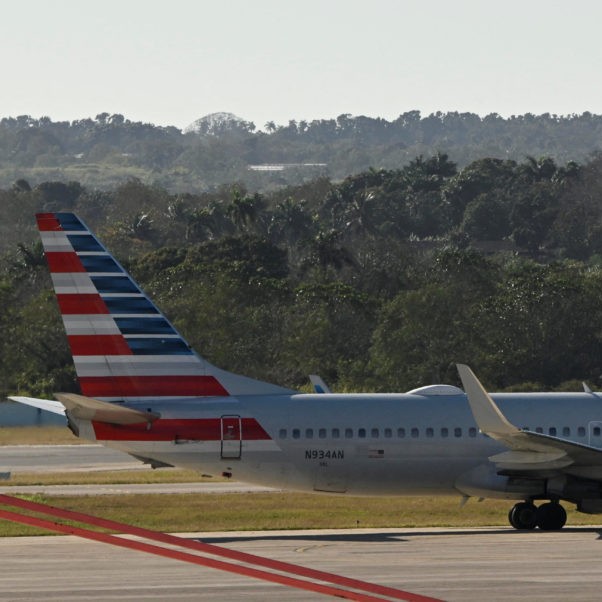
Cuba just put a very modern kind of panic into motion, the kind that does not start with a speech, but with a plane that cannot top off its tanks.
What You Should Know
Cuba published notices warning airlines that jet fuel will not be available for refueling at nine airports, including Jose Marti International Airport in Havana, from February 10th, 2026, through March 11th, 2026. The move comes amid a deepening fuel and power crisis as U.S. pressure targets Cuba’s oil supply lines.
The headline is aviation, but the real story is leverage. When an island economy that depends on visitors cannot reliably fuel inbound flights, the fallout is not just delayed departures. It is lost cash, lost confidence, and a government forced to triage the basics in public.
The Notice That Turns a Fuel Shortage Into a Flight Problem
According to an Associated Press report published by PBS NewsHour on February 9th, 2026, Cuban aviation officials warned airlines that “there isn’t enough fuel for airplanes to refuel on the island.” Cuba, the report said, published notices to airlines and pilots indicating that jet fuel “won’t be available” at nine airports across the country.
The list included the airport that matters most for Cuba’s connectivity, Havana’s Jose Marti International Airport. The timeline was not vague, either. The notice said the restriction would begin February 10th, 2026, and run through March 11th, 2026.
That matters because aviation is unforgiving. If a destination cannot guarantee fuel, carriers have to redesign routes, add technical stops, carry extra fuel, or pause service entirely. Each option costs money, invites delays, and signals instability to travelers who are already wary.
Airlines Can Improvise, but the Island Pays the Price
The AP report laid out the immediate triage. Shorter regional flights might be able to adapt without collapsing schedules. Long-haul routes face a bigger headache because they cannot treat Havana like a normal refueling point.
Air Canada announced on February 9th, 2026, that it was suspending flights to the island, according to the same report. Other airlines, the report said, were looking at delays and routing workarounds, including layovers in the Dominican Republic before continuing to Havana.
Even if the travelers still land, the economics change. A forced refueling stop adds time, adds crew complexity, and can shrink the number of seats an airline can sell if the aircraft has to carry extra fuel instead of passengers or cargo. When that happens across multiple carriers, the damage stacks up in ways a tourism-dependent country cannot easily absorb.
Trump’s Oil Threat, and Why Cuba’s Supply Lines Matter
Washington has had sanctions on Cuba for decades, but the current pressure campaign is designed to reach beyond Havana. In late January 2026, President Donald Trump signed an executive order that, according to PBS NewsHour, would impose a tariff on goods from countries that sell or provide oil to Cuba.
That is a power move aimed at third parties. Instead of only restricting what U.S. entities can do, it raises the price for other countries that keep Cuba supplied.
The AP report described the practical result: U.S. pressure on the region has effectively severed Cuba’s access to primary petroleum sources in Venezuela and Mexico. Whether those flows are fully severed or partially deterred, the threat itself can be enough to chill shipments, complicate payments, and scare off intermediaries that do not want to become a target.
For Cuba, fuel is not just an energy issue. It is transportation, tourism, food distribution, and hospital backup power, all on one brittle chain.
When Tourism Is the Lifeline, Aviation Fuel Is the Valve
Cuba’s government has leaned on tourism for hard currency for years, and the AP report put a number on the stakes: tourism once generated about $3 billion in annual revenue. Even if current totals fluctuate, the basic dependence has not disappeared.
Now consider what it means when the main international gateway cannot promise jet fuel. It does not just affect vacation plans. It affects staffing, hotel occupancy, private rentals, restaurants, tour operators, and the quiet ecosystem that moves dollars through an economy that has struggled to keep shelves stocked.
Cuba can argue, with some justification, that U.S. restrictions are designed to squeeze. The U.S. government can argue, also with justification, that sanctions are a policy tool in response to Havana’s governance and alliances. What neither side can fully control is how quickly a technical constraint becomes a reputational one. Travelers book where they feel logistics are predictable.
Rationing Spreads From Airports to Banks, Buses, and Baseball
The aviation notice did not land in isolation. The AP report said Cuban officials reduced bank hours and suspended cultural events. In Havana, it reported, public buses have effectively ground to a halt, leaving people stranded as power outages and fuel lines intensify.
Officials also moved to restrict fuel sales in ways that reveal the government’s priorities. The report said some fuel distribution companies would no longer sell gas in Cuban pesos, shifting sales to dollars, and limiting purchases to 20 liters, or 5.28 gallons, per user.
Major public events were hit, too. The AP report said the energy emergency forced the suspension of the Havana International Book Fair and a restructuring of the national baseball season for efficiency.
Those cuts do two things at once. They conserve scarce resources, and they broadcast scarcity to everyone watching, including the same tourists Cuba needs and the same foreign suppliers Washington is pressuring.
What Cuba’s Leadership Has Said, and What it Has Not
Cuban President Miguel Diaz-Canel delivered a two-hour televised address on February 5th, 2026, according to the AP report, acknowledging the impact and warning that further measures would be taken.
However, the report also noted a silence that matters: Cuban officials made no public comments on the airline refueling notice itself, and it was unclear how long the notice would remain in effect beyond the stated window.
That gap, between operational restrictions that reshape international flights and the lack of direct public explanation, is where anxiety grows. Airlines and tour operators build schedules on clarity. A country in crisis often communicates through sudden constraints instead.
The Bigger Squeeze: Sanctions, Energy, and a Familiar Cuban Memory
U.S. sanctions on Cuba have been in place for more than six decades, and the U.S. Treasury Department’s sanctions guidance underscores how broad those restrictions can be across trade, transactions, and financial channels. In other words, the pressure is not new, but the intensity and the specific points of friction can change fast.
The AP report framed the moment as an escalation, and it connected the current suffering to an old trauma. For many Cubans, it said, the crisis has meant power outages lasting up to 10 hours, fuel shortages for vehicles, and shortages of food and medicine. The report noted comparisons to the Special Period of the 1990s, when the collapse of Soviet support helped drive a severe economic depression.
That comparison is not just nostalgia. It is a warning about what happens when supply lines are disrupted long enough for daily life to reorganize around scarcity.
What to Watch Next
Three countdowns are now running at once.
First, the calendar window. If March 11th, 2026, arrives and fuel availability is still constrained, airlines will have to decide whether Cuba is a manageable disruption or a recurring risk.
Second, the enforcement question. If Washington follows through aggressively on tariff threats tied to oil shipments, the private sector will react before diplomats do.
Third, the domestic pressure cooker. When transportation slows, banks reduce hours, and events are canceled, the state is effectively admitting it is rationing normal life. That can buy time. It can also expose how thin the margin has become.
Cuba has dealt with crises for generations. The new twist is that a jet fuel notice turns a political squeeze into an aviation problem that any traveler, any airline, and any tourism market can measure in missed connections.