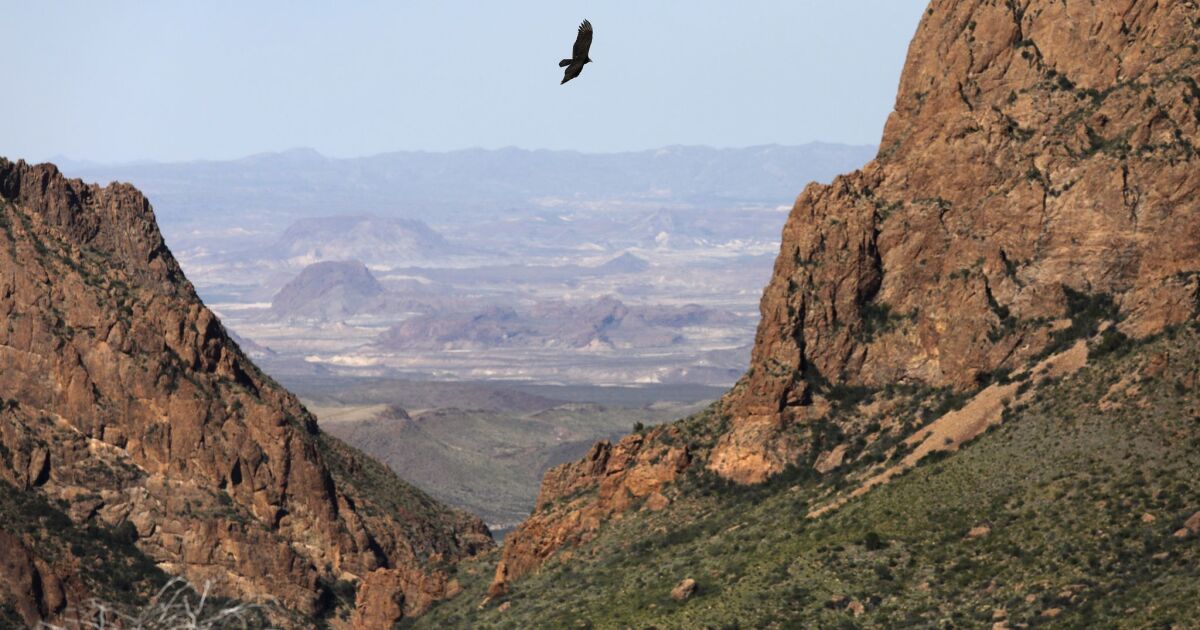
Big Bend is not a clean line on a map. It is a national park, a river boundary, and a maze of cliffs and canyons. That is why any renewed border wall chatter there quickly turns into a different kind of showdown.
What You Should Know
Big Bend National Park runs along the Rio Grande in a remote stretch of West Texas. Past border barrier efforts have relied on federal waiver authority and have triggered land, access, and conservation disputes.
The political pitch is always simple: build more barriers, faster. The reality in Big Bend has never been simple because the border there lies within a high-profile protected landscape with limited roads, sensitive habitats, and long distances to basic infrastructure.
Why Big Bend Is a Different Border Wall Battlefield
Big Bend National Park is federally protected land, and the Rio Grande forms the international boundary through the park. That means wall planning is not just about engineering, but also about access corridors, staging areas, water issues, and what happens when construction meets park management rules.
Even supporters of more barriers face a practical question: where does a continuous structure go when the terrain itself is the dominant obstacle? Big Bend is defined by steep topography and vast empty miles, the kind of place where a project can rack up costs before the first panel is placed.
The Legal Lever, Waivers, and Land
The modern wall era has leaned hard on executive authority. In Executive Order 13767, signed on January 25th, 2017, President Donald Trump set the tone with a directive that reads, “It is the policy of the executive branch to secure the southern border of the United States through the immediate construction of a physical wall on the southern border.”
But the part that tends to decide timelines is not a rally line. It is paperwork. In past projects, the federal government has used statutory tools that can narrow the path for lawsuits, accelerate construction, and compress environmental reviews, all while pushing disputes into technical arguments over jurisdiction and process.
Then there is the land question. Even when the barrier is not inside a national park footprint, construction in Texas can involve a patchwork of federal property, state land, and privately held tracts. That mix can turn a border project into a slow grind of surveys, access negotiations, and court fights over who gets moved, paid, or fenced off.
What to Watch Next in Texas
The next signals will not come from a single speech. Watch for concrete moves, including new environmental determinations, contracting activity, and any attempt to route projects around protected areas while still claiming a Big Bend win in the headlines.
Big Bend has a way of forcing big promises into small print. If wall planning returns there in earnest, the stakes will be measured in court calendars, construction bids, and the extent to which federal power is used to bend local land-use and federal conservation rules.