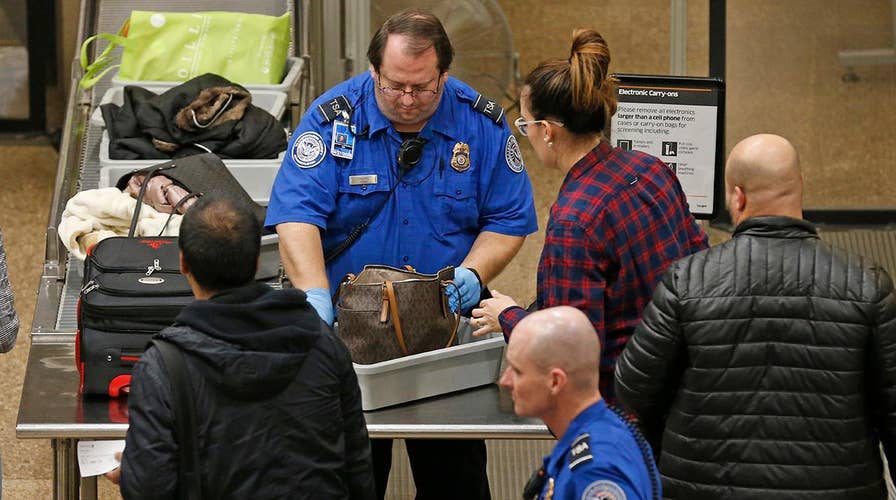
When Washington runs out of money, the airports do not get a pause button. That is why airline CEOs, people who usually lobby quietly, are stepping into the shutdown fight with a message that is less about ideology and more about lines at security.
What You Should Know
A CBS News report said the CEOs of 10 major U.S. airlines urged Congress to end a partial government shutdown and ensure TSA workers are paid. The appeal highlights how quickly a funding standoff can hit travel operations.
The segment, published on March 16th, 2026, frames a familiar power clash: elected officials can treat a shutdown as a negotiating tactic, but the aviation system treats it as a stress test. Airline leaders are betting that visible disruption moves votes faster than policy arguments.
US Airline CEOs Urge Congress to End Partial Government Shutdown in Joint Letter
The chief executives say it is ‘simply unacceptable’ to expect TSA officers to work without pay. pic.twitter.com/F0THIxebvL— Irina (@AmandaWalt51858) March 16, 2026
Why the CEOs Are Suddenly in the Room
According to CBS News, “The CEOs of ten major U.S. airlines are urging Congress to end the funding standoff and pay TSA workers as the partial government shutdown continues.” That is a pointed escalation, because CEOs do not usually band together unless the downside is immediate and measurable.
The subtext is accountability. If passengers miss flights, lawmakers can argue over appropriations. Airlines, TSA, and airports are the ones facing the crowd, the cameras, and the damage to confidence, even when the cause is a budget fight 1,000 miles away.
The TSA Pay Problem Is the Pressure Point
During shutdowns, many federal employees are furloughed, but key roles can be designated as “excepted.” The U.S. Office of Personnel Management explains in its furlough guidance that excepted employees may be required to keep working even when appropriations lapse, which turns a political stalemate into a household cash-flow problem for the workers who still have to show up.
That is why the CEOs are spotlighting TSA pay, not abstract “government services.” A thin layer of staffing strain at checkpoints can ripple into missed departures, gate pileups, and cascading delays. It is operational leverage and also reputational triage for airlines that do not control the federal payroll.
Shutdown History Shows How Fast Travel Becomes the Headline
Modern shutdowns have already shown what happens when the workforce is stressed, and the public starts to see the consequences. Encyclopaedia Britannica notes the 2018-2019 federal shutdown lasted 35 days, a reminder that these standoffs can persist long enough to hit real-world systems, not just spreadsheets.
The contradiction lawmakers have to manage is simple: shutdown rhetoric often insists the impact is contained, but air travel is a mass, daily, high-visibility service. When it wobbles, the question stops being “who is winning the negotiation” and becomes “who let this touch my flight.”
What to watch next is not just whether Congress passes a funding deal, but whether the public-facing pressure points, especially TSA staffing and airport throughput, become the scoreboard that forces a settlement. CEOs are telling Washington that the travel economy has its own deadline, and it is printed on boarding passes.