A flirty line in a lift. A phone number handed over. Then the real reveal, not from the man, but from the internet: the whole interaction had been recorded through smart glasses and posted for millions to watch.
The women caught on camera say the videos did not just go viral. They followed them home, into their inboxes, and into the uneasy gap between what is legal in public and what is safe online.
The new pickup prop is not a phone, it is eyewear
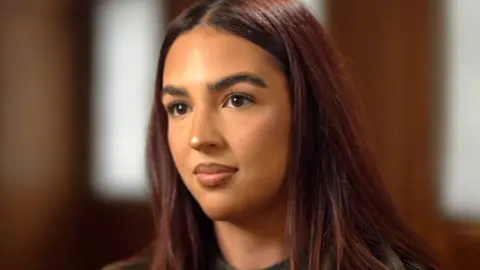
In reporting published by the BBC, a 21-year-old woman identified as Dilara said she was approached during her lunch break at the London store where she works. The man chatted to her, rode the lift with her, and asked for her phone number. She later learned he had been filming her with smart glasses that look like normal eyewear but include a small camera.
The footage was posted to TikTok and drew 1.3 million views, according to the BBC. Dilara told the outlet, “I just wanted to cry.” The pain point was not only being filmed. She later realized her phone number was visible in the video, and she said she was bombarded for weeks with calls and messages, including at night.
The BBC report says the creator had posted dozens of similar videos framed as tips for men on approaching women. Dilara’s clip was not positioned as a personal memory. It was packaged as content.
Another beach chat, another upload, another personal-data problem
A second woman, Kim, 56, described being filmed on a beach in West Sussex by a different man wearing smart sunglasses, according to the BBC. He opened with a compliment about her bikini and kept the conversation going, asking where she lived and seeking an Instagram connection.
Kim said she did not know she was being recorded and, while chatting, shared details about her employer and family. Later, the man posted two videos styled as dating advice that amassed 6.9 million views on TikTok and more than 100,000 likes on Instagram, the BBC reported.

Kim asked the creator to edit out details about her work and personal life. She told the BBC he did not.
The pattern the BBC says it found across TikTok and Instagram
Dilara and Kim are not presented as isolated examples. The BBC said it reviewed “hundreds” of similar short videos across TikTok and Instagram posted by “dozens” of male influencers who claim to teach pickup tactics. Many of the clips, the BBC reported, appear to be filmed covertly, in most cases using Meta smart glasses.
The business model matters here. The BBC reported that many of the influencers promote paid coaching or advice services. In other words, the women are not just background characters in viral clips. Their reactions become product demos for a paid funnel.
So is it illegal to film someone in public without asking?
The answer is where the tension lives. Privacy lawyer Jamie Hurworth told the BBC there is currently no specific UK law against filming someone in public without consent. But, he added, “being in a public place doesn’t necessarily mean it’s ‘fair game’ to be filmed and then have that video uploaded online.”

That distinction, recording versus publishing versus harassment, is what women in these videos say they experienced in real time. The filming can happen in seconds. The consequences can stretch for weeks.
Meanwhile, the UK’s Online Safety Act is designed to address illegal and harmful online content, but experts and charities told the BBC that this genre of covert “dating advice” videos may not neatly land in the categories that trigger clear enforcement. You can read the legislation itself in the text of the Online Safety Act 2023.
TikTok’s first answer was “no violation,” then the BBC called
Dilara reported the video to TikTok and was initially told no violations were found after review, according to the BBC. After the BBC contacted the platform, TikTok removed the video. The company said it would remove videos that violate its rules on “bullying and harassment,” per the BBC’s account of TikTok’s statement.
That sequence is the part platforms rarely like to advertise. Many users report content. A subset gets denied. A smaller subset gets action after media attention, a legal letter, or a wave of outside scrutiny. It is not proof of bad faith, but it is a real-world glimpse at how moderation triage can work when content sits near the line.
TikTok’s relevant policy language is publicly posted in its Community Guidelines on Safety and Civility, which include rules around harassment. The problem, women told the BBC, is that the clip itself can be framed as playful “advice” even when it exposes identifying details or triggers dogpiling.
“Profit over women’s safety” meets a product designed to disappear
Smart glasses solve a creator’s biggest problem: the camera is no longer an object held up at chest height, or a phone pointed at someone’s face. It can be as subtle as eye contact.
Rebecca Hitchen of the End Violence Against Women Coalition argued that manufacturers are “prioritising profit over women’s safety and wellbeing, and need to instigate safety measures,” according to the BBC report.
The technology itself is not inherently predatory. Smart glasses are marketed for hands-free capture and sharing. But that convenience is also what makes consent easier to skip. If the person being recorded does not see a phone, they may not realize they are content until the upload is already climbing the algorithm.
Why this story keeps spreading, even when the original clips come down
Even when a platform removes a specific video, the template can remain. A creator learns what “worked” for views. Other accounts replicate it. Viewers stitch it, repost it, and react to it. The initial moment becomes raw material for a wider conversation the filmed person never agreed to join.
For Dilara, the worst part was not a comment section critique. It was the contact risk created by her number appearing on screen, followed by what she described as “constant” calls and messages. “Your heart just drops, and you can’t do anything,” she told the BBC, describing seeing the video after a friend sent it.
And that is the catch. The filming is quick. The posting is instant. The consequences are distributed, hard to contain, and sometimes amplified by the very features social platforms sell as frictionless sharing.
What to watch next
Expect two parallel fights to intensify. One is legal and regulatory: whether covert filming for monetized “dating advice” becomes a clearer target under online safety enforcement, privacy law development, or new platform duties. The other is product and platform design: whether smart glasses and major apps add stronger, more visible recording cues and faster removal paths when someone’s identifying details appear in viral clips.
The unanswered question is simple and brutal. If public filming is allowed, and viral publishing is lucrative, who is responsible when a stranger’s “content” turns into their real-world harassment problem?