

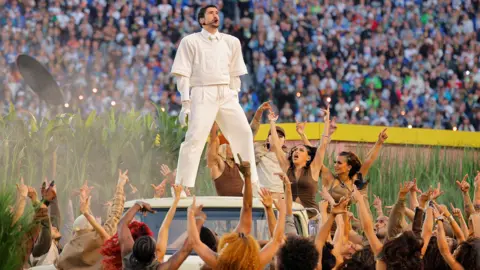
The scoreboard moment was not the celebrities, the hits, or even the all-Spanish history. It was the number on Bad Bunny’s chest, and the fact that a former president decided to grade the whole thing in one word.
What You Should Know
Bad Bunny headlined the Super Bowl halftime show at Levi’s Stadium in Santa Clara, California, becoming the first artist to perform the set entirely in Spanish. President Trump criticized the show as “terrible,” according to BBC News.
Benito Antonio Martinez Ocasio, better known as Bad Bunny, brought Puerto Rico to the center of the most-watched night on U.S. television, then watched the conversation get pulled, almost instantly, into politics, identity, and who gets to speak for the country.
A Halftime Show Built Like a Flag
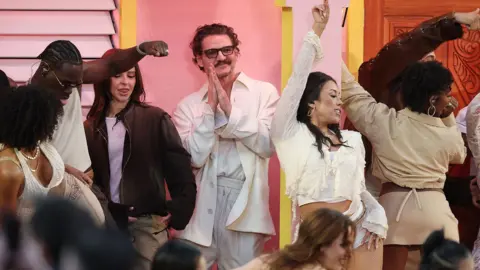
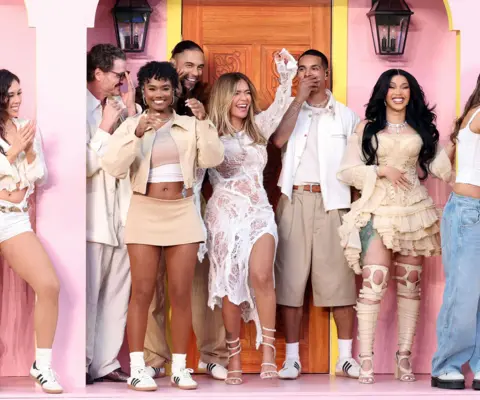
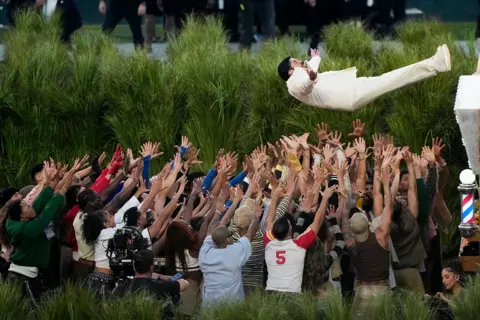
According to BBC News, the 14-minute performance played like a love letter to Puerto Rico, from the set design to the symbolism to the guest list. Bad Bunny emerged from a sugarcane field. He moved through a Latin-themed streetscape with set pieces that included a nail salon and a bar. The now-familiar casita, styled like a traditional Puerto Rican home and a staple of his touring visuals, was back, with famous faces dancing on its porch.
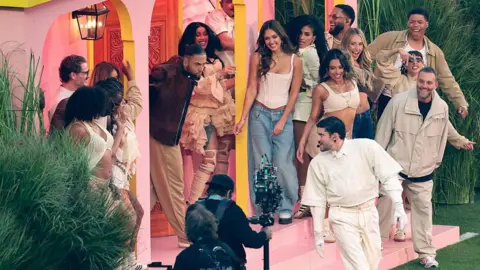
BBC News reported appearances and cameos from Lady Gaga and Ricky Martin, plus Pedro Pascal, Cardi B, Karol G, and Jessica Alba. On pure production value, it looked like a halftime show that wanted to swallow the whole broadcast and spit out a cultural thesis.
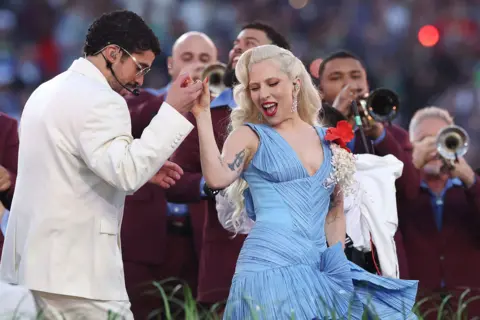
On pure production value, it looked like a halftime show that wanted to swallow the whole broadcast and spit out a cultural thesis.
The thesis was not subtle.
At one point, BBC News said Bad Bunny delivered a single English line, “God bless America,” before naming countries across Central, South, and North America as dancers carried flags. A billboard behind him read, “The only thing more powerful than hate is love,” and a football shown at the end carried the phrase, “Together, We Are America.”
In other words, he did not just show up to entertain. He showed up to define the room.
The History Flex Was the Language
The key milestone, per BBC News, was that Bad Bunny became the first musician to perform a Super Bowl halftime show entirely in Spanish. For a league and a broadcast machine that sells itself as the widest possible American tent, language was the flex and the friction point.
Bad Bunny is not exactly an underdog act sneaking onto a big stage. BBC News noted that Spotify named him the world’s most-played artist in 2025. The bigger question is why the biggest stage still treats Spanish as a headline-making deviation, not a default option, when the U.S. market has been consuming Latin music like oxygen for years.
The NFL loves safe universality. Bad Bunny delivered something else: mass-market stardom with a specific point of view.
The Number 64, the Storm, and the Subtext
Then there was the sweater.
BBC News reported that Bad Bunny wore a beige sweater with “64” on it, a detail the outlet framed as a possible reference to Hurricane Maria. The number 64 was widely cited early on as Puerto Rico’s official death toll, before later analyses and revisions pushed the figure far higher than the initial count.
That is where halftime stops being halftime and turns into a referendum. A number on a sweater can be a memorial, a protest, or both. It can also be a reminder that disasters do not just expose infrastructure. They expose which communities get patience, resources, and the benefit of the doubt from faraway power.
According to the George Washington University Milken Institute School of Public Health, the Puerto Rico government commissioned an independent mortality study after Hurricane Maria, and the researchers estimated excess deaths in the thousands in the months following the storm. That gulf between early messaging and later findings is part of what makes “64” a loaded symbol.
Bad Bunny did not stop the show to deliver a speech. He did not need to. The props and the wardrobe did the talking.
Trump’s One-Word Review and the Real Stakes
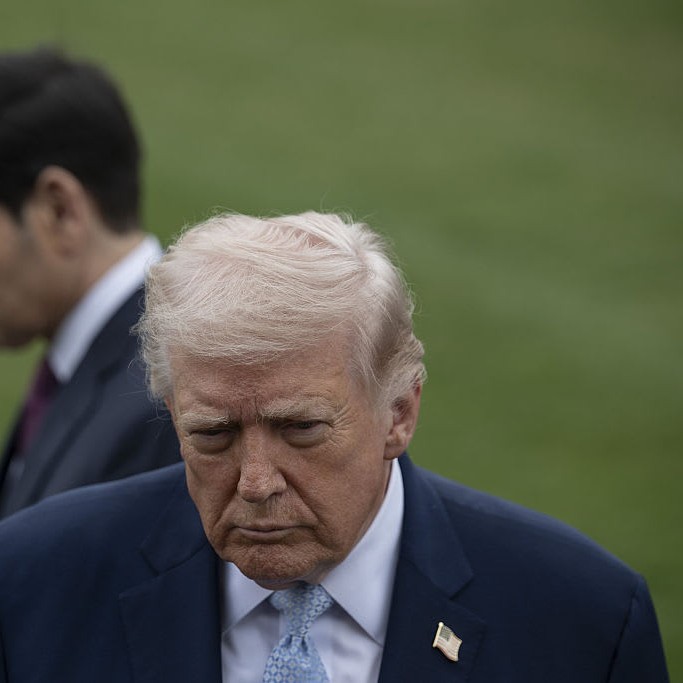
President Trump, according to BBC News, criticized the halftime show as “terrible.” The simplicity is the point. A one-word takedown is not an arts critique. It is a power move, a signal to audiences who treat cultural events as political turf.
Trump’s reaction also creates a neat contrast with what was actually on display: a set that used unity language, a patriotic phrase, and a closing moment that literally put Puerto Rico’s flag alongside the U.S. flag, per BBC News.
The tension is not whether Bad Bunny said something anti-American. BBC News explicitly reported there were no direct criticisms of Trump during the halftime show. The tension is whether certain versions of “America” get treated as inherently suspect, even when they are wrapped in slogans about togetherness.
There is another layer here, too. Trump does not need to run the NFL to influence the postgame narrative. He just needs to provide the quote that turns a performance into a loyalty test.
Bad Bunny vs. the Machine He Still Needs
Bad Bunny’s relationship with the U.S. market has been complicated by design. BBC News reported that he told i-D magazine he opted not to bring his world tour to the U.S. mainland because he worried fans could be targeted by ICE officers. BBC News also reported he said there were “many reasons” he would not be performing in the U.S. and that “none of them were out of hate.”
That posture matters because the Super Bowl is not just a concert. It is corporate America, the NFL, and broadcast television selling a single shared moment. If you are on that stage, you are inside the biggest, most expensive PR machine in sports.
And yet, according to BBC News, Bad Bunny used that machine to spotlight Puerto Rico, to allude to Hurricane Maria, and to broadcast messages that read like a direct rebuttal to the idea that the U.S. is only one language, one culture, and one story.
It is also a calculated gamble. The NFL wants a halftime show that unites viewers across demographics. Bad Bunny delivered unity, but on his terms. That can increase his leverage, or it can give critics a clean target.
The Contradiction Sitting in the Middle
If you want the cleanest contradiction from the night, it is this: Bad Bunny’s set, as described by BBC News, leaned into inclusive slogans and a pan-American roll call. Trump responded as if the performance itself was the provocation.
That mismatch is the story more than the set list.
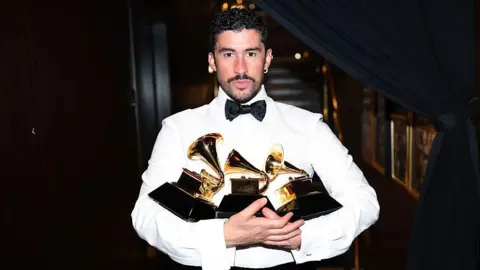
Language and symbolism were the headline, even though the show also played the obvious hits, including “Titi Me Pregunto,” “MONACO,” and “BAILE INoLVIDABLE,” per BBC News. Family imagery featured heavily, including a staged wedding scene and a moment where Bad Bunny handed a Grammy to a child while an acceptance speech played on a television prop, according to the BBC.
Even the physical feats were political if you knew what you were looking at. BBC News described Bad Bunny climbing an electricity pylon, a nod to infrastructure damage after Maria, while rapping.
In an entertainment economy where artists are told to be universal, Bad Bunny went hyper-specific, then made the case that the specific can be universal.
What to Watch Next
The aftermath will be easier to predict than the performance itself.
First, expect the same split-screen argument that follows every cultural flashpoint with political gravity: art versus agenda, patriotism versus protest, unity versus “division.” The billboards and slogans make that debate irresistible for people who like their entertainment as a proxy war.
Second, watch the NFL and its partners. When a halftime show becomes a political talking point, the league’s instinct is usually to deny it is political at all, even when the stagecraft says otherwise.
Third, watch Bad Bunny. BBC News reported he ended the performance by repeating “God bless America” while naming countries and territories, including Puerto Rico and the U.S., with both flags carried side by side. That is not a retreat. It is a claim.
Trump called it “terrible.” Bad Bunny called it America, then dared the country to argue with the receipts.
References