

The new tranche of Jeffrey Epstein emails does not just drag Prince Andrew back into the headlines. It drags back a specific kind of problem, too. Who, exactly, was getting access to power, and why?
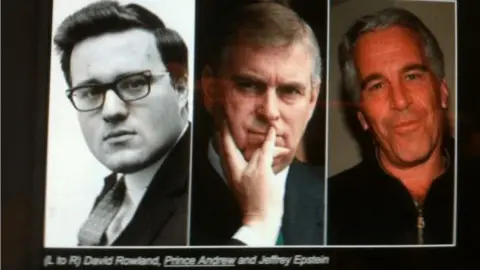
In messages released by the U.S. Department of Justice, Andrew appears to describe British businessman David Rowland as his “trusted money man,” while nudging Epstein toward Rowland-linked ventures at a time when Andrew held an official role as the UKs trade envoy, according to BBC News.
That is the tension at the center of the latest documents. A royal with a public job, a private banker with political ties, and a convicted sex offender with a global Rolodex. The emails do not have to prove an illegal act to raise an awkward question about judgment, proximity, and who gets invited into the room.
A Royal Title, an Official Role, and Private Money
The BBC report frames the emails as fresh details about Andrew Mountbatten-Windsor’s relationship with Rowland, a multi-millionaire and Conservative Party donor whose family was closely linked to Andrew’s overseas travel during Andrew’s time as a trade envoy.
That role mattered. A trade envoy is supposed to be a door-opener for UK business, which is precisely why the overlap looks combustible when a prince is seen promoting a private banker to Epstein, a figure whose name has become a synonym for reputational catastrophe.
Rowland is not some anonymous contact in these messages. The emails described by the BBC suggest Andrew was pushing Rowland’s financial ventures, and Epstein’s circle was, at times, reacting like people who could smell risk.
Meanwhile, Jonathan Rowland, David Rowland’s son, told the BBC that he and his father “never had any contact or correspondence or had dinner or met with” Epstein.
That denial does not erase the emails, but it does set up the central standoff. The messages suggest introductions and pitches were happening around Epstein. The Rowlands reject the idea that they were in Epstein’s orbit at all.
Epstein’s Inbox Reads Like a Due Diligence File
The emails described by BBC News show Andrew appearing to pitch Rowland’s private banking ambitions as a place to park wealthy clients.
In one exchange dated October 2010, Andrew allegedly writes to Epstein: “He is actively seeking high net worth individuals for his Private Bank. Perhaps this is an avenue for your undecided Chinese?”
Epstein responds with a shrug that reads like a man weighing upside against downside: “His bank just might be the place.. I guess I should learn more.”
That is the part that makes this story more than a recycled Andrew scandal. Even Epstein, an operator who built his brand on proximity to the powerful, comes off as cautious about stepping into Rowland’s world.
According to the BBC, an Epstein contact warned him that Rowland had been referred to in the UK press as a “shady financier,” and pointed out that the phrase originated in Parliament. Under UK rules, words said in Parliament are protected, and reporting them carries strong legal cover. In other words, the warning was not just gossip. It was a reminder that the Rowland name had baggage that could be safely repeated.
One email exchange captures the confusion and the mess. A contact warns: “He resigned his post as Tory treasurer last Thursday before he started.” Epstein replies: “Before he started?? What?”
Even if you strip away the royal element, the dynamic is familiar. Access brokers try to sell each other on a deal. Someone flags the reputational land mines. The buyer hesitates, and the emails preserve the moment in amber.
Fergie, First Class, and the Money That Leaves a Paper Trail
The other sticky thread in the BBC reporting is money tied to Andrew’s ex-wife, Sarah Ferguson, Duchess of York.
The emails, as described by the BBC, suggest David Rowland lent money to Ferguson, and that someone in Epstein’s circle was irritated about how it was being spent. One message from a business contact to Epstein in September 2009 reads: “Will finalise F summary for you next week. Can’t now cause she went to nepal paying for the first-class flight with her Rowland bank loan.”
The BBC reports that “F” appears to refer to Ferguson, and notes she was photographed in Nepal on the day the email was sent.
On its face, that is not proof of wrongdoing. It is something else, and arguably worse for public perception. It is an image of royal-adjacent finances being discussed like an account management problem, with Epstein, of all people, positioned as a recipient of the chatter.
It also highlights how these relationships work. Money does not always show up as a wire transfer with a scandal label. Sometimes it shows up as a loan, a flight, a favor, or a connection, and the value is the relationship itself.
The Rowlands’ Denials, and the Dinner That Hangs Over Everything
BBC News reports that one email suggested Epstein was going to have dinner in Hong Kong with Andrew, David Rowland, and Jonathan Rowland. The BBC also reports that Epstein did not seem eager to commit to Rowland-linked ventures.
In a 2011 email described in the report, an Epstein associate says Jonathan Rowland asked him to join a new fund to invest in China, Russia, CIS countries, and Europe, then adds a blunt instruction: stay away. The associate wrote: “You need to tell me what you want me to do with this, but I am working on the assumption to stay far away from it.”
Jonathan Rowland admitted meeting that associate, according to the BBC, but said he never mentioned Epstein.
That is the kind of contradiction that keeps the story alive. The documents show people in Epstein’s orbit talking about Rowland opportunities. The Rowlands say they did not have Epstein contact. Andrew appears, in the emails, as a connector. The question becomes less about one meeting and more about the network logic. Who was introducing whom, and what were they trying to get done?
Banque Havilland’s Trouble Adds a Second Set of Stakes
Rowland’s private bank, Banque Havilland, later ran into regulators, according to the BBC. The report says the bank fell foul of regulators in London and Luxembourg, and that its banking license was withdrawn in 2024 by the European Central Bank. The BBC reported the bank was appealing.
That regulatory history matters because it gives the email exchanges a second life. When a bank ends up in regulatory trouble, earlier reputation warnings start looking less like gossip and more like a preview.
It also matters because it sharpens the power dynamic. Andrew was not just a private citizen chatting. He was a public figure whose status traveled with him, and who, according to the BBC, had Rowland and his son joining him on trips tied to Andrew’s trade envoy work, including travel to China and former Soviet states.
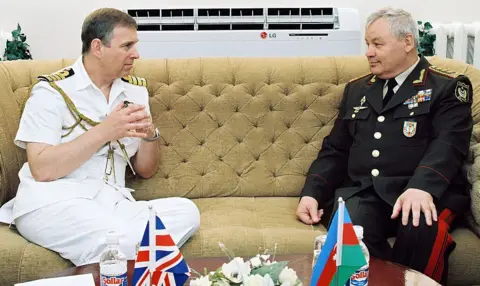
Those are exactly the kinds of destinations where elite introductions can become valuable assets, and where the line between public mission and private business can start to blur.
What This Does, and Does Not, Prove
The emails described by BBC News do not, by themselves, prove criminal conduct by Andrew, David Rowland, or Jonathan Rowland. They do show Andrew speaking warmly about Rowland, and they show a push to connect Epstein with Rowland-related financial ventures.
They also show something more subtle. The people inside Epstein’s circle were doing what power circles always do. They were weighing risk, assessing reputations, and discussing money in a way that assumes access to elites is an ordinary tool.
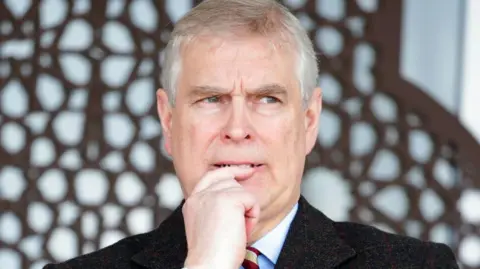
Prince Andrew has faced intense scrutiny for his relationship with Epstein for years, including public backlash around a 2019 interview and the end of his public duties. The BBC report adds new detail about another strand of Andrew’s relationships, and it ties that strand to an institution, Banque Havilland, whose later regulatory battles made it a target for renewed interest.
If Andrew’s defenders want to argue this is nothing more than name-dropping in private correspondence, the counterpoint is sitting in the messages themselves. The emails read like active promotion, and they document people around Epstein actively weighing whether the Rowland name was worth the trouble.
What to Watch Next
The next pressure point is not a palace statement. It is documentation. Will more of the DOJ-released material be authenticated, contextualized, or supplemented by other records, such as calendars, travel schedules, or business documents?
For Andrew, the stakes are reputational, and they are stubborn. The story does not require new allegations to cause damage. It just requires one clear pattern. A public role, private introductions, and Epstein sitting in the middle like an unsolicited clearinghouse.
For the Rowlands, the stakes hinge on the gap between the denial, no contact, no dinners, no correspondence, and the way their names appear in an Epstein email trail that keeps expanding.