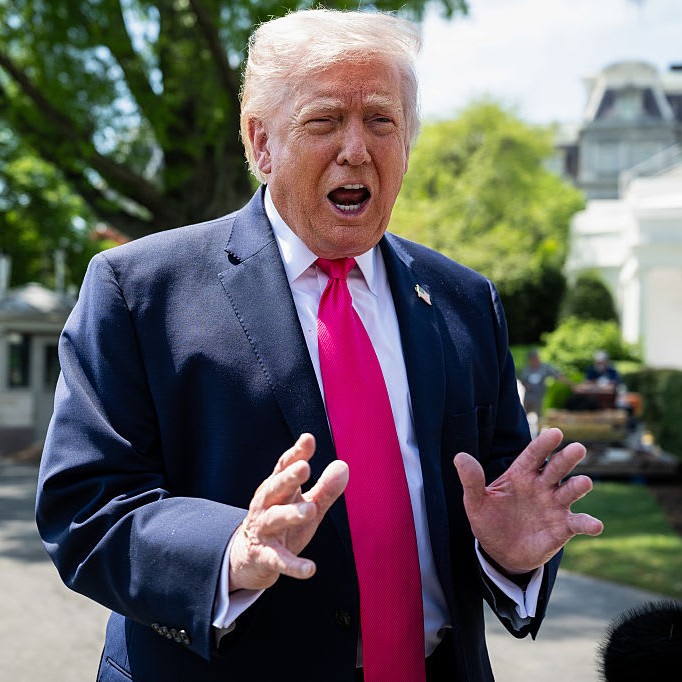


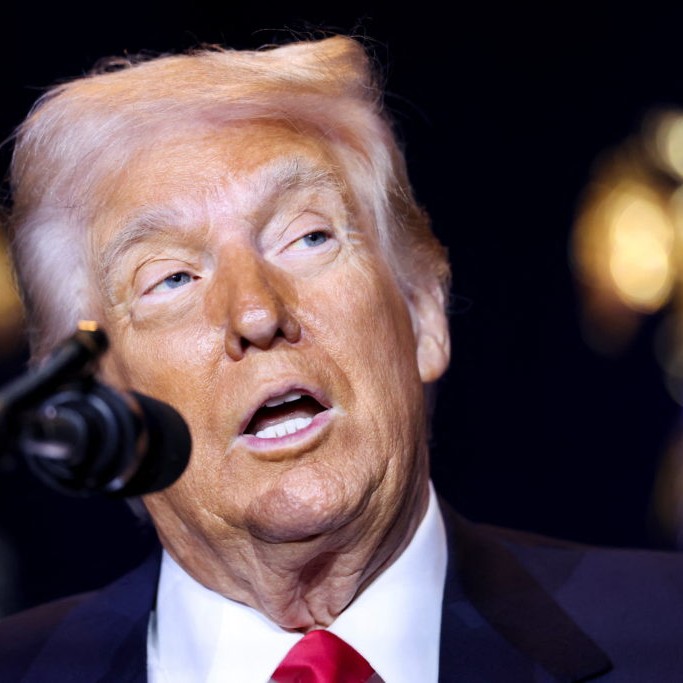
President Donald Trump delivered a familiar kind of line at the National Prayer Breakfast: half pitch, half threat, wrapped in laughter. The hook was simple. If clergy want to talk politics, he says, they should. If they talk politics against him, he says, there could be a price.
That is the tension now hanging over the most sensitive tax perk in American public life: the ability of churches, and other 501(c)(3) nonprofits, to stay tax-exempt while steering clear of candidate endorsements.
And here is the part that matters: Trump did not just argue for looser rules. He claimed the rules were already gone, then suggested he could flip the switch right back on when the criticism lands.
A Joke With a Very Real Target
According to PBS NewsHour, Trump falsely claimed he had eliminated the tax code provision commonly called the Johnson Amendment, which restricts 501(c)(3) organizations, including churches, from endorsing or opposing political candidates.
Trump framed the issue as a gag order on the faithful, telling the crowd, “People like me and like a lot of people, they want to hear ministers,” and, “They want to hear from priests. They want to hear from them. and you were restricted from talking about very important things like who to elect.”
Then came the punchline that did not sound like a punchline for long.
“We worked hard in getting rid of the Johnson Amendment,” he said. “It’s gone as far as you can say anything you want.”
And then, in the same breath, he suggested a personal carve-out.
“Now if you do say something bad about Trump, I will change my mind, and I will have your tax-exempt status immediately revoked,” Trump added, drawing laughter from the audience, according to PBS NewsHour.
It is a tidy piece of political theater, because it compresses three separate fights into one line: what the law says, what the IRS enforces, and what a president can threaten in public.
What the Johnson Amendment Actually Does
The Johnson Amendment is the shorthand for language tied to 501(c)(3) tax status. In plain terms, groups that want the benefits of that status cannot participate or intervene in political campaigns on behalf of, or in opposition to, candidates.
The Internal Revenue Service has long treated candidate endorsements and explicit anti-candidate messaging as a bright-line risk for 501(c)(3) organizations. The IRS also distinguishes between partisan election activity and issue advocacy, which is one reason the boundary can feel squishy in practice, even when the rule is simple on paper.
That squishiness is where politics thrives. Supporters of loosening the rule argue that clergy, and nonprofits more broadly, should not be muzzled. Critics argue that removing the restriction turns tax-exempt institutions into tax-subsidized political machines, with donors effectively getting a public discount for funding partisan messaging.
Trump, at the prayer breakfast, presented it as a solved problem. That is where the record gets awkward.
The Paper Trail Trump Points To, and What It Did Not Do
Trump has been claiming some version of “we got rid of it” for years. The key action during his first term was a 2017 executive order directing the Treasury Department to use discretion in enforcement related to political speech, as described by PBS NewsHour.
That matters politically, because it signals how an administration wants the IRS to behave at the margins. It does not matter legally in the way Trump implied, because an executive order does not delete a statute from the tax code.
Put differently, there is a difference between “enforce this lightly” and “this is gone.” Trump described the second.
PBS NewsHour also noted that the IRS has allowed a narrow exemption in certain circumstances involving houses of worship communicating with their congregants in connection with religious services through their usual channels of communication on matters of faith. That kind of limited carve-out is not the same as open-season endorsements in a general election, and it is not a personal loyalty test keyed to whether a pastor says something “bad about” the sitting president.
Can a President Revoke Tax-Exempt Status ‘Immediately’?
Trump’s line was designed to sound like a direct lever: criticize him, lose your status. The mechanics are not that clean.
Tax-exempt status is administered through the IRS. The agency has processes, standards, and documentation requirements. It also operates inside a political environment, which is why comments from presidents land differently than comments from private citizens.
Still, the main contradiction in Trump’s claim is visible without a law degree. If the Johnson Amendment is “gone,” there is nothing to “change my mind” about, and there is no reason to threaten to revoke anyone’s status for saying something “bad” about a politician. The threat only makes sense if the restriction still exists, or if the speaker wants the audience to believe the IRS can be used as a personal enforcement arm.
That is the power dynamic: the president talking about a tax benefit that can shape whether a church can fundraise easily, keep donors confident, and avoid expensive legal fights. Even when delivered with laughter, it signals who he believes should feel pressure, and who should feel protected.
Why This Fight Never Dies
The Johnson Amendment fight does not die because it sits at the intersection of three American obsessions: religion, money, and elections.
For churches, tax-exempt status is not just a balance-sheet perk. It affects donor behavior and institutional stability. For campaigns, pulpits can offer something that canvassing cannot: a ready-made community, an authority figure, and a weekly audience.
For politicians, it is also a loyalty story. A president who is praised from the pulpit can frame it as religious freedom. A president who is criticized from the pulpit can frame it as political interference. Trump’s prayer breakfast riff collapsed those two arguments into one sentence and made the dividing line explicit: praise is protected, criticism gets punished.
That framing also invites an obvious question. If tax enforcement becomes a reward-and-punish system tied to personal criticism, what happens to the churches that take moral stands that cut against any administration, on any issue, in any era?
The Audience Laughed, but the Signal Was Serious
The room laughed at Trump’s “say something bad about Trump” line, according to PBS NewsHour. Laughter can mean amusement, agreement, discomfort, or a decision to let the moment pass. In politics, laughter is also a way to normalize a boundary-push. Everyone can pretend it was just humor, right up until someone tries it for real.
Trump’s broader claim, that he “got rid” of the Johnson Amendment, is the kind of statement that tests whether institutions correct the record or quietly allow a new story to settle in. The IRS does not run on applause lines. Churches do not run on legal footnotes, either. That gap is where misunderstandings and pressure campaigns are born.
What to Watch Next
There are two tracks to watch.
First, the policy track. Any real repeal of the Johnson Amendment would require legislative action. Short of that, changes tend to come through enforcement priorities, IRS guidance, and the kind of narrow carve-outs that can be expanded or tightened over time.
Second, the political track. Trump’s comment makes this personal, which is often the point. The next escalation is not theoretical. It is whether candidates and allied groups start daring clergy to cross lines on camera, whether watchdog groups push for enforcement, and whether churches decide it is safer to stay silent than risk being dragged into a tax fight that they cannot control.
The Johnson Amendment, in other words, is still doing what it has always done. It is forcing powerful people to decide whether they want religion in politics, or religion in politics as long as it is on their side.
References
- PBS NewsHour: WATCH: Trump Says He Will Revoke Church Tax Exempt Status if Leaders ‘Say Something Bad About’ Him
- Internal Revenue Service: Charities, Churches, and Politics
- The Washington Post: President Trump’s Shifting Claim That ‘We Got Rid of the Johnson Amendment’
- PolitiFact: Trump Claims He Got Rid of Johnson Amendment. True?