

The deadline is not subtle. Congress has two weeks to keep the Department of Homeland Security funded and, if Democrats get their way, to rewrite how federal immigration agents operate in public. Republicans are already calling that timeline fantasy.
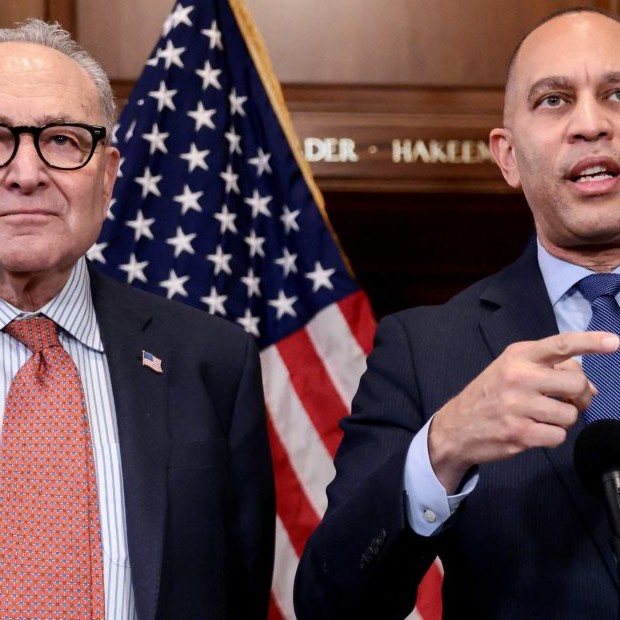
At the center of the scramble are Senate Democratic leader Chuck Schumer and House Democratic leader Hakeem Jeffries, who are pressing for new enforcement rules after immigration officers shot and killed two Minneapolis protesters in January, according to The Associated Press reporting published by PBS News.
Republicans say Democrats are packaging a political attack on Immigration and Customs Enforcement as a safety reform. Democrats say the country is watching videos of masked federal agents and wants accountability. The clock is ticking either way.
A 2-Week Funding Truce With a Lot Packed Inside
President Donald Trump agreed to a Democratic request to split DHS funding off from a larger spending bill and extend it at current levels for two weeks, while negotiations begin over new requirements for federal immigration agents, The Associated Press reported.
That move did two things at once. It lowered the risk of an immediate funding crisis and raised the political stakes of the next short-term vote, because it created a neat, televised window for both parties to fight over what immigration enforcement should look like on the street.
House Speaker Mike Johnson, a Louisiana Republican, said Trump and Schumer were “on the path to get agreement,” according to the same report. Senate Majority Leader John Thune, a South Dakota Republican, was blunter about the odds of legislating complex enforcement changes in that time frame.
“I don’t think it’s very realistic,” Thune said Tuesday about finding quick agreement. “But there’s always miracles, right?”
The tension is structural. Democrats want concrete rules in statute. Republicans are warning that the same rules could make agents easier to target, and they are signaling they will not be rushed into a rewrite that changes how arrests work.
Schumer’s Pitch: Stop Asking for Trust, Put It in Law
Schumer is framing the negotiations as a test of whether Congress will set clear boundaries on federal power, rather than letting the executive branch define its own guardrails through internal policy.
“We don’t need promises. We need law,” Schumer said, adding that Democrats would present Republicans with a “serious, detailed proposal” soon.
The demands described in The Associated Press report include unmasking and identification requirements, tighter limits on when officers can act without judicial warrants, coordination with local authorities, a uniform code of conduct for ICE and other federal agents, and limits on roving patrols targeting people in streets and at homes.
Jeffries added another line in the sand, calling for “an end to the targeting of sensitive locations like houses of worship, schools and hospitals,” according to The Associated Press.
The power dynamic is obvious. Democrats, furious about what they describe as increasingly aggressive operations, are trying to use must-pass funding leverage to force policy changes. Republicans, newly empowered, are trying to keep operational control in the hands of DHS leadership, not a bipartisan negotiating table that is responding to viral videos.
One Area of Overlap: Body Cameras, With a Catch
Even in a fight like this, both sides can see the optics. Republicans have said they are open to officer-worn body cameras, and DHS Secretary Kristi Noem ordered body-worn cameras to be issued to every Homeland Security officer on the ground in Minneapolis, including those from ICE, according to The Associated Press. Noem said the policy would expand nationwide as funding becomes available.
The underlying spending bill already included $20 million to outfit immigration enforcement agents with body-worn cameras, The Associated Press reported. That sounds like an agreement waiting to happen, until the argument turns to what the camera policy actually is.
Gil Kerlikowske, a former commissioner of U.S. Customs and Border Protection, told The Associated Press that many agents support cameras because footage can exonerate them. But he also flagged the practical landmines, including when cameras must be activated, when footage is released, and what discipline looks like if an incident happens off-camera.
Schumer’s answer was simple in public, and complicated in practice. He said the cameras “need to stay on,” according to The Associated Press.
The Mask Fight: Accountability vs. Officer Safety
If body cameras are the area of possible overlap, masks are the flashpoint that could blow up the talks.
Democrats argue that agents covering their faces reduces accountability and makes it harder to know who is exercising federal power in a community. Rep. Bennie Thompson, the top Democrat on the House Homeland Security Committee, drew the contrast with local policing.
“State law enforcement, local folks don’t do it,” Thompson said. “I mean, what’s so special about an ICE law enforcement agency that they have to wear a mask?”
Johnson responded with a warning about doxing and targeting. “Unlike your local law enforcement in your hometown, ICE agents are being doxed and targeted. We have evidence of that,” he said, adding that if you “unmask them and you put all their identifying information on their uniform, they will obviously be targeted,” according to The Associated Press.
Even where there is nominal agreement on identification, the fight is over enforcement and trust. Federal regulations require immigration officers to identify themselves “as soon as it is practical and safe to do so,” The Associated Press noted. Advocates say the real-world compliance is not consistent.
Nithya Nathan Pineau, a policy attorney with the Immigrant Legal Resource Center, told The Associated Press, “We just see routinely that that’s not happening.”
That is the negotiation in one sentence. Democrats are describing a pattern that requires strict rules. Republicans are describing a threatening environment that requires flexibility.
Warrants, Home Entry, and the Fourth Amendment Shadow
Democrats are also demanding stricter use of judicial warrants and an end to roving patrols, with Schumer saying they want “arrest warrants and an end to racial profiling,” according to The Associated Press.
The warrant argument gets technical fast, and it is where the consequences get serious. Most immigration arrests rely on administrative warrants, which are issued inside the immigration system. They are different from warrants signed by judges, which traditionally carry stronger authority for entering private spaces.
The Associated Press reported that an internal ICE memo it obtained authorized ICE officers to use force to enter a residence based solely on a narrower administrative warrant, in a limited category of cases involving someone with a final order of removal. Advocates argue that approach collides with Fourth Amendment protections.
Johnson called the Democratic push for judge-signed warrants “an entirely new layer” beyond administrative warrants, and he flatly said, “We can’t do that,” according to The Associated Press.
Republicans are not just defending procedure. They are defending an enforcement model that lets DHS move quickly and widely, without routinely asking judges for permission first. Democrats are trying to force friction into that model, betting that the public will prefer slower enforcement if it means more accountability.
Minnesota’s Case Study: Who Gets to Investigate Federal Force?
The Minneapolis shootings are not only the catalyst. They are also the receipt in the debate about federal power versus local oversight.
The Associated Press reported that federal officials blocked state investigators from accessing evidence after protester Renee Good was shot and killed by an ICE agent on January 7. Minnesota Gov. Tim Walz demanded that the state be allowed to participate, saying it would be “very difficult for Minnesotans” to accept that an investigation excluding the state could be fair.
That is the kind of dispute that rarely stays local. If a state cannot get evidence in a case involving federal agents operating inside the state, Democrats will argue that the only remaining leverage is Congress. Republicans will argue that states do not get to commandeer federal investigations.
Either way, it is not just about one incident. It is about who has standing to check federal enforcement operations when they go wrong.
Republicans’ Add-Ons: Voting Rules and Sanctuary Cities
Democrats are not the only ones trying to use DHS funding as a policy vehicle.
House Republicans are demanding that some of their priorities be included, including legislation requiring proof of citizenship before Americans register to vote, The Associated Press reported. Sen. Lindsey Graham and other Republican senators are pushing restrictions on sanctuary cities, arguing that some jurisdictions do not cooperate enough with federal immigration authorities.
Those additions raise a practical question for Democrats: Is this negotiation about agent conduct, or is it about building a new immigration and elections package under threat of a funding lapse?
And for Republicans, the question cuts the other way: If Democrats can tie enforcement limits to DHS funding, why should Republicans not tie election-related provisions and sanctuary jurisdiction crackdowns to the same bill?
The Democratic Coalition Problem: Not Everyone Wants a Deal
Any agreement Schumer and Jeffries strike still has to survive the politics inside their own party.
Rep. Ayanna Pressley, a Massachusetts Democrat, said she would never support an agreement that did not require unmasking, according to The Associated Press. She also made clear she is not searching for a middle ground position.
“I ran for Congress in 2018 on abolish ICE,” Pressley said. “My position has not changed.”
That is the quiet threat hanging over bipartisan talks. If Democrats negotiate a narrow deal that focuses on body cameras and limited operational tweaks, they risk blowback from members who want a structural rollback of ICE authority. If they push for the full wish list, Republicans can point to the internal split as proof that Democrats are negotiating in bad faith.
What to Watch Next
The two-week window forces a simple triage. Body cameras look like the lowest-hanging fruit. Unmasking rules and judge-signed warrants look like the hardest sell. Roving patrol limits sit in the middle, where some agreement is possible, but the details will decide everything.
Thune has suggested the real negotiation should be between Democrats and Trump, not a full congressional scramble, according to The Associated Press. That is its own power play. It puts the White House, not congressional committees, at the center of the deal.
If there is a final product, expect it to be a short list of enforceable conduct rules paired with money, because that is the only currency Washington reliably trades in on a deadline. If there is no deal, the fight will not disappear. It will just get rebranded as the next funding cliff, with Minnesota still hanging over every camera angle.