

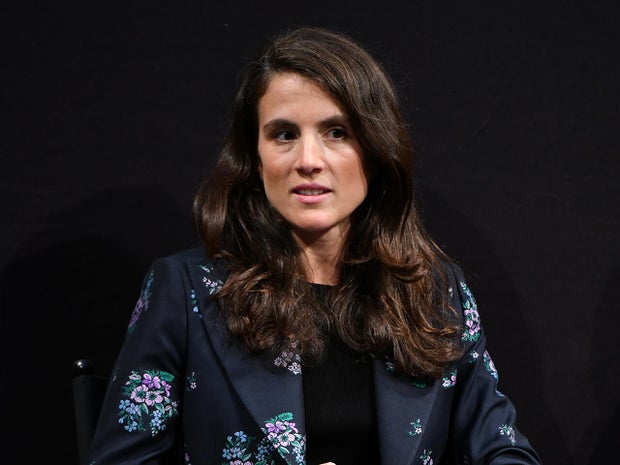
The Kennedy family has lived under a microscope for generations, but Tatiana Schlossberg chose a different kind of exposure. Not politics. Not glamour. A medical timeline, in her own sentences, that made even her famous last name feel secondary.
Schlossberg, an environmental journalist and the daughter of Caroline Kennedy, died Dec. 30, 2025, according to a CBS News roundup of notable deaths published by senior producer David Morgan, with The Associated Press contributing to the gallery.
Not a campaign story. A cancer story.
Schlossberg was 35. CBS News identified her as a grandchild of President John F. Kennedy, and noted her work as a reporter for The New York Times Science section and as the author of the 2019 book Inconspicuous Consumption: The Environmental Impact You Don’t Know You Have.
That resume made her an easy subject for the usual legacy storyline. Then her own writing ripped up the script.
In an essay published in The New Yorker in November 2025 titled ‘A Battle With My Blood’, Schlossberg described the moment her life rerouted. Not at a podium. Not at a protest. In a hospital, hours after she gave birth to her second child in May 2024 at age 34.
Breaking News: Tatiana Schlossberg dies at 35
Tatiana Schlossberg, writer and daughter of Caroline Kennedy, dies at 35
Schlossberg announced that she had been diagnosed with acute myeloid leukemia in an essay published by the New Yorker in November.Tatiana Schlossberg, Writer… pic.twitter.com/CAFP0n5Vq4
— Paul White Gold Eagle (@PaulGoldEagle) December 31, 2025
The detail doctors did not like after childbirth
Schlossberg wrote that doctors noticed “a spike in her white-blood-cell count” shortly after delivery. She was diagnosed with acute myeloid leukemia, which she said involved a rare mutation “suggested mostly seen in older people,” as summarized in the CBS News entry.
Her description of the disconnect between how she felt and what the labs showed is the kind of line that keeps getting reposted because it sounds too normal to be a prelude to catastrophe: “I wasn’t sick. I didn’t feel sick. I was actually one of the healthiest people I knew,” she wrote.
There is no mystery-box here, no shadowy rumor to chase. The tension is simpler and crueler: a young mother who felt fine, and a diagnosis that arrived anyway.
Chemotherapy, transplants, trials, and a sentence that lands like a verdict
According to CBS News’ summary of her essay, Schlossberg recounted rounds of chemotherapy, two stem cell transplants, and participation in clinical trials. That is the long medical road that many families know intimately, except most families do not have their pain turned into a public artifact with a famous signature.
Then came the part that reads less like a diagnosis and more like a clock being switched on. Schlossberg wrote that during her most recent trial, her doctor told her he could “keep me alive for a year, maybe.”
In the logic of modern medicine, a year can be a gift, a bargaining chip, a bridge to the next option. In the logic of motherhood, a year can feel like a theft with paperwork attached.
The Kennedy name, and the private guilt that does not care about it
Schlossberg’s essay also carried an emotional freight that had nothing to do with Camelot nostalgia and everything to do with family dynamics that readers recognize, famous or not. CBS News quoted her writing about trying to protect her mother, Caroline Kennedy, and the way illness can land like an unwanted inheritance.
Schlossberg wrote: “For my whole life, I have tried to be good, to be a good student and a good sister and a good daughter, and to protect my mother and never make her upset or angry. Now I have added a new tragedy to her life, to our family’s life, and there’s nothing I can do to stop it.”
It is not a political quote. It is not a celebrity quote. It is a family quote. That may be why it hits so hard.
Why people keep circling back to her story
Schlossberg’s death has drawn attention for at least three reasons, all visible in the public record described by CBS News and in her own published essay.
First, the timing. Her leukemia diagnosis came right after childbirth, a period when many people assume the worst is over and the new life part begins.
Second, the contrast between her self-described health and the seriousness of the disease. “I wasn’t sick” is not just a personal detail. It is a reminder of how abruptly serious illness can arrive.
Third, the choice to write about it at all. Families with famous names often communicate through spokespeople, carefully worded statements, or silence. Schlossberg communicated through narrative, with medical specifics and personal regret, and she did it under her own byline.
Receipts, not whispers
This is not a story built on anonymous claims. The backbone is documented and attributable.
CBS News’ “Notable Deaths in 2025” entry provides the basic biographical and timeline information: her birth and death dates, her relationship to the Kennedy family, and her work history and authorship. It also points directly to The New Yorker essay that she wrote, which contains her account of diagnosis, treatment, and prognosis.
That matters because high-profile deaths often attract noise, speculation, and revisionism. Here, the key details were put into the world by Schlossberg herself and summarized by a major news organization.
What to watch next
In the months after a public figure dies, the story usually splits into two streams: the official remembrance, and the cultural afterlife of their words. Schlossberg left a paper trail that is likely to keep circulating, not because of her last name alone, but because she described illness with the plain force of someone writing against the clock.
Her professional identity also complicates the way people file her away. She was not only “a Kennedy granddaughter.” CBS News noted her work as a New York Times reporter and as the author of an award-winning book about consumer behavior and environmental impact. She spent years writing about consequences. Then she documented the most personal consequence imaginable.
As the CBS News gallery put it, it was a year that took “esteemed personalities.” Schlossberg’s public goodbye was not a grand speech. It was a mother, a journalist, and a patient leaving the clearest record she could.
The line that lingers is the one she wrote about what her illness meant for her family, and the helplessness inside it. “There’s nothing I can do to stop it.”