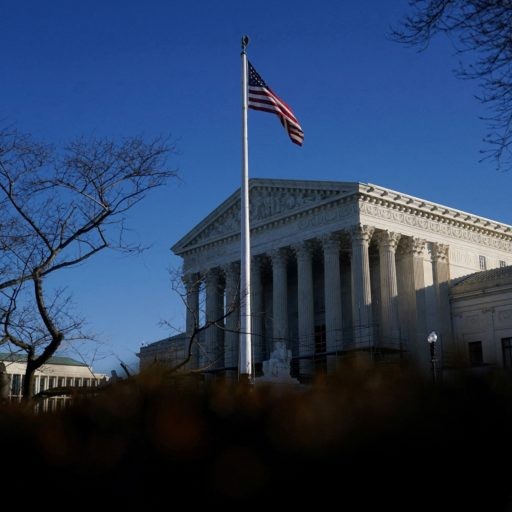
The Supreme Court just told President Trump, in plain legal terms, that a big chunk of his tariff machine was plugged into the wrong outlet. The immediate question is not only what he does next, but who gets stuck holding the receipt for tariffs already paid.
What You Should Know
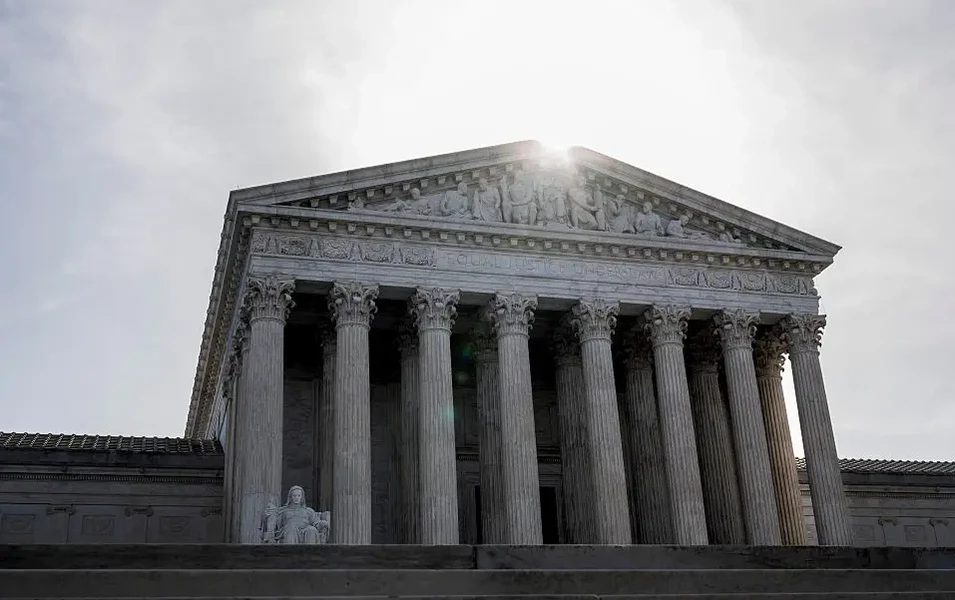
PBS NewsHour reported that the Supreme Court struck down most of President Trump’s tariffs in a 6-3 decision, finding he lacked authority under an economic emergency law. Trump said he would pursue a global 10% tariff using a different law.
The ruling lands at the intersection of three things Trump likes to control: money, leverage, and the narrative. The court says his legal theory for using emergency powers to impose broad levies does not fly. Trump says fine, he will use a different statute, and keep the pressure on anyway.
Trump Lost in Court, Then Reached for a Different Lever
According to PBS NewsHour, the Supreme Court “struck down most of President Trump’s tariffs” and did it with a 6-3 majority that rejected his claim of authority under an economic emergency law. That is not a small technicality. It is the court drawing a bright line around a tool that presidents in both parties have increasingly treated like a master key.
Trump’s response, as PBS described it, was not to back away from tariffs. It was to switch legal hooks. The president said he would impose a global 10% tariff under a different law.
That pivot is the tell. In Washington, losing the legal argument is one problem. Losing the power move is another.
Tariffs are not just taxes. In a trade fight, they are also a message to companies, a threat to trading partners, and a reminder to voters that the White House can pull a lever that shows up in prices, profits, and headlines.
The Supreme Court just took away one of the levers Trump reached for. Trump is signaling he wants a replacement lever fast.
Who Pays, Who Gets Refunded, and Who Sues Next
When courts strike down tariffs, the fight does not end with the ruling. The next scramble is over dollars.
PBS’ transcript excerpt flagged a practical issue that can get lost in the constitutional fireworks: refunds. If tariffs were collected and later found unlawful, importers can seek their money back. How that works depends on the specific tariff program, deadlines, and procedures, and it can turn into years of paperwork and litigation.
This is where the power dynamics get real. Large importers have trade counsel on speed dial. They file protests, preserve claims, and sue when needed. Small businesses often find out after the fact that the window to challenge a tariff bill is not infinite.
And while the legal system sorts it out, the cash flow question stays ugly. Tariffs are typically paid at the border by the importer of record. That cost can be absorbed, passed on, or negotiated through contracts. By the time a court decision arrives, the economic pain has often already been distributed across the supply chain.
Even if refunds are available, they do not automatically rewind every price increase that happened when tariffs were in effect. Retail pricing does not come with a reverse gear.
So the court’s decision hits in two directions at once: it can reduce future tariff collections, and it can open the door to refund battles over the past. That is a lot of money to argue about, and a lot of parties with incentives to argue loudly.
The Emergency-Power Question Is the Real Prize
PBS framed the court’s decision as a rejection of Trump’s claimed authority under an economic emergency law. That framing matters because emergency authorities are built for speed and broad discretion. If a president can cite an emergency and rewrite huge parts of trade policy with a signature, Congress becomes an afterthought.
The court’s 6-3 ruling, as PBS summarized it, tells the executive branch there are limits. That is the part legal obsessives care about, because it is bigger than tariffs. The fight is about what an “emergency” can be used to justify, and how much the judiciary is willing to police the boundary.
Trump’s immediate counter, saying he will impose a global 10% tariff under a different law, is an admission that the legal hook matters as much as the policy. The policy goal is tariffs. The durability depends on the statute.
That sets up a second-round confrontation where the questions shift from “Can the president do this under emergency powers?” to “Can the president do this under the other law he is pointing to now, and on what terms?”
Different trade statutes come with different triggers, procedural steps, and scope. Some involve investigations or findings. Some are tied to national security claims. Some focus on unfair trade practices. The details matter because the court just demonstrated it is willing to read the text and say no.
It also puts Congress in an awkward spotlight. Lawmakers love to complain about tariffs when the pain hits their districts. They also love to avoid hard votes that would clearly limit presidential discretion. When courts start drawing the lines instead, Congress gets to duck accountability and still campaign on outrage. That arrangement is comfortable, until it isn’t.
Amy Howe’s Role in the Story, and Why the Medium Matters
PBS NewsHour did not treat the ruling like a sports score. Anchor Geoff Bennett discussed it with Amy Howe, a Supreme Court analyst for the program and a SCOTUSblog co-founder, according to PBS.
That choice of interpreter is part of the larger story. Tariff authority fights get sold to the public as “trade policy.” But inside the building, they are also separation-of-powers fights. If the court is narrowing what emergency statutes can do, then this is not just a Trump story. It is a presidential power story with a Trump-shaped test case.
PBS also signaled it would continue coverage about what comes next for tariffs and executive power. That is the right framing, because the stakes are not limited to one set of levies.
Presidents like tools that are fast, flexible, and politically legible. Courts like clear limits, clear text, and clean lines between branches. Tariffs sit in the middle because they are both policy and pressure.
What to Watch if Trump Tries Again
Trump’s promise of a global 10% tariff under a different law raises immediate, practical questions that will shape whether this becomes a lasting shift or a short-lived workaround.
- Which statute does he use, and what does that law require before tariffs can be imposed?
- How broad is the new plan, and does it target the same goods and countries, or does it shift to a different structure?
- How quickly do challengers file suit, and in which courts?
- How do businesses respond in real time, especially if they believe another legal reversal is possible?
- Will Congress move to clarify or restrict tariff authority, or will it watch the courts do it?
The Supreme Court ruling, as PBS reported it, is a hard reminder that not every presidential threat turns into a legally durable policy. But Trump’s response is also a reminder that losing one argument in court does not mean abandoning the broader strategy.
This is now a contest over endurance. The White House wants a tariff authority that survives litigation. Opponents want a court-tested limit that outlasts a single presidency. In that kind of fight, the paperwork is the weapon, and the clock is part of the strategy.