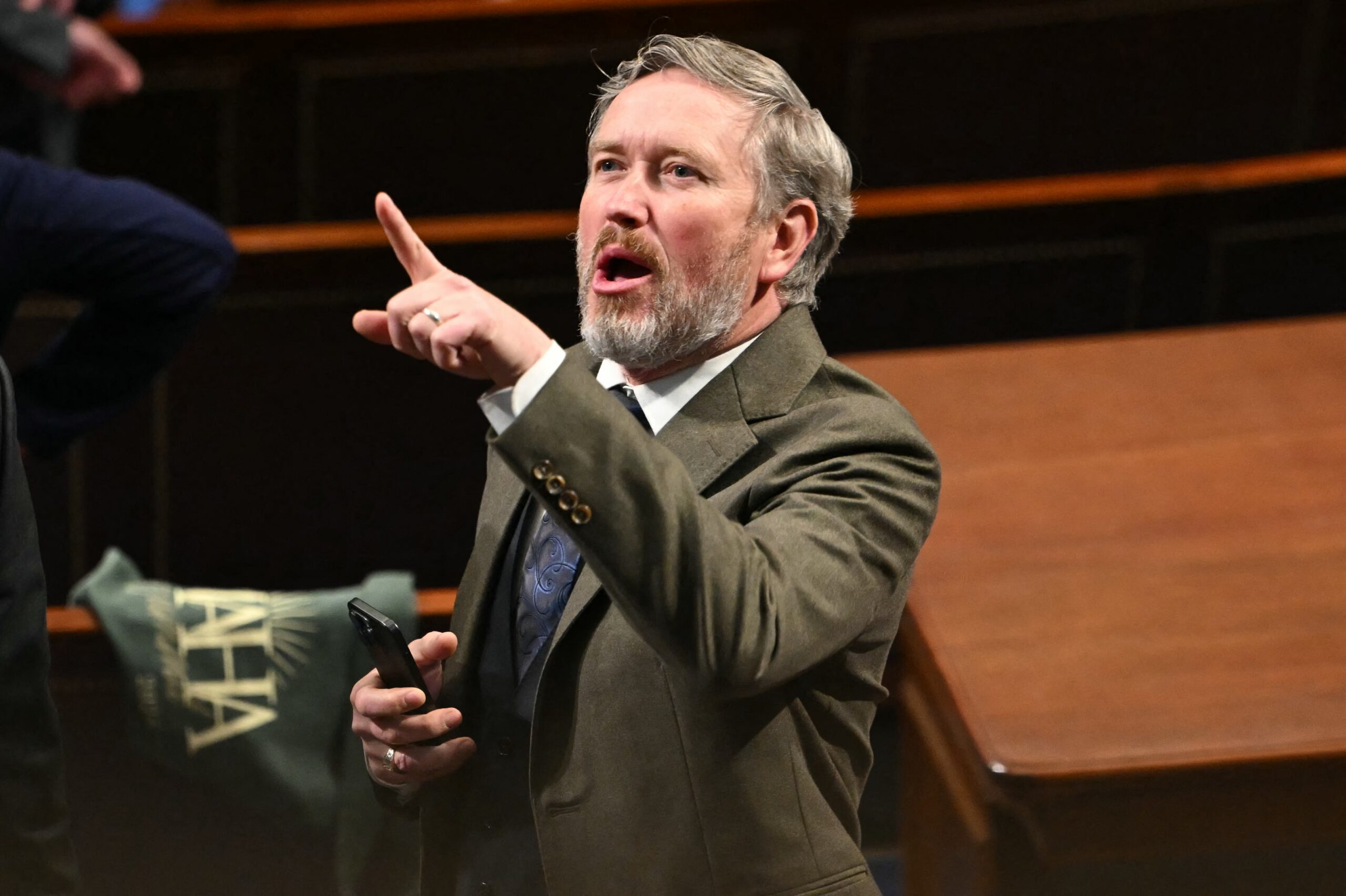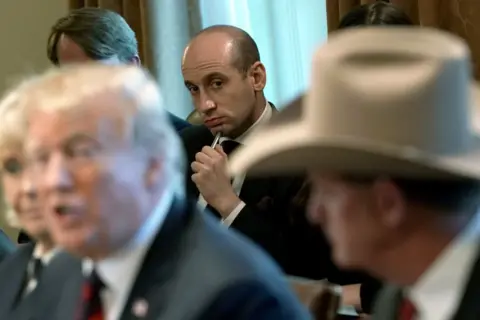
Stephen Miller has spent years as the sharp-elbowed idea man in Donald Trump’s inner circle. Now, a new profile suggests he’s something closer to the operating system, and when the system spits out a bad read in public, the clean-up can get messy.
What You Should Know
BBC News reported that Stephen Miller’s influence in President Donald Trump’s orbit has grown, particularly on immigration policy. The report also details a high-profile incident in which Miller posted claims about a Minneapolis shooting that he later partially walked back.
The BBC story, written by North America correspondent Anthony Zurcher, frames Miller as a lightning rod who both drives policy and absorbs heat, with critics targeting him directly while allies describe him as essential to how Trump processes politics and power.
Stephen Miller has long played a specific Washington game: be the aide who says the quiet part out loud, then dare the rest of the administration to live with the consequences. The BBC’s reporting argues that, in the early stretch of 2026, the consequences are no longer theoretical. They are political, reputational, and operational.
The Aide Who Turns a Preference Into Policy
In most White Houses, staffers sell ideas upward. In this portrait, Miller does something more potent. He takes Trump’s instincts, sharpens them into talking points, and then helps convert those lines into action, especially on immigration.
The BBC describes him as a conservative firebrand whose hard-charging style has pushed immigration policy and expanded his influence, not just inside the West Wing, but across the administration’s posture toward the Western Hemisphere.
That’s the power dynamic that matters. Trump, the principal, benefits from a loyal enforcer who can fight on multiple fronts at once: internal meetings, TV appearances, policy drafting, and public messaging. Miller, the agent, gains leverage by being the person who can translate broad slogans into measurable outcomes, like detention targets, deportation pressure, and aggressive rhetoric meant to keep the base engaged.
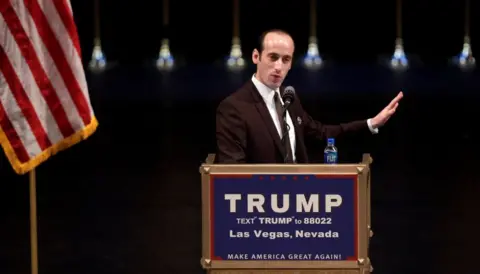
It is also a structure that invites a particular kind of contradiction. The more an aide becomes the brand’s amplifier, the more any factual misstep becomes a test of whether the administration prizes speed over accuracy.
When the Feed Moves Faster Than the Facts
The BBC report puts one moment at the center of Miller’s current spotlight: an incident in Minneapolis in which two immigration officers shot and killed a person identified as Alex Pretti. The BBC says Miller posted messages describing the nurse as a “domestic terrorist” before a later video, as described by the BBC, showed Pretti did not threaten officers before being pepper-sprayed and shot multiple times.
That sequence matters less as a viral scandal than as a case study in how official narratives get built. First comes an on-the-ground claim. Then comes an influential aide broadcasting it as certainty. Then comes evidence, and then comes the scramble to reconcile the earlier certainty with the later record.
According to the BBC, Miller later said the initial assessment was based on on-the-ground reports and “may not have followed protocol.” Democrats, per the BBC, criticized that walk-back as insufficient and accused him of spreading falsehoods about the victim.
Notice the bind. If Miller concedes too much, he undercuts the administration’s posture of confident enforcement. If he concedes too little, he looks like he is using death to score points. Either way, the story gives critics a clean line to attack: not only the policy, but the information discipline behind the policy.
Inside the Meeting Rooms, Outside the Guardrails
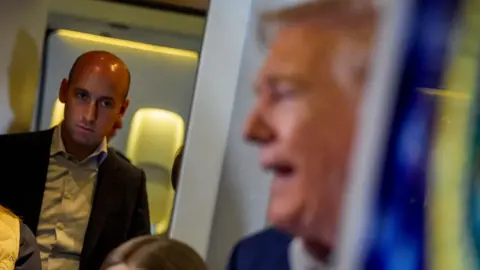
The BBC also reports that Miller advocated harsher detention and deportation policies in May and that reports described him confronting immigration officials at a meeting over detentions.
That is the other half of the Miller model: pressure inside, messaging outside. In that setup, internal friction is not a bug. It is a tool. If line officials resist, an aide with the president’s ear can frame that resistance as disloyalty, inefficiency, or weakness.
A senior official, cited by the BBC, defended Miller as critical to the president’s policy and as efficient in enforcing actions. The public argument is that he’s the adult in the room who makes the machinery run. The opposing argument is that he is the accelerant who turns bureaucratic discretion into political theater.
Both claims can coexist, and that is what makes the profile useful. It shows how a polarizing figure can be defended as a manager while being denounced as a provocateur, sometimes based on the same behavior.
Trump’s Plausible Deniability, Miller’s Totem Pole
Washington loves a succession rumor, and the BBC says there were rumors that Miller could become a White House security adviser. The BBC reports that Trump dismissed the idea, saying Miller is “higher on the totem pole” than that.
That quote is doing two jobs at once. It flatters Miller, and it also keeps him where Trump likely prefers him: not boxed into a formal job description, not pinned to one lane, and not easily constrained by the normal boundaries of a portfolio.
Formally elevating an aide can create accountability. Informally elevating an aide creates reach.
This is where the contradiction becomes structural. Trump’s public message, as described by the BBC, is that Miller is powerful. The political utility is that Miller can be the face of controversial moves, the person who takes incoming fire, while the president retains the option to say the operation, the timing, or the wording was someone else’s call.
A Worldview Built on Strength, Then Put on Television
The BBC report also describes a broader ideology, one that casts global politics as a contest governed by strength. In the BBC’s telling, Miller made remarks invoking “iron laws of the world” and described a world governed by strength and power. The BBC says he appeared on CNN after a Venezuela-related episode to defend the administration’s worldview.
Even without adjudicating any specific operation, the stakes of that worldview are easy to map. If power is the point, then restraint looks like weakness. If weakness is the enemy, then critics are not merely opponents. They are obstacles.
The BBC notes that some Republicans have been unsettled by Miller’s provocative comments, including a senator who warned him to “stay in his lane.” That pushback is important because it suggests the tension is not just left versus right. It is also about control inside the right, and who gets to define what “America First” means in practice.
Why Protesters Target the Staffer, Not Just the Boss
Presidents are durable targets. Staffers are softer ones. The BBC describes posters in Washington, DC, depicting Miller with a caption about fascism and drawing calls for resignation.

That kind of protest is not just moral signaling. It is tactical. If opponents believe Miller is a key driver of policy, then isolating him becomes a way to slow the machine. It is an attempt to fracture the coalition that keeps hard-line policy moving: the president’s will, the aide’s strategy, and the bureaucracy’s execution.
For Miller, the trade is familiar. The more influence he gains, the less he can blend into the background as a mere advisor. He becomes a public symbol, and symbols invite simplification.
The BBC even notes that Miller, a figure who once relished confrontations, has at times stepped back from them, an interesting tell in a political culture that rewards escalation.
What to Watch Next
The BBC’s framing leaves two open questions that matter more than any one viral moment.
First, can the administration keep using Miller as both strategist and spokesperson without paying a recurring price when early claims collide with later evidence?
Second, if Miller’s power is tied to being Trump’s policy muscle, what happens when other power centers inside the party decide the muscle is costing them swing voters, internal unity, or operational legitimacy?
The BBC reports that even some observers who see Miller as central to Trump’s agenda also predict he could be among those who exit when the era ends. In Washington, that’s less a prophecy than a reminder: staff power is real, but it is rented, not owned.