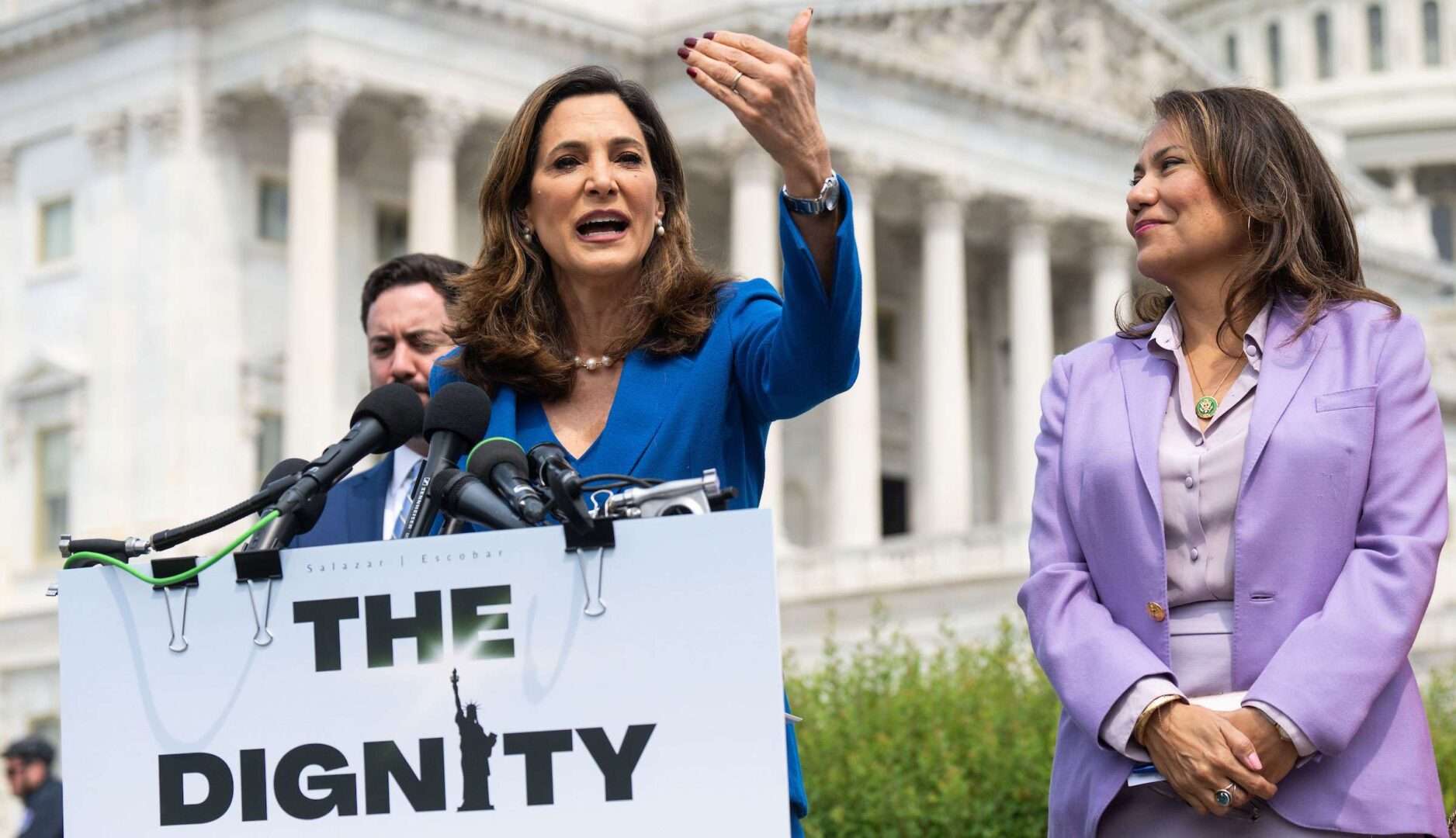
Rep. Maria Elvira Salazar keeps bringing Washington a simple trade: tougher border controls and workplace enforcement in exchange for a legal path for long-settled immigrants. The bill has a catchy name. The timing has a political edge. The question is whether anyone with real power wants it to pass.
What You Should Know
Rep. Maria Elvira Salazar, a Florida Republican, is promoting the bipartisan Dignity Act, an immigration package that pairs border and enforcement measures with an earned legal status for certain undocumented immigrants. The proposal faces long odds in a polarized House.
Salazar, a swing-district Republican who has pushed immigration deals before, has framed the effort as a made-for-Congress compromise. It is also a dare to both parties, which routinely campaign on immigration chaos while failing to lock in durable rules.
A Bipartisan Bill With a Partisan Problem
The proposal, formally titled “Dignity Act of 2023,” was introduced as a bipartisan House bill, according to Congress.gov. Its central bet is that lawmakers can finally package two things that usually die separately: enforcement that conservatives demand and legal status that Democrats defend.
However, the House does not run on policy symmetry. It runs on leverage. A bill that spreads wins around can be less attractive than a border standoff that energizes donors, drives cable bookings, and hands leadership a constant message weapon.
Salazar has leaned into the idea that the country needs rules that are strict enough to be credible and humane enough to be sustainable. The bill, as summarized on Congress.gov, envisions an earned-status track tied to background checks, fees, and work requirements, alongside measures to control future illegal entries.
What the Bill Promises, and What it Demands
One reason the sales job is hard is that immigration politics now lives in extremes. Conservatives tend to treat any legalization mechanism as amnesty-by-another-name. Many Democrats, meanwhile, are wary of enforcement-first frameworks that can expand detention capacity or tighten eligibility in ways that hit asylum seekers and mixed-status families.
Then there is the operational reality at the border. U.S. Customs and Border Protection data shows the Southwest border has seen sustained pressure in recent years, a statistic both parties cite while arguing for opposite remedies. That churn keeps attention on short-term crackdowns, not long-term systems.
Why the Math Is Brutal
The Dignity Act also runs into a calendar problem. Immigration packages are massive, technically dense, and politically radioactive. In an election cycle, leadership often prefers messaging votes or narrower enforcement bills that draw sharper lines, rather than one bill that invites friendly fire from every faction.
Salazar can point to a bipartisan coalition and a detailed framework. What she cannot control is whether party leaders want a deal more than they want an issue. If the bill moves at all, watch for whether it is treated as a serious negotiating text or as a press-conference prop that proves everyone is “doing something” without changing the incentives that keep the border debate stuck.