

The signs did not fall off the wall. They were taken down. And now Philadelphia is in federal court trying to put them back.
At the center is the President’s House site near 6th and Market streets, the footprint of the Philadelphia residence used by George Washington and John Adams, and a rare public space that explicitly names enslaved people connected to the early presidency. After workers removed slavery-related displays, city officials filed suit, arguing the National Park Service changed a joint exhibit unilaterally.
The removal happened fast. The backlash got official even faster.
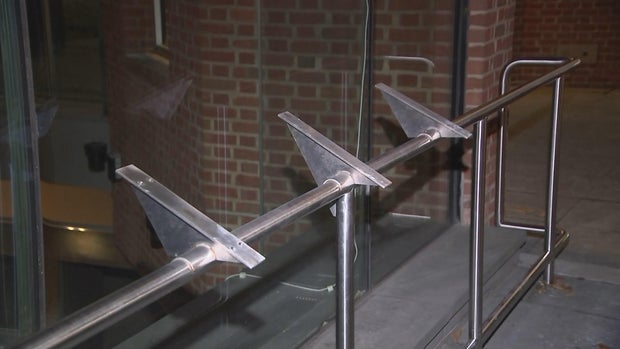
A series of informational signs about slavery were removed from the President’s House exhibit site in Old City, according to CBS News. The site is operated by the National Park Service and sits inside Independence National Historical Park, a tourist magnet that includes the Liberty Bell and draws visitors looking for founding-era history.
The President’s House exhibit, which opened in 2010, was shaped by local pressure to include the stories of enslaved people who lived at the home. Those stories were ultimately incorporated, CBS reported, after activists urged exhibit creators to confront the slavery history tied to the site.
Then, in one workday, key pieces of that story were physically removed.
What the city says the Park Service did wrong
Philadelphia’s lawsuit, filed in federal court, seeks to force the signage back into place. The city’s core argument is procedural, and it is spelled out in the reporting: the city says it has prior agreements with the National Park Service that require disputes to be handled informally, through consultation or other non-binding resolution methods acceptable to both sides. The city claims those steps were not followed before the exhibits were altered, per CBS News.
In other words, this is not only a fight about interpretation. It is a fight about control, and about who gets to decide what visitors see on one of the most symbolic blocks in American history tourism.
CBS reported that it reached out to the National Park Service and the mayor’s office for comment and was awaiting responses at the time of publication.
A local preservation leader points to one reason the site stands out
One of the sharpest on-record clues about why this particular set of signs matters came from Paul Steinke, executive director of the Preservation Alliance for Greater Philadelphia. He told CBS Philadelphia that workers from the park service removed the signage, and he linked the apparent rationale to what the displays said about Washington’s household.
Here is Steinke’s statement as published by CBS: “The decision to do this appears to be made because the President’s House Site memorialized the nine enslaved individuals that were held there against their will by President Washington and his wife Martha, and this is the only federal historic site that commemorates the history of slavery in America.” CBS News
His claim about uniqueness will be debated by historians and park-watchers, because multiple federal sites interpret slavery in different ways. But his broader point is harder to dodge: the President’s House exhibit forces a collision between founding mythology and coerced labor, on the very ground where visitors expect uncomplicated patriotism.
The directive looming over the Liberty Bell corridor
CBS ties the removal to a broader political push from President Trump. The outlet reported that Trump signed an executive order in September aimed at removing “ideological indoctrination or divisive narratives,” and that the order was titled “Restoring Truth and Sanity to American History.” The reporting also notes that the order specifically mentioned Philadelphia’s Independence National Historical Park and the Smithsonian Institution’s museums in Washington, D.C.
According to CBS, the directive instructed Interior Secretary Doug Burgum to ensure memorials “do not contain descriptions, depictions, or other content that inappropriately disparage Americans past or living (including persons living in colonial times), and instead focus on the greatness of the achievements and progress of the American people.” CBS News
That language creates a practical question for any site curator: who decides what “inappropriately disparage” means when the underlying facts are ugly but documented? One person’s “divisive narrative” is another person’s baseline history.
Why this fight is happening now, not later
The calendar is doing some of the arguing. CBS reported that Burgum was given a deadline of July 4, 2026, to complete any changes to Independence National Historical Park, a timing that intersects with the country’s 250th anniversary celebrations. Independence Mall is expected to be a focal point for that anniversary, which raises the political stakes for what the park highlights and what it mutes.
This is also why the President’s House fight is not a small inside-baseball museum squabble. A site inside Independence National Historical Park is, in practice, a national stage. If a slavery interpretation can be removed there, activists worry the same logic could spread to other high-visibility sites preparing for anniversary crowds.
There is a second pressure campaign, and it is local
The Trump administration’s directive did not land quietly in Philadelphia, CBS reported. Dozens of Philadelphia organizations signed a letter to Interior Secretary Burgum opposing the changes, and the Philadelphia City Council passed two resolutions condemning the executive order.
That matters because the city is not just litigating. It is signaling that, at least locally, there is political support for keeping the slavery story on the walls, not shuffling it into a footnote.
The contradiction at the heart of the tourism brand
Independence Mall sells a story that many Americans grew up on: liberty’s birthplace, founders’ footprints, bell-ringing ideals. But the President’s House site, by design, complicates that story. It sits near the places where freedom is celebrated, while pointing to the people who were denied it inside a president’s household.
When the city argues the Park Service bypassed agreements, it is also arguing that you cannot market the founding era as a shared civic shrine and then rewrite the interpretive terms without local buy-in.
And when the federal government frames certain narratives as “divisive,” it invites a predictable counterargument: that the nation is not being disparaged by accurate history, it is being tested by it.
What to watch next
The immediate question is whether the signs return quickly or whether the case becomes a longer fight over contracts, authority, and interpretive control. Another open question is what, if anything, replaces the removed displays in the meantime, and how those choices are justified.
For now, the cleanest fact pattern is also the most combustible one: signage about slavery at a founding-era presidential site was removed, the city says that violated prior agreements, and the dispute is now in federal court. The rest will hinge on what the Park Service and Interior Department say on the record, and whether the paper trail backs the city’s claim that this was a unilateral move.
And the sentence at the core of Trump’s directive, quoted by CBS, is likely to be the line everyone keeps rereading: memorials should not “inappropriately disparage Americans past or living,” and should “instead focus on the greatness of the achievements and progress of the American people.” In Philadelphia, that is no longer just philosophy. It is litigation.