Jack Smith did not come to Congress to lob soft, careful phrases. In a closed-door deposition that lawmakers later made public, the former special counsel offered a blunt thesis about Jan. 6: the violence at the Capitol “does not happen” without Donald Trump.
That line is now ricocheting through Washington for a reason. Smith’s Trump prosecutions are over, dropped after Trump returned to the White House in 2024 under Justice Department policy against indicting a sitting president. But Smith’s recorded answers are still alive, and they land like a postscript to a case the public never got to see tried in court.
A closed-door deposition becomes a public political weapon
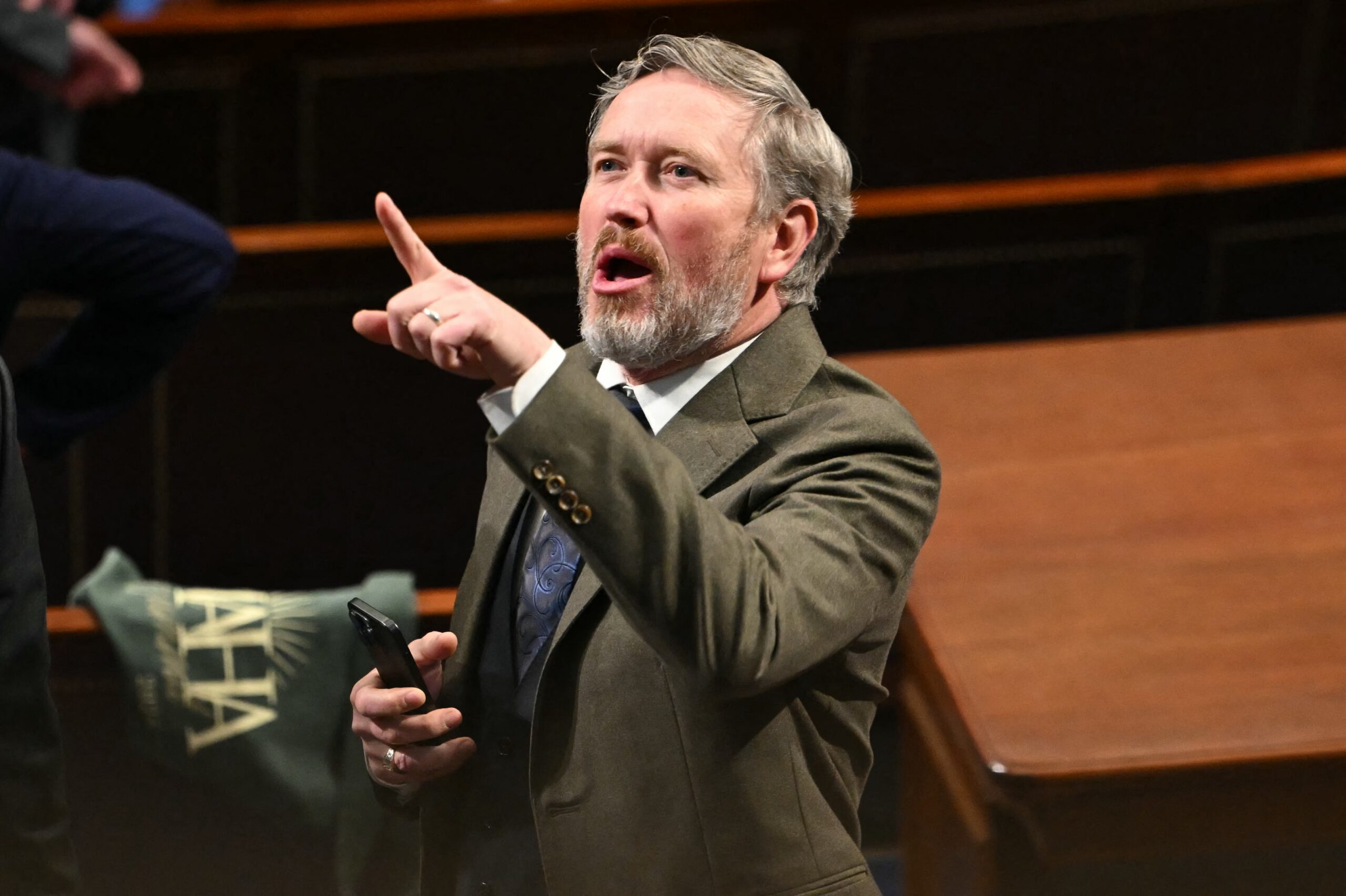
The Republican-led House Judiciary Committee released a transcript and video of Smith’s daylong deposition. Smith had requested to testify publicly, according to the account in the transcript coverage, but the interview happened privately.
The release matters because it offers something rare in modern Washington: a long, relatively uninterrupted record of a top prosecutor defending decisions, tactics, and reasoning under hostile questioning. It also gives Republicans a fresh piece of footage to frame as “politicized,” and Democrats a fresh set of lines to argue the evidence was overwhelming.
In short, it is a document built for both sides. Smith’s words are the fuel.
Smith’s core claim: Trump is “most culpable” in the conspiracy
Smith told lawmakers that the evidence showed Trump was, in his view, “the most culpable and most responsible person” in a criminal conspiracy to overturn the 2020 election results. He argued the other alleged co-conspirators acted for Trump’s benefit.
His most quoted sentence came with an unmistakable construction, part legal argument and part moral ledger:
“The evidence here made clear that President Trump was by a large measure the most culpable and most responsible person in this conspiracy. These crimes were committed for his benefit. The attack that happened at the Capitol, part of this case, does not happen without him. The other co-conspirators were doing this for his benefit,” Smith said.
Those lines do two things at once. They restate why prosecutors said they brought the case, and they answer a question Smith kept getting from Republicans: was the case meant to stop Trump politically?
The “politically motivated” accusation meets a prosecutor’s flat denial
Republicans pressed Smith about whether the investigations were designed to derail Trump’s 2024 run and potential return to power. Smith rejected that framing outright, defending the indictments as evidence-driven.
“So in terms of why we would pursue a case against him, I entirely disagree with any characterization that our work was in any way meant to hamper him in the presidential election,” Smith said.
The clash is familiar. It is also the central contradiction the transcript puts on display: Smith framing the work as routine application of law, Republicans framing the same work as extraordinary political interference.
What makes the transcript different is the timing. The cases are no longer active prosecutions. That leaves Smith defending choices that will not be tested before a jury, and lawmakers presenting questions that will not be resolved by a verdict.
What Smith said about foreseeing the riot and Trump’s refusal to stop it
Smith’s deposition includes a forceful description of how prosecutors viewed the chain of events leading to Jan. 6.
According to Smith, the evidence showed Trump “caused it and that he exploited it and that it was foreseeable to him.” Smith also described Trump’s conduct during the violence in stark terms, saying Trump refused to stop the attack and had to be pushed by staff to take steps to quell it.
Smith also told lawmakers he did not have evidence that Trump explicitly instructed supporters to riot. Instead, he pointed to a different mechanism: Trump amplifying fraud claims that “weren’t true,” encouraging anger, inviting supporters to Washington, and directing them to the Capitol.
It is a line prosecutors often walk in public corruption and conspiracy cases. What matters is not just direct orders, but what prosecutors argue was encouraged, knowingly set in motion, and then allowed to burn.
Why the Trump cases were dropped, and why the transcript still bites
Trump had been indicted in two separate federal matters: the election subversion case and a classified documents case tied to materials stored at Mar-a-Lago in Florida. After Trump won the presidency in 2024, both cases were abandoned. Smith cited longstanding Justice Department policy barring prosecution of a sitting president.
That policy does not settle the factual dispute. It simply ends the courtroom fight.
The transcript release, therefore, functions as a substitute battleground. Smith is effectively saying: the evidence justified indictments and would have supported proof “beyond a reasonable doubt,” a phrase he used in the deposition, as reported in the released material. Republicans are effectively saying: the entire enterprise was tainted.
“Yes, I believe we had proof beyond a reasonable doubt in both cases.”
Former Special Counsel Jack Smith to House Judiciary Committee on the twin criminal investigations into Donald Trump.
More on the newly released transcript from Smith’s deposition: https://t.co/Um77v1R855 pic.twitter.com/9EZyFXl8xM
— Zachary Cohen (@ZcohenCNN) December 31, 2025
Neither side gets the kind of closure a trial provides. But both sides get a record to campaign on.
The phone records fight that pulled lawmakers into the blast radius
One of the flash points in Smith’s deposition involves a sensitive investigative step: obtaining and analyzing phone records of GOP lawmakers who were in contact with Trump on Jan. 6.
Smith defended the move as lawful and “by-the-book,” and he pushed back on the idea that his team was the villain for collecting “toll records.” If there was outrage, Smith suggested it should be aimed at Trump’s actions and not at prosecutors following the evidence trail.
“Well, I think who should be accountable for this is Donald Trump,” Smith told lawmakers, arguing that Trump and alleged co-conspirators directed outreach to members of Congress as part of an effort to delay proceedings. Smith also said that if Trump had contacted Democratic senators instead, prosecutors would have sought records for them.
The implication is pointed and political. Smith framed it as neutrality: follow the calls where they lead, regardless of party. But in a polarized Congress, the very act of touching lawmakers’ records is guaranteed to be read as either basic accountability or prosecutorial overreach.
Meadows, Jim Jordan, and the fear factor inside the Capitol
Smith also described evidence his office gathered about communications between Trump and Republican supporters in Congress. He referenced an interview with Mark Meadows, Trump’s former chief of staff, and mentioned Rep. Jim Jordan of Ohio, who now chairs the House Judiciary Committee.
In Smith’s telling, Meadows contrasted Jordan’s normal temperament with the moment violence erupted, saying he had “never seen Jim Jordan scared of anything,” and that lawmakers’ fear made it clear the events at the Capitol could not be mistaken for something less serious.
That detail operates on two levels. It is human, and it is prosecutorial. Prosecutors often use contemporaneous reactions to establish severity, intent, and knowledge. Politicians often use those same moments to claim they were bystanders to chaos rather than participants in a plan.
Cassidy Hutchinson’s SUV claim, and what investigators said did not match
The deposition also touched a moment that became famous because of its cinematic specificity: former White House aide Cassidy Hutchinson’s claim that Trump grabbed at the steering wheel of the presidential SUV when the Secret Service would not take him to the Capitol after his Ellipse speech.
Smith told lawmakers that investigators interviewed an officer who was in the car, who said Trump was “very angry” and wanted to go to the Capitol. But Smith said the officer’s version “was not the same as what Cassidy Hutchinson said she heard from somebody secondhand.”
That is not a full exoneration of anyone and not a full confirmation of Hutchinson’s account either. It is a prosecutorial reality check: some details survive interviews, others blur when they move through intermediaries.
What to watch next: accountability without a courtroom
The House Judiciary Committee’s release ensures Smith’s deposition will not stay a legal artifact. It is now campaign material, committee material, and cable segment material, even though the underlying cases ended on a policy wall, not a factual finding.
For Trump’s allies, the transcript is a chance to re-litigate motive and argue the prosecutions were designed to shape elections. For Trump’s critics, it is a reminder that Smith says the evidence was strong enough to indict, and that he viewed Trump as central to the events that culminated on Jan. 6.
The question hanging over the whole release is the one no transcript can answer: would a jury have agreed with Smith, or with Trump’s denials and defenses? Washington just got a new stack of pages. The verdict is still missing.