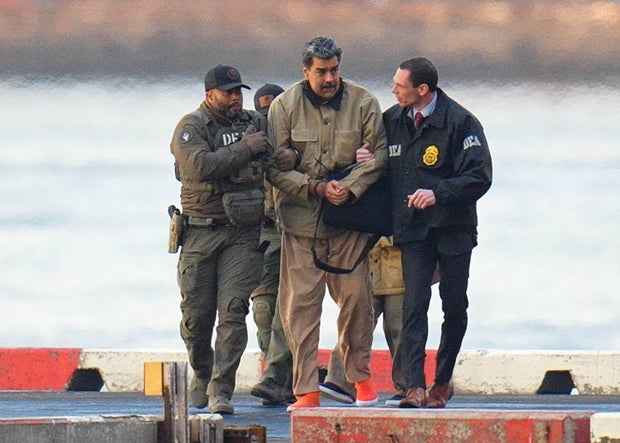
It started with handcuffs at a Manhattan helipad. It ends, at least on paper, inside a federal courtroom. But the real fight is already spilling into the open: is this a straightforward U.S. prosecution, or the beginning of a power grab dressed up as an arraignment?
According to CBS News live updates, ousted Venezuelan President Nicolas Maduro and his wife, Cilia Flores, were brought to the United States after being captured by U.S. forces. They are slated to make their first court appearance in New York at noon on charges related to drug trafficking.
From capture to courthouse, fast
CBS News reported that Maduro and Flores were captured by U.S. forces and transported to the U.S. following what President Trump described as a “large-scale strike” against Venezuela and its leader, after months of military buildup.
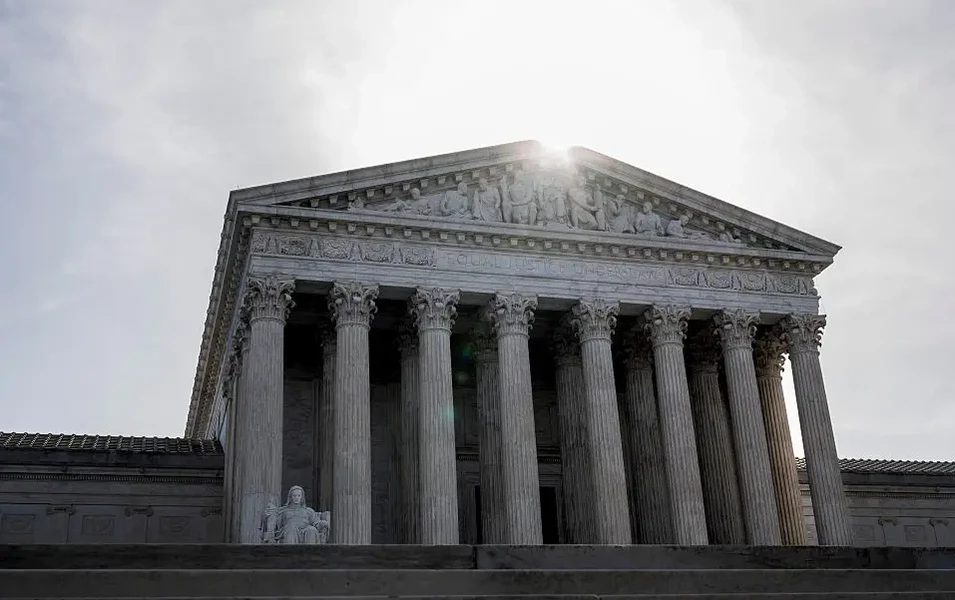
The visuals are already doing the work. One Getty Images photo distributed by CBS shows Maduro in handcuffs after landing at a Manhattan helipad, escorted by heavily armed federal agents on his way to the federal courthouse in lower Manhattan.
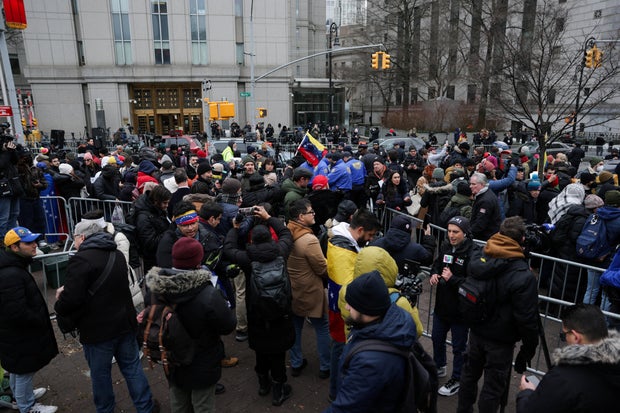
Then came the courthouse scene. CBS reported protesters gathered across from the courthouse ahead of the noon arraignment, with loud chanting, flags, and people banging on cans. CBS also reported a smaller contingent of counter-protesters and heightened security, including police barricades around the area.
The legal case is familiar. The way Maduro got here is not.
The drug trafficking allegations are not new to U.S. prosecutors. In March 2020, the U.S. Justice Department unsealed an indictment accusing Maduro and other senior Venezuelan figures of narco-terrorism and drug trafficking conspiracies tied to cocaine shipments. Maduro has repeatedly denied wrongdoing, and Venezuela’s government has long framed U.S. charges as politically motivated.
What is new, based on CBS’s reporting, is the method. A leader accused in U.S. court filings is one thing. A leader captured by U.S. forces after a described strike and brought to New York is another. That sequence yanks the story out of the usual “sanctions and indictments” lane and into a murkier territory where criminal procedure, foreign policy, and military force collide.
In Manhattan, the legal mechanics are expected to look like any other high-profile federal arraignment: a judge, the reading of charges, and arguments over detention. Outside Manhattan, the political mechanics look like Washington testing how far it can push.
Trump says “temporary” control. Rubio says no direct governing.
The sharpest tension in CBS’s live updates is not between Maduro and prosecutors. It is between what the administration is saying about Venezuela’s future.
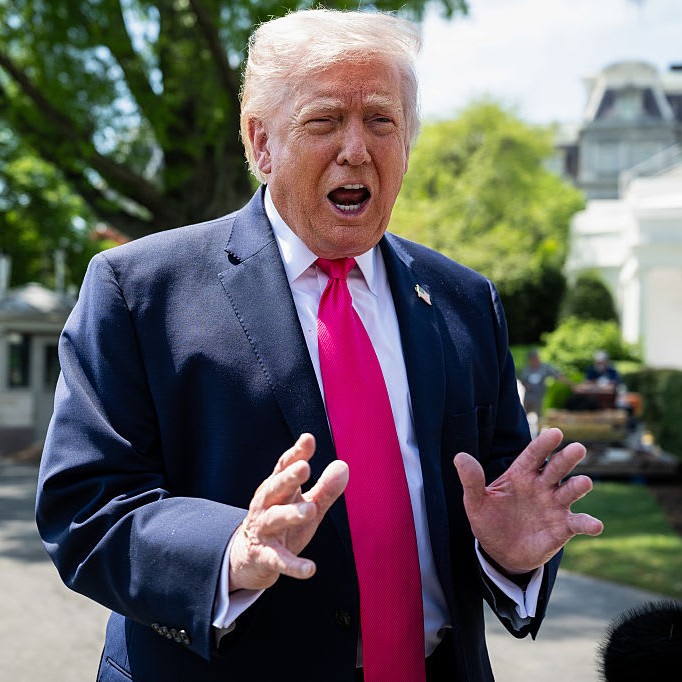
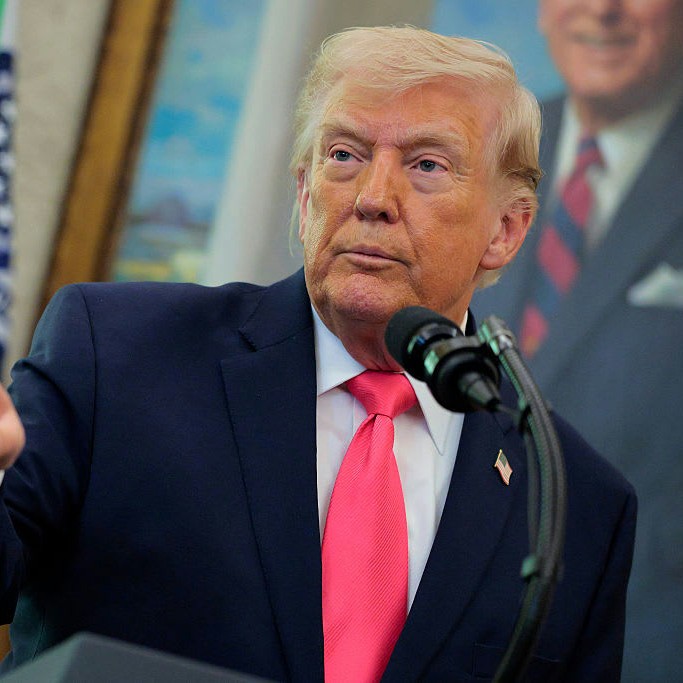
CBS reported that Mr. Trump said Sunday the U.S. would “run the country on a temporary basis and get the oil flowing.” That is an extraordinary statement, and it lands like a warning shot to Caracas, U.S. allies, and critics at home all at once.
Then came the walk-back, or the alternative plan, depending on who you believe. CBS reported Secretary of State Marco Rubio signaled that the U.S. would not directly govern Venezuela, but would instead exert “tremendous leverage through an oil quarantine.”
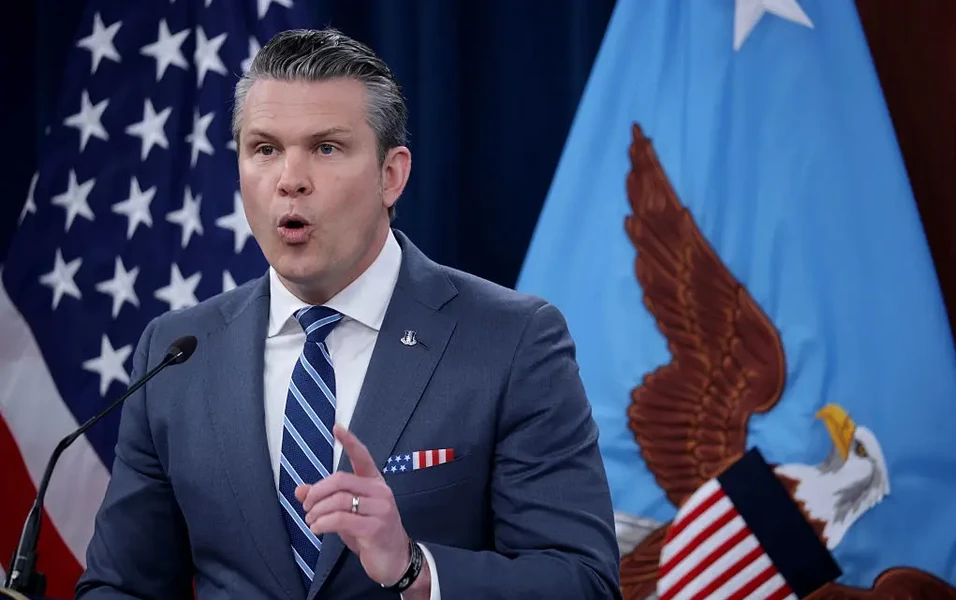
And then came the third voice. CBS reported Defense Secretary Pete Hegseth said “President Trump sets the terms.”
Those three messages do not neatly align. Direct U.S. control is not the same as an oil quarantine. And “Trump sets the terms” can mean anything from negotiating pressure to a more maximal approach.
Why the oil talk keeps popping up
Venezuela’s oil is the silent character in every version of this story. CBS’s updates put it in plain language through Trump’s focus on getting oil “flowing” and Rubio’s emphasis on an “oil quarantine.”
Even without adopting any one official story as definitive, the incentives are obvious. Oil is leverage. Oil is revenue. Oil is the lifeline for a state trying to survive isolation. It is also the reason any U.S. claim of “temporary” administration would reverberate far beyond Venezuelan politics and into global energy markets and geopolitics.
That is why the courthouse stakes go beyond sentencing guidelines. A narco-trafficking case is about guilt or innocence, evidence, and procedure. An oil quarantine is about coercive power. When those two logics are mashed together, every courtroom development starts to look like an instrument of statecraft.
Meanwhile, Trump keeps widening the map
As Maduro’s arraignment approached, CBS reported Mr. Trump also renewed calls for a U.S. takeover of Greenland and threatened U.S. action against Colombia.
That matters because it changes the frame. If the White House is simultaneously talking about territorial control elsewhere, critics will argue that Venezuela is not just a criminal justice story. Supporters will argue it is a coherent posture of American hard power. Either way, the messaging bundle makes it harder to separate the Maduro prosecution from broader territorial and regional pressure campaigns.
Receipts to watch: the charging papers and the first hearing
CBS’s reporting says Maduro and Flores face charges related to drug trafficking. In a case this high-profile, the first round of “receipts” that will matter most are the actual court documents and what prosecutors say on the record at the initial appearance.
Key questions that typically get answered early in a federal case include:
- What, precisely, are the charges? The Justice Department’s earlier Venezuela-related indictments included allegations of narco-terrorism and conspiracy. The court docket will show what is being pursued now.
- What evidence will prosecutors preview? In prior Venezuela cases, U.S. filings have leaned on cooperating witnesses, intercepted communications, and trafficking routes. The government’s first statements often signal how it plans to prove the case.
- Will the court order detention? Flight risk arguments are inevitable in a case involving a foreign political figure. The government’s position, and the judge’s response, will be a big early tell.
Also looming is a question that is political as much as legal: what does the U.S. say to other countries about the precedent of capturing a foreign leader and trying him in New York?
The street-level split outside the courthouse is the point
The dueling crowds outside the lower Manhattan courthouse, as described by CBS, are not just color. They are a preview of how this story will play in two languages at once.
In one telling, this is accountability, with prosecutors finally getting their hands on a leader U.S. officials have accused for years of enabling drug trafficking and corruption. In the other, it is regime change by force, followed by courtroom theater.
Those narratives are going to collide at every step: at arraignments, at bail hearings, in pretrial filings, and in the diplomatic fallout that will follow even routine scheduling orders.
What happens next, and what to watch
CBS reported Maduro and Flores are expected in court at noon in lower Manhattan. That first hearing will set the initial tone, but it will not resolve the bigger contradiction the administration has created for itself.
If Washington’s posture is primarily legal, expect a heavy focus on the indictment, evidence, and a tightly managed prosecution. If Washington’s posture is primarily strategic, watch for policy moves that match the rhetoric, including any formal steps toward the “oil quarantine” Rubio referenced, or any further clarification of Trump’s claim that the U.S. would “run the country on a temporary basis and get the oil flowing.”
For now, the clearest fact on the ground is the simplest one: CBS says Nicolas Maduro arrived in New York in handcuffs. Everything else, including who “sets the terms,” is still being argued in public.