JD Vance walked into a Wisconsin machining facility to talk about prices and paychecks. He walked out with a midterm message built around fraud, immigration, and a dare to voters that makes the details matter.
What You Should Know
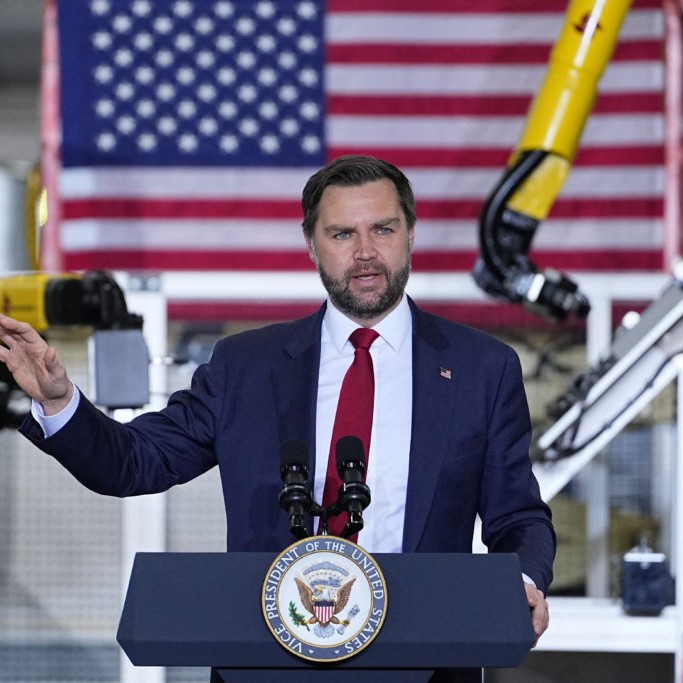
On February 26th, 2026, Vice President JD Vance spoke at Pointe Precision Inc. in Plover, Wisconsin, promoting the Trump administration’s economic agenda ahead of the 2026 midterms. He blamed Democrats for affordability problems and highlighted fraud claims tied to Minnesota.
The setting was deliberate. A machining shop floor reads as wages, tools, and production, the kind of place politicians use to signal they are fighting for people who build things, not people who just talk about them.
Vance spoke at Pointe Precision Inc., a machining facility in Plover, Wisconsin, according to PBS NewsHour video coverage.
A Shop-Floor Stage, a Ballot-Box Ultimatum
In his remarks, Vance framed November’s choice as a power transfer question, not a policy comparison. “The question in November is do we give power to the people who fight for corruption, who fight for fraud, who fight for illegal aliens, or do we give the government to the American citizens for whom it was designed and for whom it was created?” he said, according to the Associated Press video distributed by PBS NewsHour.
It is a tight piece of political engineering. Start with affordability, add a villain list, and end with a loyalty test that treats disagreement as proof of bad faith. The upside is simplicity. The risk is that voters start asking what, specifically, is being cut, audited, raised, or paid for.
Minnesota as a Prop, Medicaid as Leverage
Vance also pointed to what he described as corruption in Minnesota and referenced a story involving money “supposedly being taken away from autistic children,” per the same PBS NewsHour report. He did not lay out a full paper trail in that appearance, but the allegation did its job as a moral hook.
Separately, PBS NewsHour published another segment in which Vance said the administration was pausing some Medicaid funding to Minnesota over fraud concerns. Medicaid is a federal-state partnership with budgets, contracts, and patient care on the line, so even a partial pause can turn a campaign talking point into a real intergovernmental fight.
Affordability Numbers, and the Question of Proof
On the affordability front, the administration is stepping into a debate that is easy to feel and harder to quantify in a stump speech. The Bureau of Labor Statistics tracks consumer prices through the Consumer Price Index, and the broad trend since the pandemic era has been that many everyday costs remain elevated compared with pre-pandemic baselines.
That leaves a pressure point for both parties. Republicans want fraud to read as the hidden tax behind your grocery bill, your health program, and your local budget. Democrats and Minnesota officials, if the Medicaid pause escalates, will likely demand specifics: audits, findings, dollar amounts, and due process. Watch whether the administration produces documented fraud determinations that match the heat of the rhetoric, and whether the factory-floor messaging holds when the argument shifts from slogans to spreadsheets.