

The new Muhammad Ali stamp looks like a victory pose. The backstory is a government that once tried to punish him now putting his name on millions of envelopes.
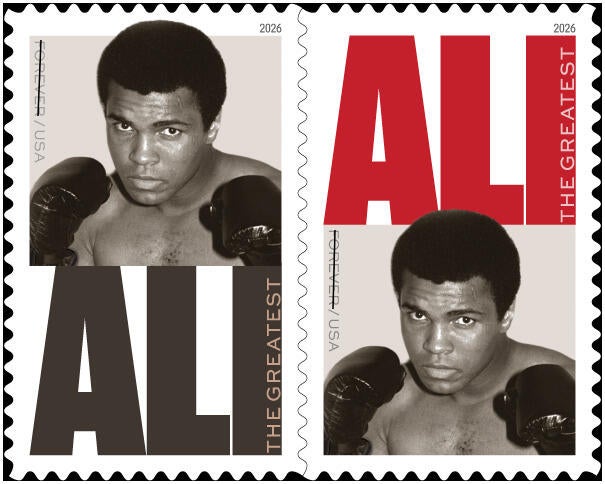
Postal officials rolled out the Muhammad Ali Forever Stamp in Louisville, Kentucky, honoring the boxing legend in the city that raised him and kept him close even after he became a global brand. The U.S. Postal Service says it printed 22 million stamps, featuring a 1974 Associated Press photo of Ali in his fighting prime, gloves up, stance set, last name shouting in bold block letters.
Louisville Gets the Ceremony, the Whole Country Gets the Postage
The unveiling event brought together Ali’s friends and family and a stack of public figures who know exactly what an Ali tribute signals. It is sports history, yes. It is also a message about identity, conscience, and how institutions revise their own storylines over time.
Longtime broadcaster Bob Costas, hosting the event, framed it as a hometown reckoning, saying, “We honor Muhammad Ali here in his hometown, a city that shaped him and that he reshaped forever.”
The stamp went on sale the same day as the ceremony, according to the report. And unlike a limited souvenir, a Forever Stamp is designed to circulate. USPS Forever stamps remain valid for the current First-Class Mail 1-ounce rate even after price changes, meaning this tribute is built to keep moving through the system for years.
Why This Stamp Is Not Just Nostalgia
USPS did not pick a quiet portrait. The stamp image is a fighter’s pose, from 1974, when Ali was still in the era of heavyweight dominance that made him unavoidable in American culture and politics. It is a classic sports frame, but it also functions like a signature. The design centers his last name, “ALI,” in bold all-caps, making it readable at arm’s length, even at stamp size.
The stamp sheet adds a second image of Ali in a pinstripe suit, which USPS described as recognition of his work beyond boxing, including activism and humanitarian efforts. In other words, the stamp wants two Alis at once. The athlete and the public figure. The punch and the principle.
The Full-Circle Moment: From Draft Resistance to Federal Honor
The unveiling carried an obvious historical tension that even the local CBS affiliate pointed out. Ali, born Cassius Clay Jr., famously refused induction into the U.S. military during the Vietnam War after being drafted in 1967. That refusal triggered a legal case and immediate professional consequences. Boxing authorities stripped him of his heavyweight title, and he was suspended from boxing, sidelining him during what should have been his prime earning years.
Ali was convicted of draft evasion in 1967. He appealed, and in 1971 the U.S. Supreme Court unanimously overturned his conviction in Clay v. United States, ruling the government had not properly stated why his conscientious objector claim was denied.
That arc is what makes a federal commemorative stamp feel like more than a sports collectible. It is an official nod to a man who challenged the government, paid a steep professional price, then ultimately won in the nation’s highest court and returned to reclaim the heavyweight crown.
Former Louisville Mayor Greg Fischer summed up the bounce-back angle at the event, observing, “He paid the consequences, but rose again.”
Lonnie Ali’s Line: A Stamp That Does Quiet Work
Ali’s widow, Lonnie Ali, leaned into the idea of reach. Not TV reach, not arena reach, but daily-life reach. She told the crowd, “This stamp will travel millions of miles, it will pass through countless hands, but it will quietly remind the world of a man who dared to believe that kindness could be powerful and that being in service to others could be heroic.”
It is a carefully chosen claim because stamps are one of the few federal artifacts still designed for ordinary repetition. A commemorative medal goes on a shelf. A stamp gets licked, stuck, and sent. Ali even joked about that contradiction during his career, quipping he should be on a postage stamp because “that’s the only way I’ll ever get licked.”
Receipts and Specifics: 22 Million Stamps, One Iconic Photo
The hard numbers matter in the stamp world. USPS printed 22 million stamps, according to the report, a scale that moves the Ali tribute from niche memorabilia into mass circulation.
The imagery is also sourced cleanly. The fighting-stance photo comes from the Associated Press archive, dated 1974, and USPS released the image publicly as part of the stamp announcement.
Collectors will fixate on print counts and design variants, but the broader cultural signal is simpler: USPS chose the Ali most Americans recognize instantly, then paired it with the suited activist portrait to widen the story.
Evergreen Ali: The Resume That Keeps Getting Re-Issued
Ali’s official honors were never limited to boxing halls of fame. He won Olympic gold in 1960. He received the United Nations Messenger of Peace award in 1998. He was awarded the Presidential Medal of Freedom in 2005.
Ali died in 2016 at age 74, after living with Parkinson’s disease for more than three decades, and he is buried in Louisville.
That timeline is part of the stamp’s subtext. The government is not just celebrating a titleholder. It is stamping an entire public life, including the years when Ali’s fame shifted from the ring to philanthropy and human rights advocacy.
What To Watch Next: Collectors, Classrooms, and the Next Postal Tribute
USPS stamp unveilings can look like small culture, but they have a way of surfacing big arguments fast. Which image got chosen? Which era got emphasized? Who got quoted? Ali’s stamp is already built around a contradiction that never really goes away: an institution once on the opposite side of his most famous stand now distributing his name by the millions.
If you want the cleanest takeaway, it is right there in Lonnie Ali’s framing. The tribute is designed to be handled, not just admired. A stamp is not a statue. It is a travel document, and now it carries a fighter who made a career out of refusing to be moved by anyone else’s script.