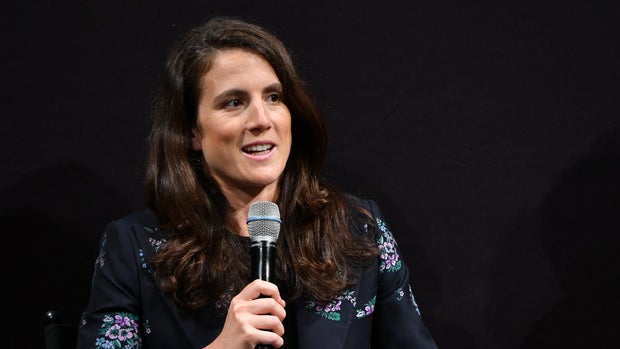
The Kennedy name has weathered decades of public tragedy, but Tatiana Schlossberg’s final act was intensely personal and strangely timed. She told the world she was dying on the same calendar day her grandfather, President John F. Kennedy, was assassinated. Then, not long after, her family announced she was gone.
Schlossberg, an environmental journalist and author and the daughter of Caroline Kennedy Schlossberg, died after a terminal cancer diagnosis, according to the JFK Library Foundation. She was 35.
A farewell posted in plain sight
The news did not arrive via a formal press conference or a spokesperson’s carefully buffered statement. It landed where modern grief increasingly lives, on social media.
In a message posted by her family on the JFK Library Foundation’s Instagram account, they wrote, “Our beautiful Tatiana passed away this morning. She will always be in our hearts.” The post appeared alongside an image of Schlossberg.
Tatiana Schlossberg, the middle child of Caroline Kennedy and Edwin Schlossberg, died on Tuesday, Dec. 30, at age 35.Schlossberg announced that she had been diagnosed with acute myeloid leukemia in an essay published by The New Yorker in November… pic.twitter.com/4BG3uCz86c
— People (@people) December 30, 2025
The choice of platform matched the way Schlossberg handled her illness in public. She did not trade in vagueness. She wrote, in detail, about the physical grind and the mental math of time.
The diagnosis, the treatment, and the one-year prognosis
In an essay published by The New Yorker, Schlossberg said she was diagnosed with acute myeloid leukemia in May 2024, shortly after the birth of her second child. She described intensive treatment that included chemotherapy, bone marrow transplants, and participation in a clinical trial involving a form of immunotherapy. The cancer returned, she wrote, and doctors ultimately gave her a prognosis of one year to live.
That timeline is part of what made her essay travel so widely. It read as both reporting and reckoning, a writer documenting her own case while still trying to live inside it.
Schlossberg published the essay in November, 62 years to the day after President Kennedy was killed in Dallas in 1963. The date was not framed as a stunt. It was presented as a fact of her life, one more way the family’s private calendar collides with the public’s memory.
“I have added a new tragedy to her life”
One of the essay’s sharpest moments was not about medicine. It was about inheritance, and the burden of being the child of someone who already carries history.
“For my whole life, I have tried to be good, to be a good student and a good sister and a good daughter, and to protect my mother and never make her upset or angry. Now I have added a new tragedy to her life, to our family’s life and there’s nothing I can do to stop it,” she wrote.
It is an unusually direct line from a member of a family that has often kept its most painful chapters behind controlled gates. Schlossberg was not just writing about illness. She was writing about what illness does to a family that has seen too much of it in public.
Her work was bigger than a last name
Schlossberg was the second of Caroline Kennedy Schlossberg and Edwin Schlossberg’s three children. But the story of her adult life was not limited to her lineage.
She built a career in environmental journalism and authorship, and she wrote about consumption, climate, and the everyday choices that add up to policy-sized consequences. Her 2019 book, ‘Inconspicuous Consumption,’ argued that the biggest environmental impacts are often hiding in plain sight, in homes, travel, food, and energy use.
In The New Yorker essay, she also linked her medical treatment to scientific discovery and public funding. She wrote that one of her chemotherapy drugs, cytarabine, traces back to research connected to an ocean sponge found in the Caribbean, and she noted that such work typically relies on government support. In the same passage, she referenced her cousin, Health Secretary Robert F. Kennedy Jr., writing that he “has already cut” that funding. The line landed like a family footnote with national-policy implications, even as it remained a personal reflection within her own account.
A Yale romance, a Vineyard wedding, two young children
Schlossberg married George Moran in September 2017. The New York Times reported that the pair met as undergraduates at Yale University and married at her family’s home on Martha’s Vineyard.
They had two children, a son born in 2022 and a daughter born in May 2024, the same month Schlossberg said she received her acute myeloid leukemia diagnosis.
After that, her priorities narrowed in a way many readers recognized immediately. In her essay, she wrote, “Mostly, I try to live and be with them now.”
She described memory as both comfort and trap, and she admitted that “being in the present is harder than it sounds.” The writing did not ask for pity. It documented the strange logistics of loving small children while time becomes the loudest object in the room.
Why this death is hitting harder than a headline
The public already knew Schlossberg’s name. What they did not know, until she told them, was how much of her life was being lived between chemotherapy cycles and the ordinary demands of parenting.
That is the contradiction readers are still sitting with. A member of America’s most mythologized political family chose to publish a clear-eyed account of vulnerability, and then the story ended quickly.
Her death also reopens a familiar Kennedy-era question: what does the public “own” when it comes to a famous family’s private pain? The Instagram statement was brief. Her essay was expansive. Together, they formed a kind of two-part record, one official, one intimate.
What happens next, and what does not
There is no legal battle to track here, no campaign calendar, no courtroom date. The immediate next steps are private ones for a family with two very young children at the center of the loss.
Schlossberg is survived by her husband and children, her parents, her sister Rose, and her brother Jack, according to CBS News reporting that cited the JFK Library Foundation.
Her own words remain the loudest closing statement, not because they were crafted as a finale, but because they were written while she was still trying to hold on. “Mostly, I try to live and be with them now,” she wrote. The rest, as her family’s post made clear, is what they will carry.