

The Traitors is built to make people doubt each other. But when the doubt starts ricocheting inside the traitors’ own turret, the whole game turns into something else: damage control, live, in front of everyone.
That is the new flashpoint BBC culture reporter Ian Youngs highlights after two consecutive episodes that escalated into a full-blown traitor civil war, then ended with Fiona getting banished at the roundtable. The question now is not just who wins, but whether the winners can keep their hands clean when the “team” starts eating itself.
An abysmal play from Fiona. Thought she was a Traitors legend in the making, absolutely crashed and burned and fully deserved to be banished #TheTraitors pic.twitter.com/U9NEpMjSJe
— Ryan Love (@RyanJL) January 9, 2026
The spark: a private confession becomes public ammo
According to the BBC recap, the conflict kicked off after Rachel revealed to the wider group that Amanda, a faithful who was later banished, had confided something personal: she was a former detective.
In Traitors logic, that detail is not trivia. A contestant with investigative experience can become either a shield or a target. Used the wrong way, it can also look like a player is smearing someone who is no longer in the room to defend themselves.
That set up an awkward paradox. Rachel’s move could be read as strategic, but it also introduced a fresh ethical question into a game that already blurs those lines. Was it smart gameplay, or was it a reputation hit-job dressed up as “helping the faithful”?
Fiona goes public, and the accusation is oddly accurate
The BBC says Fiona, described as the “secret traitor” until recently, took offense and confronted Rachel in front of the other contestants. Fiona accused Rachel of lying and of being a traitor.
And here is the deliciously complicated part, per the BBC: Rachel actually is a traitor, but the others do not know that. Fiona’s accusation was correct, but the group was left to interpret it as either perceptive suspicion or theatrical overreach.
Reality competitions usually punish players for acting “too sure” without proof. Fiona’s problem was that she was trying to tell the truth while needing to look like she was guessing.
Inside the turret, the gloves come off
In the following episode, the row did not cool down. It moved into the turret, where the traitors are supposed to coordinate.
BBC reports Rachel accused Fiona of “throwing a grenade” into the traitor team, while Fiona fired back that Rachel was “playing a game” for herself.
That exchange matters because it exposes the show’s hidden hierarchy. The faithful think the traitors are a single unit. In practice, the traitors are also competing. The turret is not a boardroom, it is a pressure cooker with a prize at the end.
The third traitor, Stephen, appeared to embody what viewers at home often feel watching these meltdowns. BBC quotes him as saying he was “absolutely speechless” at the altercation.
The roundtable: when strategy looks like a setup
All of it poured into the roundtable, the show’s signature public tribunal where suspicion is aired and votes decide who gets banished.
BBC reports the tense roundtable was led by Rachel and ended with Fiona receiving the most votes and being banished.
If you are mapping power, that detail jumps out. When the argument is between two traitors, the traitor who can better steer the room often survives. The faithful are not just voting on who seems guilty, they are voting on who seems socially safe.
Fiona, by going loud, may have forced an outcome she could not control. In the short term, a public confrontation can be a rescue attempt. In the long term, it can read as desperation, or as an attempt to dominate the narrative, even if the underlying claim is right.
Fiona’s exit line: funny, fatal, and maybe revealing
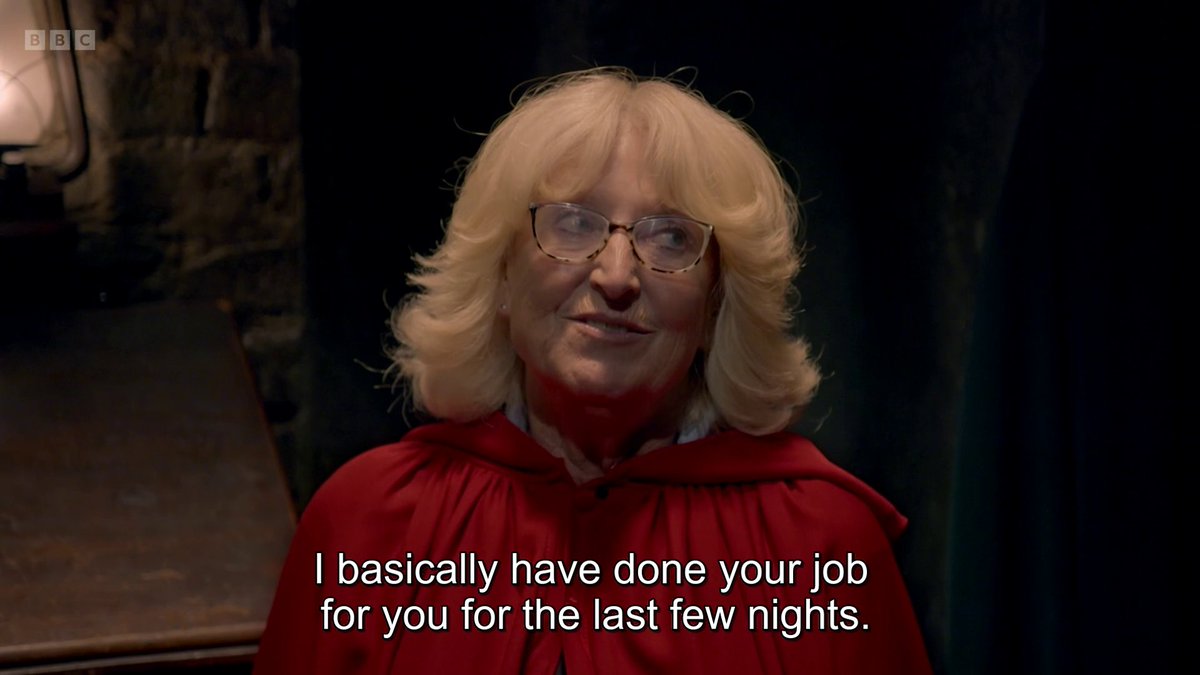
After her banishment, Fiona did not pretend it was a clean win for her. BBC quotes her admitting: “My cunning plan was not cunning at all!”
That line lands because it is both self-deprecating and strangely instructive. The “cunning plan” was not merely to survive, but to manage optics while delivering an accusation that, if believed, would end Rachel’s game. Fiona did not pull that off.
Then came the twist that keeps fans arguing: Fiona said she did not vote for Rachel herself, “because she deserves to win,” according to the BBC.
Take that at face value and it sounds like respect for gameplay. Read it another way and it is an acknowledgement that the social tide was too strong, so she chose an exit that looked gracious rather than vengeful.
Why this showdown hits harder than the usual Traitors chaos
BBC frames the latest episodes as contenders for the show’s most explosive moments across multiple series, plus the first Celebrity Traitors season. Even without ranking them against past fireworks, this fight has a special kind of fuel: it is not faithful versus traitor, it is traitor versus traitor, with the faithful watching.
The faithful are supposed to be the audience inside the game. When traitors start accusing each other, faithful players get permission to treat the whole thing like open season. That can speed up banishments, scramble alliances, and make “quiet” faithful players suddenly decisive swing votes.
It also highlights a cold truth about the format. The traitors are incentivized to act unified, but every episode is also a countdown to when someone will throw someone else under the carriage wheels.
The receipts that matter, and what viewers can actually verify
Unlike a normal scandal, this one is not happening in shadow. The “receipts” are baked into the broadcast: the turret arguments, the roundtable, and post-banishment comments.
The BBC’s summary provides clear, checkable markers: the detective reveal attributed to Rachel, Fiona’s public confrontation and traitor accusation, the “grenade” and “playing a game” exchange in the turret, Stephen’s reaction, and Fiona’s banishment followed by her exit remarks.
That does not settle the debate over whether Rachel’s disclosure about Amanda crossed a line. But it does anchor the timeline, which matters because Traitors controversies often blur into “who said what first” arguments.
What to watch next: the risk Rachel now carries
Fiona’s banishment ends the open conflict, but it does not erase the smoke. If Fiona was loudly accusing Rachel of being a traitor, some faithful will remember that the accusation was detailed, emphatic, and repeated.
For Rachel, the advantage is obvious: one rival is gone, and the room chose her framing in the moment. The risk is subtler: if the faithful later discover Rachel is a traitor, Fiona’s earlier warnings will look less like chaos and more like a missed warning label.
And for Stephen, the “absolutely speechless” moment is not just a reaction clip. It signals a potential fracture line. If one traitor can blow up another on impulse, any traitor may start calculating defensively, and that is when the turret stops being a planning room and becomes a paranoia lab.
BBC’s question is where this showdown ranks among the franchise’s biggest blowups. The more immediate question for the castle is simpler. After Fiona’s last laugh and her final verdict on Rachel, can the remaining players pretend this was just another roundtable, or did it permanently change what “trust” means in this game?