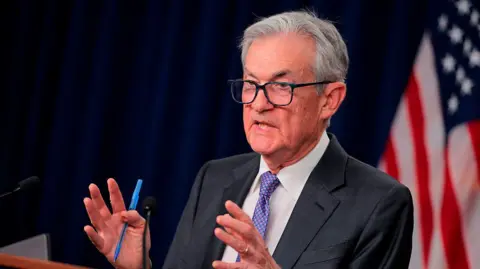
Jerome Powell just put the Justice Department on blast. The Federal Reserve chair says federal prosecutors have opened a criminal investigation into him, and he is framing it as more than a dispute over construction costs. He is calling it a pressure campaign with the central bank’s independence on the line.
The White House says the president was not read in. Republicans are splintering. Democrats are calling it a takeover attempt. And Wall Street is already placing a bet on chaos, with gold and silver spiking as the story spread.
Powell says subpoenas arrived, and an indictment was threatened
Powell said he learned of the investigation after the Justice Department served subpoenas on the Federal Reserve tied to his testimony to a Senate committee about renovations to Fed buildings. In a video announcing the situation, Powell described prosecutors as threatening a criminal indictment connected to that testimony, according to BBC News.
He called the probe “unprecedented,” and cast it as a test of whether the Fed can keep setting interest rates “based on evidence and economic conditions,” or whether policy will be shaped by “political pressure or intimidation.”
Powell under criminal probe over Fed HQ renovation. He says it’s “about interest rates,” not building repairs.
👉 https://t.co/keQKKkMqKW#virginiatimesnow #JeromePowell #FederalReserve #DOJ #InterestRates pic.twitter.com/00oUKiifSO
— Virginia Times (@newsbreaknow) January 12, 2026
Powell also tried to draw a hard line between accountability and what he argues is a coordinated squeeze. “I have deep respect for the rule of law and for accountability in our democracy. No one, certainly not the chair of the Federal Reserve is above the law, but this unprecedented action should be seen in the broader context of the administration’s threats and ongoing pressure,” he said.
The Justice Department has not publicly confirmed details of the probe, and BBC News reported it sought comment from both the department and the White House.
Trump’s public posture: “I don’t know anything about it”
President Donald Trump, asked about the investigation in an interview with NBC News, said he had no knowledge of it. “I don’t know anything about it, but he’s certainly not very good at the Fed, and he’s not very good at building buildings,” Trump said.
That second clause is not a throwaway. The Fed’s renovation project is the hook prosecutors are reportedly pulling on, and it has already become a political weapon.
The renovation fight: asbestos, lead, and a multibillion-dollar price tag
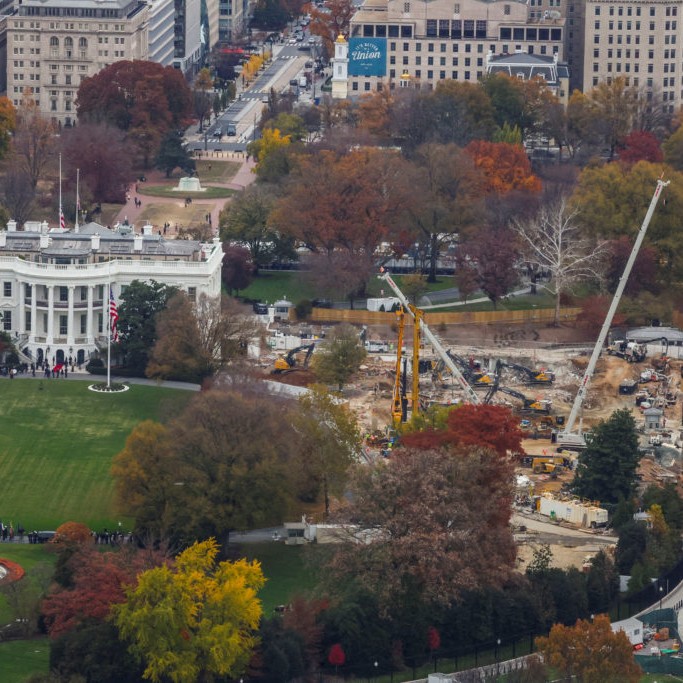
The Federal Reserve is renovating two long-standing Washington buildings, the Eccles Building and 1951 Constitution Avenue. The structures date back to the 1930s, and the Fed has described the work as modernization that includes health and safety fixes such as removing asbestos and lead contamination, according to the BBC account.
Trump has criticized the project’s price, arguing the cost will hit $3.1bn. The Fed’s forecast, per the same reporting, is $2.5bn. The Fed has said the renovations will reduce costs over time.
That gap, $600m on paper, is now serving as a political accelerant. If investigators are scrutinizing testimony about the project, the factual center will likely be what Powell said, what documents show, and whether prosecutors believe anything crossed from disputed projections into criminal territory.
But the political center is different. Powell says the investigation cannot be separated from Trump’s long-running campaign to browbeat the Fed into lower rates.
Rates, pressure, and the calendar: Trump is expected to name a successor
Trump nominated Powell to lead the Fed in 2017, then repeatedly attacked him when interest rates did not fall fast enough to suit the White House. The BBC report notes the Fed cut rates three times in the second half of 2025, but Trump continued to argue rates were too high and to link them to voters’ cost pressures.
Now the timing is combustible. The president is expected to name Powell’s successor as chair by the end of the month, the BBC reported.
That means the probe is landing in the narrow window when Washington is already watching for signs of who will run the central bank next, and whether the Fed board will be remade into a more compliant partner for the White House’s economic agenda.
Capitol Hill lines up, and an intra-GOP warning shot appears
Senators quickly turned the probe into a proxy fight over institutional power.
North Carolina Senator Thom Tillis, a Republican on the Senate Banking Committee, said he would oppose the confirmation of Trump’s Fed chair pick and any other Fed Board nominee until the matter is resolved. “If there were any remaining doubt whether advisers within the Trump Administration are actively pushing to end the independence of the Federal Reserve, there should now be none,” Tillis said in a statement, according to the BBC report.
Democrats went further, openly describing the investigation as an attempt to shove Powell aside. Senator Elizabeth Warren said she believed Trump’s plan was to force Powell off the board and install “another sock puppet,” urging the Senate not to move forward on any Trump Fed nominees, according to the BBC.
Those are hard words, but the core question beneath them is practical. If lawmakers treat the investigation as politically tainted, confirmations can stall. If they treat it as legitimate oversight, Powell’s position weakens and the Fed’s decision-making risks getting pulled into partisan trench warfare.
Not just Powell: other legal clashes hover in the background
The Powell probe is not happening in a vacuum. The BBC report points to earlier disputes involving the administration and perceived adversaries.
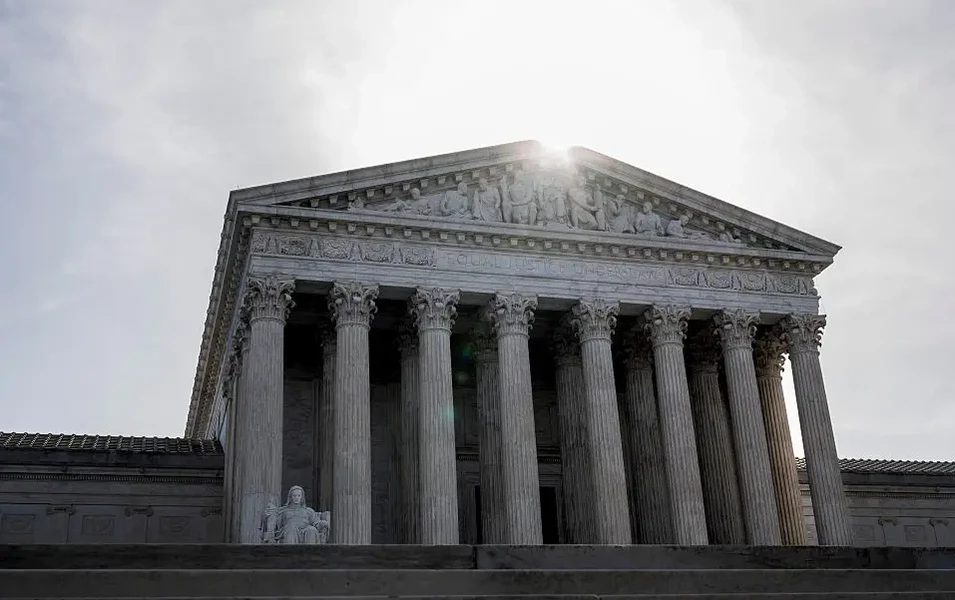
Trump previously tried to fire Fed Governor Lisa Cook over alleged mortgage fraud, according to the BBC. That effort was blocked by a federal court, and the case is slated for the Supreme Court later this month, the report said.
The BBC also reported that criminal charges brought by Trump’s Justice Department against New York Attorney General Letitia James and former FBI Director James Comey were dismissed by a court. Both have maintained their innocence and said the prosecutions were politically motivated, according to the BBC.
Those episodes matter here for one reason. They have shaped the lens through which Washington will read the Powell investigation, whether as normal law enforcement scrutiny or as a pattern of criminal process colliding with political conflict.
Markets react: investors flee to metals as uncertainty spikes
Financial markets do not wait for court filings to pile up. The BBC report said news of the probe, alongside unrest in Iran, helped push precious metals higher.
Trump DOJ Targets Powell with Criminal Probe as Gold hits $4,600
The war between the White House and the Federal Reserve has moved from mean tweets to grand jury subpoenas.
US President Donald Trump has launched a criminal investigation into Fed Chairman Jerome Powell. pic.twitter.com/PhC9HZv3av
— Crypto Sanders (@cryptosanders_7) January 12, 2026
Gold rose 1.4% to $4,572.36 an ounce, after hitting a record $4,600.33 earlier, the BBC reported. Silver also hit a record $84.58 an ounce before easing back to $83.26, still up 5.4% on the day.
In plain terms, investors treat political uncertainty as a tradable product. A criminal probe involving the sitting Fed chair is the kind of headline that makes hedges look cheap.
What happens next: documents, prosecutors, and the confirmation choke point
The most immediate unknown is what the Justice Department actually has, and what it wants. Powell says subpoenas have been served and an indictment was threatened. Prosecutors have not publicly laid out accusations.
The New York Times first reported the probe, and the BBC reported it will be overseen by the US Attorney’s Office for the District of Columbia.
Next, watch the Senate calendar. Tillis’s stance, if joined by even a small bloc of Republicans, could complicate any quick push to confirm a new chair or new Fed nominees while Powell’s legal status is unresolved.
Then there is the Fed itself. If Powell remains in office while under criminal investigation, every rate decision risks becoming interpreted through a political lens. If he steps aside, the president’s successor pick becomes more than a routine personnel move. It becomes a test of who owns monetary policy.
For now, the loudest fact is the one Powell himself put in the open. He says the subpoenas arrived, and he is treating the investigation as a referendum on independence, not just a dispute over a renovation budget.