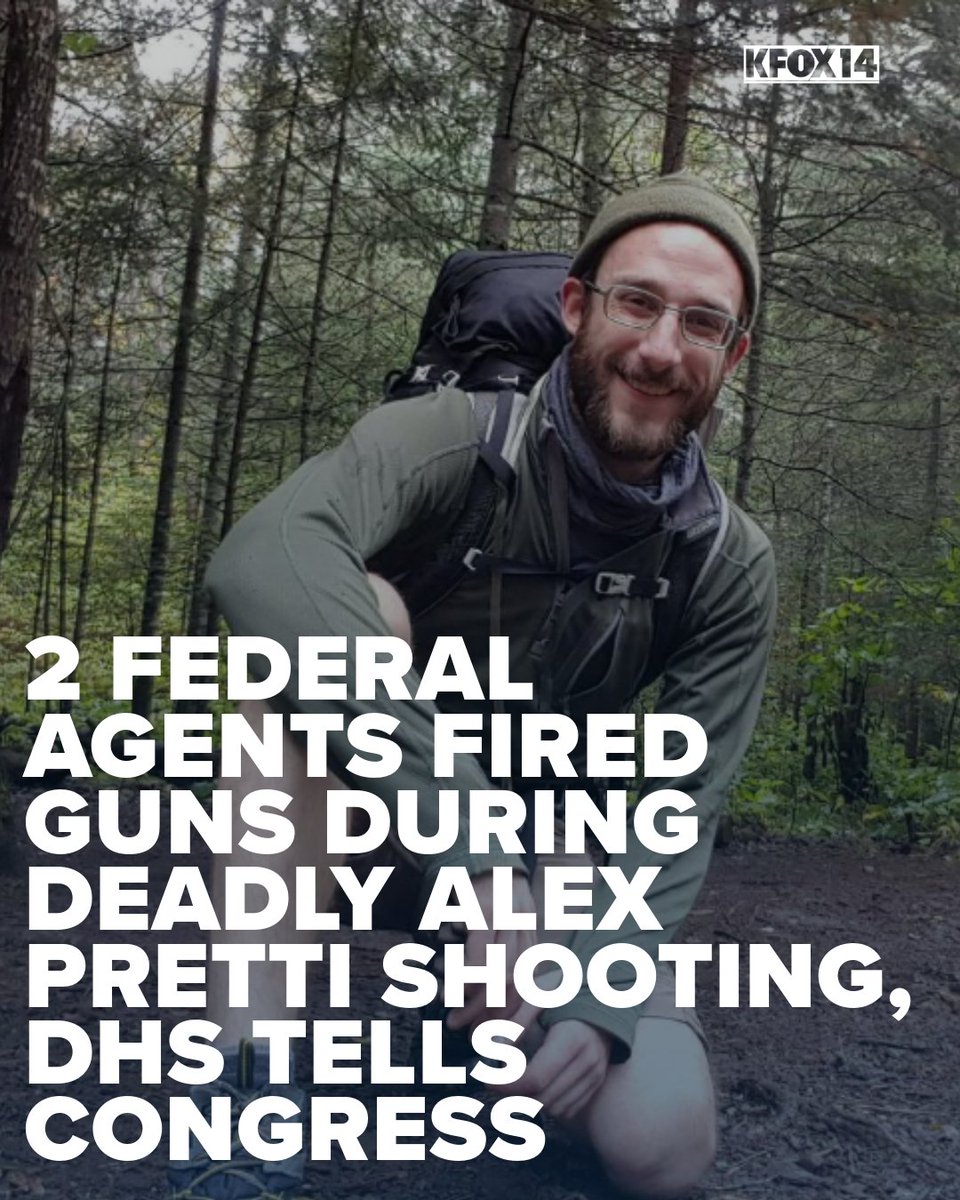
The weekend story was neat and compact: a federal agent fired “defensive shots.” Then the paperwork showed up, and it got messier.
In the fatal shooting of Minneapolis ICU nurse Alex Pretti during a deportation operation, a government report sent to Congress and obtained by CBS News says two U.S. Customs and Border Protection personnel fired their weapons. That detail alone is enough to reopen the central question hanging over the video: why did this confrontation escalate to gunfire at all?
This is not just a use-of-force argument. It is a credibility fight between initial messaging and documented accounts, and it is unfolding as the Department of Homeland Security is under a microscope for ramped-up immigration operations in densely populated civilian areas.
A One-Shooter Story, Then a Two-Gun Report
According to CBS News, the CBP Office of Professional Responsibility report says a Border Patrol agent discharged a CBP-issued Glock 19, and a CBP officer discharged a CBP-issued Glock 47 during the confrontation that ended Pretti’s life. CBS reported that additional information about the agents’ identities was not released.
Two federal officers fired Glock pistols during the deadly shooting of 37-year-old ICU nurse Alex Pretti in Minneapolis, a Customs and Border Protection (CBP) official said. https://t.co/Mujj5GbuhQ pic.twitter.com/96hgrx8QC0
— FOX SA (@KABBFOX29) January 28, 2026
That is a direct contrast with the Department of Homeland Security’s initial public description, which CBS reported as saying one Border Patrol agent fired “defensive shots” over the weekend.
Why does the shooter count matter? Because the first public narrative often frames everything that follows, including political defenses, internal reviews, and how quickly leaders move to declare the case closed. If the earliest version is incomplete, every later assurance has to compete with a simple question: what else was simplified for public consumption?
The video question: Why engage a man with a phone?
CBS News framed one of the most uncomfortable details early: video appears to show Pretti filming a deportation operation with his cellphone. That is the kind of fact that pulls the case into a broader national pattern, where surveillance runs both ways, and every encounter is a potential public record.
Marc Brown, a former federal law enforcement trainer interviewed by CBS, put it plainly: “We live in a digital age. People are going to record law enforcement.” Then he pushed the hinge point: “So the question is, what was the need to engage him in the first place?”
Brown’s critique, as reported by CBS, is not that officers can never approach someone filming. It is that the decision to initiate contact can be the moment an operation shifts from enforcement to escalation, especially in a crowded public environment.
OC Spray, Crowds, and the Escalation Ladder
Brown also criticized what CBS described as the use of Oleoresin Capsicum spray, or OC spray, in a crowded area. The tactical risk is not theoretical. OC can spread, disrupt visibility, and create panic or confusion for everyone nearby, including officers.
“OC is an aerosol,” Brown said, according to CBS. “Everybody around is going to get exposed, demonstrators, bystanders, and other officers. Now everyone has chemical irritant in their eyes.”
The argument embedded in that quote is about control. Federal officers running a high-stakes operation want control of the scene. A chemical agent in a crowd can rapidly reduce that control, and once control drops, the likelihood of somebody reaching for a weapon, misreading a movement, or firing to reassert dominance goes up.
Deadly Force Turns on Seconds, and on Definitions
The sharpest dispute in CBS’s reporting lands on timing: video appears to raise questions about whether Pretti’s firearm had been removed from his waistband before officers opened fire, and whether he was being restrained when shots were fired.
Brown drew a distinction that comes up repeatedly in police use-of-force reviews. “A firearm in someone’s waistband is a concern,” he said, according to CBS. “A firearm in someone’s hand is an immediate threat. But those are very different things.”
CBS also reported Brown questioning whether the legal threshold for deadly force was met, emphasizing that use-of-force policies generally require an imminent threat, not merely the presence of a gun.
The legal backdrop to these disputes is well established. The Supreme Court’s use-of-force framework emphasizes “objective reasonableness” under the Fourth Amendment, not hindsight perfection. But it also draws a bright line around deadly force: it is not supposed to be a shortcut for managing uncertainty.
‘He’s Got a Gun!’ and What Happened Next
CBS reported that, according to the CBP report submitted to Congress, during the struggle, a Border Patrol agent yelled, ‘He’s got a gun!’ multiple times. The report then describes a tight timeline: “Approximately five seconds later,” two CBP personnel discharged their weapons, and afterward, a Border Patrol agent advised he had possession of Pretti’s firearm.
That sequence creates competing interpretations that will matter in any official review.
One interpretation is the government’s: a weapon was present, officers perceived an imminent threat, and the response was defensive. Another is Brown’s critique: calling out a gun is not the same thing as establishing an immediate threat that justifies lethal force, especially if the weapon is not in hand or the subject is being restrained.
Those interpretations do not just collide in courtrooms. They collide in congressional hearings, agency budgets, and in determining whether DHS can maintain the political space to keep expanding interior operations.
Training, Masks, and the Push Into Civilian Streets
CBS also connected Pretti’s death to a larger DHS training and deployment surge. The reporting described ICE ramping up recruitment, restructuring basic training, and sending recruits into U.S. cities, including Minneapolis, amid intensified deportation operations.
Caleb Vitello, identified by CBS as the acting ICE director at the time of an earlier interview and now an assistant director for training and development, described a use-of-force continuum to CBS: “Our use of force continuum is officer presence, verbal commands, soft techniques, hard techniques, and deadly force.” He added, “We always want to de-escalate, we just don’t want to fight.”
Vitello also stressed verbal identification. “All of our officers are trained to say ‘Police’ upon engagement,” he told CBS. “It definitely helps when they see a badge, but No. 1 word is ‘Police. Police. Police. Police.'”
But CBS reported that ICE leaders have noted that agents may conduct operations without name-identifying badges and often wear masks. DHS has cited doxxing concerns, and Vitello told CBS that threats against agents’ families are a real fear.
That creates a hard-to-miss contradiction in the operational optics: agencies say identification is key to de-escalation, while also defending anonymity as necessary protection. Both can be true at the same time. In a crowded city operation, they can also collide in the worst possible way.
Why Minneapolis Matters Beyond One Case
CBS quoted former DHS official John Sandweg, warning that Border Patrol training and culture can be shaped by a different enforcement environment than urban crowd dynamics. Sandweg described the concern as Border Patrol agents being trained for aggressive conditions and then being asked to draw lines between unlawful interference and First Amendment-protected conduct.
CBS also reported comments from national security contributor Sam Vinograd, who argued that large-scale sweeps in densely populated areas require specialized training to minimize risk to the public and agents themselves.
The political stakes are already forming. CBS reported that Democrats on the House Homeland Security Committee asked the Government Accountability Office to examine DHS’s rapid hiring and training surge, and that leaders of major immigration enforcement agencies are scheduled to testify before congressional committees in February.
🚨🇺🇸 STEPHEN MILLER: CBP AGENTS IN MINNEAPOLIS “MAY NOT HAVE BEEN FOLLOWING” PROPER PROTOCOL BEFORE FATAL SHOOTING
Stephen Miller just acknowledged the White House is evaluating whether CBP agents in Minneapolis followed proper protocol before Alex Pretti was shot.
Miller said… pic.twitter.com/LOvNmJAKAV
— Mario Nawfal (@MarioNawfal) January 28, 2026
That means the Pretti shooting is not headed for a quiet administrative file. It is heading toward sworn testimony, timelines, and documents. Every discrepancy between initial statements and later reports becomes fair game.
What To Watch Next
Three facts will likely dominate the next phase.
- The timeline: what happened in the seconds between the gun being noticed, physical restraint, and shots being fired.
- The command and identification issue: whether agents clearly identified themselves, and how masking and lack of name badges affected the interaction.
- The accountability channel: whether internal DHS reviews and congressional oversight converge on the same factual record, or produce dueling narratives.
If DHS wants the public to accept its version of aggressive interior enforcement, it needs the paper trail to match the talking points. In the Alex Pretti shooting, CBS’s reporting suggests the paper trail is already complicating the pitch.